
Class 6 Social Science Chapter 8: Unity in Diversity, or ‘Many in the One’ Notes
This chapter in five lines
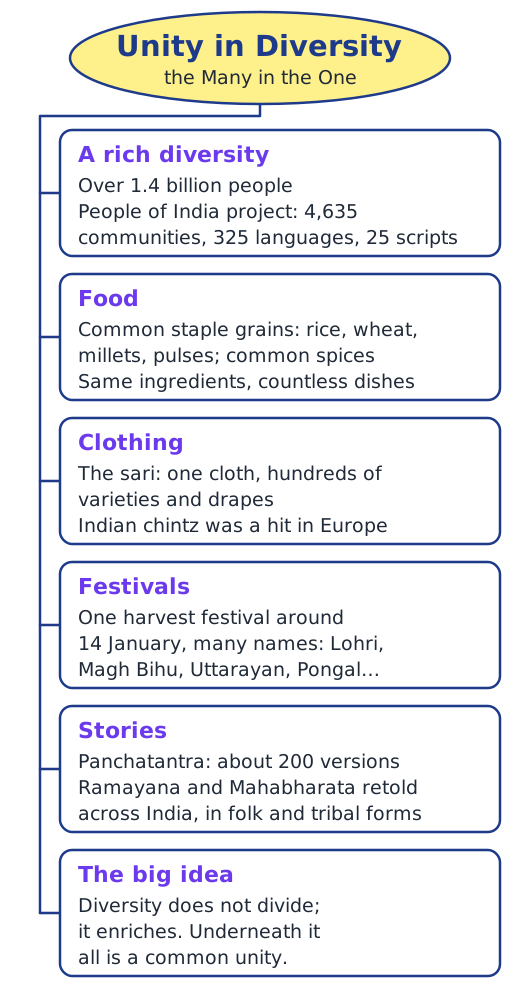
India has an immense diversity of landscapes, people, languages, food, dresses, festivals and customs. Under this variety lies a common unity: the same staple grains and spices make countless dishes, one unstitched sari is worn in hundreds of ways, one harvest festival around 14 January has many names, and the same stories, like the Panchatantra, the Ramayana and the Mahabharata, are retold across India. Diversity does not divide India; it enriches it.
How diverse is India?
Travel across India by train and you will see changing landscapes, many kinds of dresses and food, and you will hear different languages and see different scripts. India has over 1.4 billion people, about 18 percent of the world’s population. In the late 20th century, the Anthropological Survey of India studied 4,635 communities in the People of India project and counted 325 languages using 25 scripts.
What is ‘unity in diversity’?
Unity in diversity means that beneath India’s variety there is a common base that connects it all: the Many in the One. A British historian, Vincent Smith, wondered how one history could be written for such a diverse land, and answered that India offers unity in diversity.
Food: same ingredients, endless dishes
Cereals such as rice, barley and wheat, millets such as bajra, jowar and ragi, and many pulses are staple grains across India. Spices such as turmeric, cumin, cardamom and ginger are also used everywhere. These common ingredients (unity) are combined in countless ways (diversity).
Clothing: the sari
The sari is one plain, unstitched length of cloth worn in most parts of India, in cotton, silk and now synthetic fabrics too. Famous silk saris include Banarasi, Kanjivaram, Paithani, Patan Patola, Muga and Mysore. It comes in hundreds of varieties and drapes, and women also put it to many other uses. A stone relief from Vaiśhali (in today’s Bihar) shows a sari a few centuries BCE.
Festivals: one festival, many names
Makara Sankranti, on or around 14 January, marks the start of the harvest season in many parts of India. The same festival has many names, such as Lohri in Punjab, Magh Bihu in Assam, Uttarayan in Gujarat and Pongal in Tamil Nadu.
Stories: the Panchatantra and the epics
The Panchatantra is an old Sanskrit collection of animal stories that teach life skills. It is at least 2,200 years old and has about 200 adaptations in more than 50 languages. The two epics, the Ramayana and the Mahabharata, have been retold for over two thousand years in regional languages, folk forms and tribal versions, creating a web of shared culture across India and Asia.
Key terms
| Term | Meaning |
|---|---|
| Diversity | Variety; many different kinds, such as many languages, foods or festivals. |
| Unity | Being one; a common thread that connects different things. |
| Unity in diversity | Many different forms sharing a common base: the Many in the One. |
| Staple grains | The basic food grains for most people, such as rice, wheat, millets and pulses. |
| Millets | Grains such as pearl millet (bajra), sorghum (jowar) and finger millet (ragi). |
| Sari | A plain, unstitched length of cloth worn in most parts of India in many styles. |
| Relief | A design that stands out from the surface of a panel of stone, wood or another material. |
| Chintz | A printed Indian cotton that was so popular in 17th-century Europe that England and France banned its import. |
| Epic | A long poem about the adventures of heroes and other great figures of the past. |
| Panchatantra | An old Sanskrit collection of animal stories that teach life skills, retold in many languages. |
| Folk version | A story as it is told by ordinary people of a region, usually passed on by word of mouth. |
| People of India project | A national survey by the Anthropological Survey of India that studied 4,635 communities. |
Topics in this chapter
Practice
-
About what share of the world's population lives in India?
Show answer
Answer: (b) 18 percent
-
How many languages did the People of India project count?
Show answer
Answer: (c) 325 It counted 325 languages using 25 scripts, among 4,635 communities.
-
Which of these is a millet?
Show answer
Answer: (b) Ragi
-
Lohri, Magh Bihu, Uttarayan and Pongal are names of festivals celebrated around:
Show answer
Answer: (a) 14 January
-
Which printed Indian cotton was banned by England and France to protect their own products?
Show answer
Answer: (c) Chintz
Questions students ask
What is Chapter 8 of Class 6 Social Science about?
It explains unity in diversity, or the Many in the One, using examples from India's food, clothing, festivals and literature, especially the Panchatantra, the Ramayana and the Mahabharata.
What does ‘Many in the One’ mean?
It means that many different forms grow from one common base. One harvest festival with many names, or one sari worn in many ways, are examples.
Are there exercise questions in this chapter?
Yes. There are three Big Questions, several Let's Explore activities and five questions, activities and projects at the end. All are answered on our NCERT solutions page.
Stuck on a question?
Take a photo and Lagnever AI explains it step by step. Try it for 7 days for ₹2.
Get it on Google Play Open in browser
For parents: after the trial, the plan renews monthly by UPI or card autopay. You can cancel anytime in the app.