
Class 12 Biology Chapter 9: Biotechnology: Principles and Processes Notes Hinglish mein
Ye chapter 5 lines mein
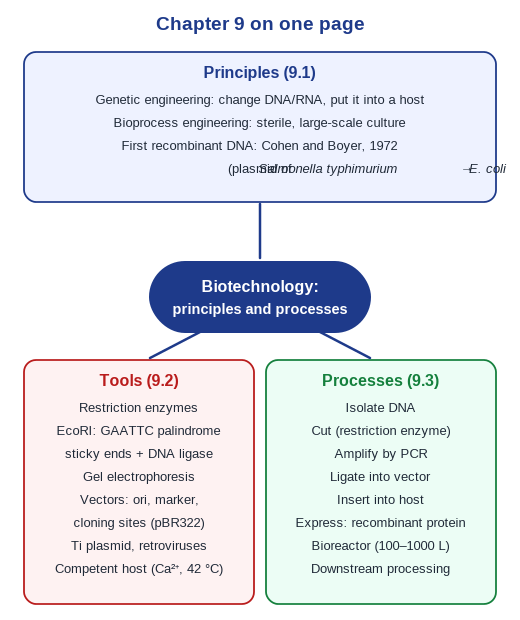
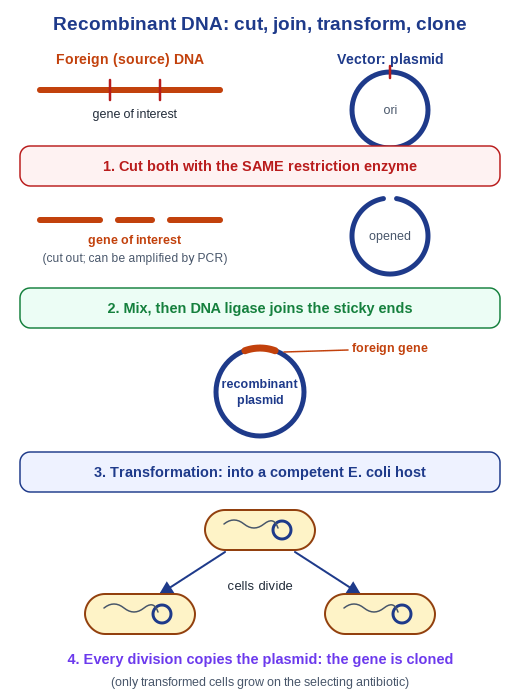
Modern biotechnology do techniques par tiki hai: genetic engineering aur bioprocess engineering. Recombinant DNA banane ke liye source DNA aur vector ko ek hi restriction enzyme se kaata jaata hai, DNA ligase se joda jaata hai aur competent host mein daala jaata hai. Steps: DNA isolate karna, kaatna, PCR se gene badhana, ligation, insertion, bioreactor mein expression aur downstream processing.
Ye chapter kis baare mein hai?
Chapter 8, Microbes in Human Welfare, mein microbes ko curd, bread aur dawaaiyan banate dekha. Ye chapter Unit IX, Biotechnology, shuru karta hai aur modern biotechnology ke tareeke samjhata hai: scientists ek organism se gene kaise kaatte hain, use carrier DNA se kaise jodte hain, aur doosre organism se uski copies aur uska product kaise banwaate hain.
Do topic pages zyada detail dete hain: recombinant DNA technology ke tools aur recombinant DNA technology ke steps. Saari 12 exercises NCERT solutions mein hal hain.
Biotechnology kya hai?
Biotechnology insaanon ke kaam ke products aur processes banane ke liye live organisms ya unke enzymes use karti hai. Bade arth mein, microbes se curd, bread ya wine banana bhi biotechnology hai. Aaj ye word chhote arth mein use hota hai: aise processes jo genetically modified organisms se yahi kaam bade scale par karte hain. Kai aur techniques bhi isi mein aati hain, jaise ‘test-tube’ baby tak le jaane wala in vitro fertilisation, gene synthesise karke use karna, DNA vaccine banana aur kharab gene ko theek karna.
European Federation of Biotechnology (EFB) ki definition traditional aur modern dono view cover karti hai. Short mein, ye biotechnology ko natural science ko organisms, cells, cells ke parts aur molecular analogues ke saath jod kar products aur services dena batati hai.
Biotechnology ke principles kya hain?
Do core techniques ne modern biotechnology ko janm diya:
- Genetic engineering: genetic material (DNA aur RNA) ki chemistry badalna, use host organism mein daalna, aur is tarah host ka phenotype badalna.
- Bioprocess engineering: chemical engineering processes mein sterile mahaul (koi microbial contamination nahi) rakhna, taaki sirf chaha gaya microbe ya eukaryotic cell bahut maatra mein ugey aur antibiotics, vaccines, enzymes jaise products banein.
Genetic engineering kyun? Sexual reproduction variation deta hai, asexual reproduction genetic information bachaata hai. Plant aur animal breeding ke traditional hybridisation mein aksar chahe gaye genes ke saath anchahe genes bhi aa jaate hain. Genetic engineering (recombinant DNA, gene cloning aur gene transfer) se target organism mein sirf ek gene, ya chune hue genes ka set, daala ja sakta hai.
Origin of replication kyun? Kisi alien organism mein daala gaya DNA ka tukda aam taur par progeny cells mein multiply nahi kar paata. Wo tabhi multiply karta hai jab chromosome ka hissa ban jaaye, kyunki chromosome mein ek khaas sequence hota hai, origin of replication, jahan se replication shuru hota hai. Isliye alien DNA ko origin of replication se joda jaata hai; tab wo host mein replicate ho sakta hai. Template DNA ki is tarah bahut si ek jaisi copies banana cloning kehlata hai.
Pehla recombinant DNA. 1972 mein Stanley Cohen aur Herbert Boyer ne restriction enzymes (‘molecular scissors’) se ek plasmid se antibiotic-resistance gene kaata aur DNA ligase se use Salmonella typhimurium ke native plasmid (apne aap replicate hone wala circular extra-chromosomal DNA) se joda. Plasmid ne vector ka kaam kiya, jaise mosquito malarial parasite ka insect vector hai. Escherichia coli mein daalne par host ke DNA polymerase ne recombinant DNA ki copies banayin: antibiotic-resistance gene E. coli mein clone ho gaya.
To kisi organism ko genetically modify karne ke teen basic steps hain: (i) desirable genes wala DNA pehchaanna; (ii) use host mein daalna; (iii) use host mein bana kar rakhna aur host ki progeny tak pahunchana.
Recombinant DNA technology ko kaun se tools chahiye?
Key tools hain restriction enzymes, polymerase enzymes, ligases, vectors aur host organism.
Restriction enzymes
- 1963 mein E. coli mein bacteriophages ki growth rokne wale do enzymes isolate hue: ek DNA mein methyl groups jodta tha, doosra DNA kaatta tha. Kaatne wale ko restriction endonuclease kaha gaya.
- Paanch saal baad Hind II isolate hua: ye ek khaas chhe base pair sequence, apna recognition sequence, pehchaan kar hamesha ek hi jagah DNA kaatta tha. Aaj 900 se zyada restriction enzymes pata hain, bacteria ke 230 se zyada strains se.
- Naam ka niyam: pehla letter prokaryote ke genus se, agle do species se; EcoRI (Escherichia coli RY 13) mein ‘R’ strain se aata hai, aur Roman number batata hai ki us strain se enzymes kis order mein isolate hue.
- Restriction enzymes nucleases hain. Exonucleases DNA ke ends se nucleotides hataate hain; endonucleases DNA ke andar khaas jagahon par kaatte hain.
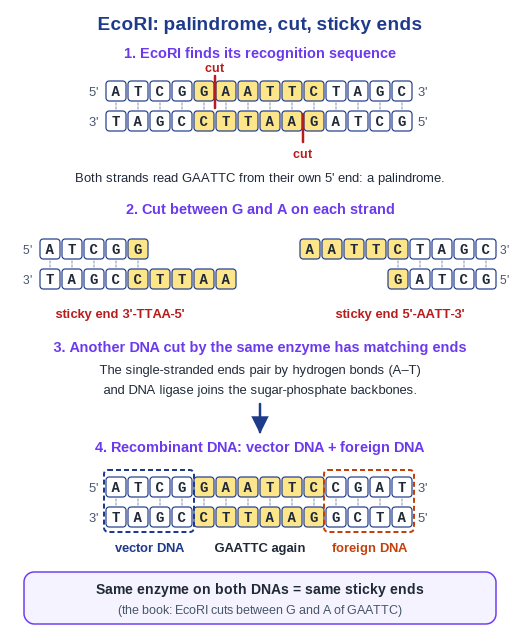
Har restriction endonuclease DNA ko ‘inspect’ karta hai jab tak apna palindromic recognition sequence na mil jaaye, wahan judta hai aur dono strands ko sugar-phosphate backbone mein kaatta hai. DNA palindrome dono strands par same padhta hai jab ek hi direction mein padha jaaye:
| Strand | Sequence |
|---|---|
| Upar | 5’ — GAATTC — 3’ |
| Neeche | 3’ — CTTAAG — 5’ |
Apne 5’ end se padhne par har strand GAATTC kehta hai. EcoRI har strand ko G aur A ke beech kaatta hai, palindrome ke centre se thoda hat kar, par opposite strands par unhi do bases ke beech. Har fragment par ek single-stranded overhang, AATT, bachta hai, jise sticky end kehte hain: ye matching cut end se hydrogen bonds banata hai, jisse DNA ligase ka kaam aasaan hota hai. Alag sources ka DNA agar ek hi enzyme se kaata jaaye to sticky ends same hote hain, isliye tukde end-to-end jud sakte hain.
DNA fragments alag karna: gel electrophoresis
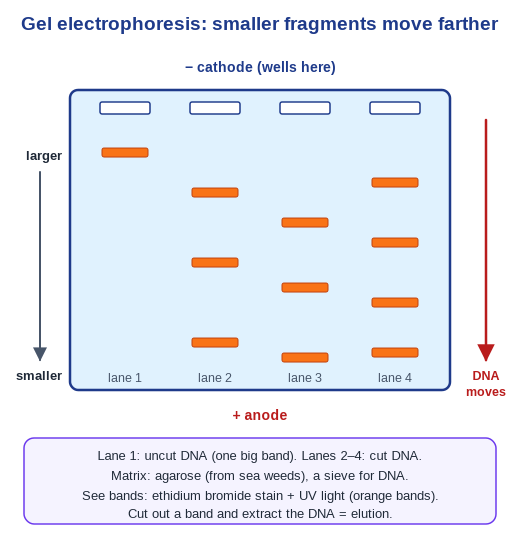
DNA fragments negatively charged hote hain, isliye electric field mein matrix ke andar anode ki taraf chalte hain. Aam matrix agarose hai, sea weeds se nikla natural polymer; ye chhalni ki tarah kaam karta hai, isliye fragment jitna chhota, utna door jaata hai. Bands tabhi dikhte hain jab DNA ko ethidium bromide se stain karke gel ko UV radiation mein rakha jaaye (chamakdar orange bands). Band kaat kar usse DNA nikaalna elution hai. (Extra: ethidium bromide aur UV light khatarnaak hain; gel ka kaam sirf laboratory mein teacher ke saath hota hai.)
Cloning vectors
Plasmids aur bacteriophages bacteria ke andar chromosome se alag, apne aap replicate hote hain. Kuch plasmids ki ek-do copies per cell hoti hain, kuch ki 15–100 ya zyada; phages ka copy number bahut zyada hota hai. Inse juda DNA inke copy number jitna multiply hota hai. Vector ko chahiye:
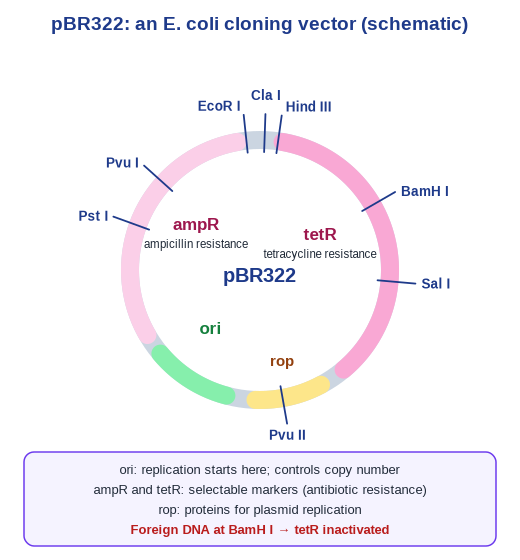
- Origin of replication (ori): jahan se replication shuru hota hai; ye juda DNA ka copy number bhi control karta hai.
- Selectable marker: aksar ampicillin, chloramphenicol, tetracycline ya kanamycin jaise antibiotic ke resistance ka gene, jo non-transformants hataata hai aur transformants ko ugne deta hai. Normal E. coli inmein se kisi ka resistant nahi hai. (Transformation wo procedure hai jisse DNA ka tukda host bacterium mein daala jaata hai.)
- Cloning sites: aam restriction enzymes ke liye bahut kam, ho sake to single, recognition sites; zyada sites vector ko kai tukdon mein kaat dengi.
- Plants aur animals ke vectors: Agrobacterium tumifaciens (book ki spelling) ka tumour-inducing Ti plasmid non-pathogenic bana diya gaya hai aur ab kai plants mein kaam ke genes pahunchata hai; disarmed retroviruses animal cells mein genes pahunchate hain.
Vector pBR322 mein tetracycline-resistance gene ki BamH I site par juda foreign DNA us gene ko inactivate kar deta hai. Recombinants ampicillin par ugte hain par tetracycline par nahi; non-recombinants dono par ugte hain. Ismein do plates lagti hain, isliye ek aasaan tareeka chromogenic substrate use karta hai: insert ko β-galactosidase ke gene ke andar daala jaata hai. Bina insert wali colonies blue hoti hain; recombinant colonies colourless rehti hain. Aise insert se gene ka kaam band hona insertional inactivation hai.
Competent host
DNA hydrophilic hai, isliye cell membranes paar nahi kar sakta. Bacteria ko calcium jaise divalent cation ki khaas concentration se treat karke competent banaya jaata hai. Phir cells ko recombinant DNA ke saath ice par rakha jaata hai, thodi der 42 °C par heat shock diya jaata hai, aur wapas ice par rakha jaata hai, to wo DNA le lete hain. Doosre tareeke: animal cell ke nucleus mein micro-injection; biolistics ya gene gun, jo plant cells par DNA-coated gold ya tungsten ke micro-particles ki bauchhaar karta hai; aur disarmed pathogen vectors. Detail recombinant DNA technology ke tools par hai.
Recombinant DNA technology ke processes kya hain?
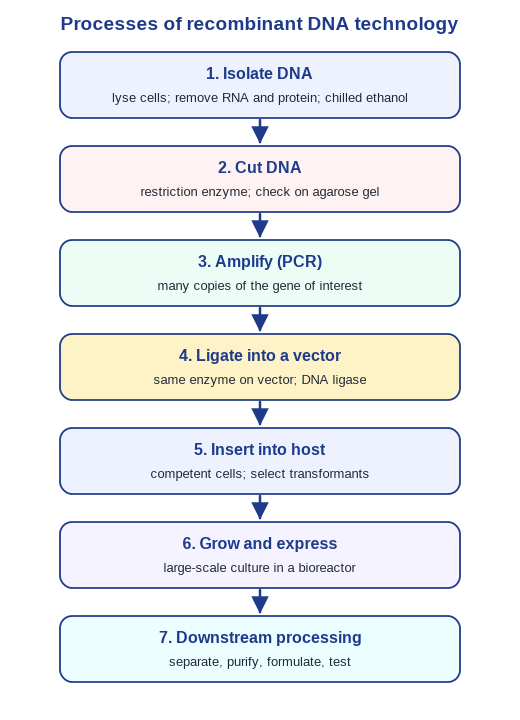
- DNA isolate karna. Cells ko lysozyme (bacteria), cellulase (plant cells) ya chitinase (fungi) se toda jaata hai. RNA ribonuclease se, histones jaise proteins protease se hataaye jaate hain; chilled ethanol daalne par purified DNA patle dhaagon ki tarah nikal aata hai, jise spool kiya ja sakta hai.
- DNA ko khaas jagah kaatna. Purified DNA ko restriction enzyme ke saath uski optimal conditions mein incubate kiya jaata hai; agarose gel electrophoresis se digestion ki progress check hoti hai. Vector bhi isi tarah kaata jaata hai; gene of interest aur kata vector ligase ke saath mila kar recombinant DNA banta hai.
- PCR se gene badhana. Do primers aur Thermus aquaticus ka thermostable DNA polymerase baar-baar denaturation, primer annealing aur extension ke cycles se gene ki copies in vitro banate hain; segment lagbhag ek billion guna badh sakta hai.
- Recombinant DNA host mein daalna. Competent cells DNA lete hain; ampicillin-resistance gene ho to ampicillin plates par sirf transformants ugte hain, isliye wo gene selectable marker hai.
- Foreign gene ka product paana. Aksar maqsad ek protein hota hai. Kisi doosre (heterologous) host mein express hue gene se bana protein recombinant protein hai. Cells ko continuous culture mein ugaaya ja sakta hai, jahan ek taraf se purana medium nikaala aur doosri taraf se naya daala jaata hai, jisse cells apne sabse active log/exponential phase mein rehte hain.
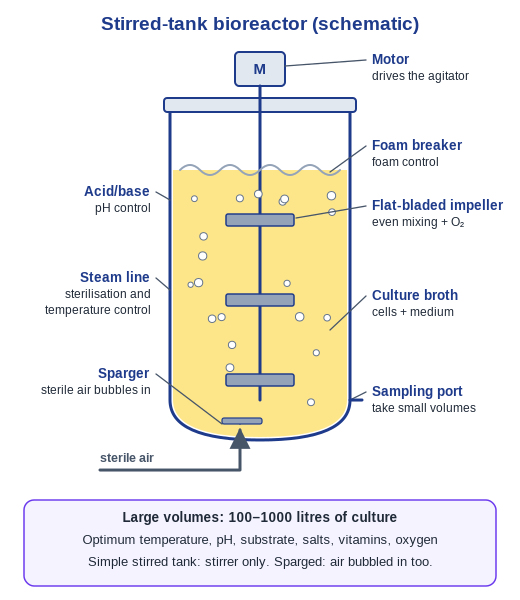
- Bioreactors. Zyada maatra ke liye bioreactors optimum temperature, pH, substrate, salts, vitamins aur oxygen mein 100–1000 litre culture process karte hain. Aam stirred-tank type mein agitator, oxygen delivery, foam control, temperature aur pH control, aur sampling ports hote hain.
- Downstream processing. Product ka separation aur purification, preservatives ke saath formulation, drugs ke liye clinical trials, aur strict quality control.
PCR, insertion, bioreactors aur downstream processing step by step recombinant DNA technology ke steps par samjhaaye gaye hain. Ye sab laboratory aur industry ka kaam hai, ghar par try karne ki cheez nahi.
Aage badhne se pehle
Ye chapter Chapter 5, Molecular Basis of Inheritance (DNA structure, base pairing aur replication), par based hai aur Chapter 10, Biotechnology and its Applications, ki taraf le jaata hai, jo in tools ko kheti aur medicine mein use karta hai. EcoRI palindrome aur uska cut, pBR322 ke example ke saath cloning vector ke features, recombinants chunne ke do tareeke, PCR ke teen steps aur stirred-tank bioreactor ke parts yaad rakho. Saari 12 exercises Chapter 9 ke NCERT solutions mein hal hain.
Key terms (zaroori shabd)
| Term | Matlab |
|---|---|
| Biotechnology | Live organisms ya unke enzymes se insaanon ke kaam ke products aur processes banane ki techniques. Aaj ye word zyadatar genetically modified organisms wale bade scale ke processes ke liye use hota hai. |
| Genetic engineering | Genetic material (DNA aur RNA) ki chemistry badalna, use host organism mein daalna aur is tarah host ka phenotype badalna. |
| Bioprocess engineering | Chemical engineering processes mein sterile mahaul rakhna, bina microbial contamination ke, taaki sirf chaha gaya microbe ya eukaryotic cell bahut zyada maatra mein ugey aur antibiotics, vaccines, enzymes jaise products banein. |
| Recombinant DNA | Alag-alag sources ke DNA ko in vitro jod kar bana naya DNA combination, jaise plasmid vector se juda ek gene. |
| Restriction endonuclease | 'Molecular scissors' enzyme jo DNA mein ek khaas palindromic sequence pehchaanta hai aur dono strands ko sugar-phosphate backbone mein khaas jagah kaatta hai. |
| Palindrome (DNA mein) | Base pairs ka aisa sequence jo dono strands par same padhta hai jab dono ko ek hi direction mein padha jaaye, jaise 5'-GAATTC-3' ke saath 3'-CTTAAG-5'. |
| Sticky ends | Chhote single-stranded overhangs jo tab bachte hain jab restriction enzyme palindrome ke centre se thoda hat kar kaatta hai. Ye matching cut ends se hydrogen bonds banate hain, jisse DNA ligase ka kaam aasaan hota hai. |
| Gel electrophoresis | DNA fragments ko size ke hisaab se alag karna: negatively charged DNA agarose gel mein anode ki taraf chalta hai, aur chhote fragments zyada door jaate hain. |
| Cloning vector | Plasmid ya bacteriophage jaisa DNA jo host mein replicate ho sakta hai aur juda hua foreign DNA host tak le jaata hai. |
| Selectable marker | Vector ka ek gene, jaise ampicillin ya tetracycline resistance ka, jisse transformants ugte hain aur non-transformants hata diye jaate hain. |
| Insertional inactivation | Kisi gene ke andar foreign DNA ghusne se us gene ka kaam band ho jaana; isse recombinants ko non-recombinants se alag pehchaana jaata hai. |
| PCR (polymerase chain reaction) | Do primers aur thermostable DNA polymerase se, denaturation, annealing aur extension ke baar-baar cycles chala kar, chune hue DNA segment ki bahut saari copies in vitro banana. |
| Bioreactor | Bartan jismein aksar 100–1000 litre culture hota hai, jahan optimum conditions mein raw materials biologically products mein badalte hain. |
| Downstream processing | Biosynthetic stage ke baad product ko alag aur purify karna, phir formulation, (drugs ke liye) clinical trials aur quality control. |
Is chapter ke topics
Practice karo
-
EcoRI ka recognition sequence hai:
Jawab dekho
Jawab: (b) 5'-GAATTC-3'
-
Gel electrophoresis mein DNA fragments kis taraf chalte hain?
Jawab dekho
Jawab: (b) anode, kyunki DNA negatively charged hai
-
pBR322 ke BamH I site par foreign DNA daala gaya. Recombinant cells kis par ugenge?
Jawab dekho
Jawab: (c) ampicillin par, tetracycline par nahi
-
PCR mein use hone wala thermostable DNA polymerase kahan se aata hai?
Jawab dekho
Jawab: (b) Thermus aquaticus
-
Fungal cells ko tod kar DNA nikaalne ke liye kaun sa enzyme use hota hai?
Jawab dekho
Jawab: (c) Chitinase
-
Blue-white test mein recombinant colonies hoti hain:
Jawab dekho
Jawab: (b) colourless
Students ke sawal
Class 12 Biology Chapter 9 ke main topics kya hain?
Biotechnology ke principles (genetic engineering aur bioprocess engineering, pehla recombinant DNA), recombinant DNA technology ke tools (restriction enzymes, gel electrophoresis, cloning vectors, competent host) aur processes (DNA isolate karna aur kaatna, PCR, host mein daalna, product paana, bioreactors aur downstream processing).
Kya Biotechnology: Principles and Processes 2026-27 NCERT Class 12 Biology book mein hai?
Haan. Ye Unit IX, Biotechnology, ka pehla chapter, Chapter 9 hai, Class 12 Biology textbook (Reprint 2026-27) ke pages 163 se 176 par. Ismein 12 end-of-chapter exercises hain.
Vector aur source DNA ko ek hi restriction enzyme se kyun kaatna padta hai?
Ek hi enzyme dono par ek jaise sticky ends chhodta hai. Sirf matching sticky ends aapas mein judte hain, isliye DNA ligase gene ko vector mein jod paata hai. Chapter kehta hai ki aam taur par dono ko ek hi enzyme se kaate bina recombinant vector nahi banta.
Is chapter ke kaun se diagrams practise karne chahiye?
EcoRI ka action aur sticky ends, recombinant DNA banane ke steps, lanes aur bands wala agarose gel, ori, ampR, tetR aur restriction sites wala pBR322 map, ek PCR cycle, aur stirred-tank bioreactor.
Koi sawal atak gaya?
Photo lo, Lagnever AI step-by-step samjhayega. 7 din ka trial sirf ₹2.
Google Play se app lo Browser mein kholo
Parents ke liye: trial ke baad plan har mahine UPI ya card autopay se renew hota hai. App mein kabhi bhi cancel kar sakte hain.