
What are handpicking, threshing and winnowing?
Answer in short
Handpicking, threshing and winnowing are simple ways to separate the parts of a mixture. Handpicking removes a few unwanted pieces, like stones from grains, by hand. Threshing beats harvested stalks to separate the grains from them. Winnowing lets the wind blow away the lighter husk while the heavier grains fall straight down from the soop.
Stuck on a question? Take a photo and Lagnever AI explains it step by step. Try it for 7 days for ₹2. Get it on Google Play
What is a mixture?
When two or more substances are mixed together, we get a mixture. Grains from the field come mixed with small stones and husk; flour can have bran in it; sea water has salt dissolved in it. We separate mixtures for two main reasons:
- to remove a part that is not useful, like stones from grains;
- to separate two parts that are both useful, like butter and buttermilk from curd.
The method we choose depends on how the parts differ: in size, colour, shape, weight, or in whether they dissolve.
Handpicking
In the book, Malli and Valli visit their Nani’s house in Haryana and see their relatives picking small stones and husk out of the grains by hand, so that the grains are fit for cooking. This is handpicking: picking out one part of a mixture by hand, using differences in size, colour and shape.
Handpicking is convenient when:
- the pieces to be removed are present in small quantities;
- they are easy to see and pick by hand.
You handpick too. When Malli takes the whole black peppers out of his pulao and keeps them aside, that is handpicking.
Threshing
In the fields, Malli and Valli see bundles of harvested wheat. Each dried stalk has many grains attached. The farmers beat the stalks on a large wooden log to separate the grains. Separating grains from the stalks is called threshing.
Winnowing
After threshing, the grains are mixed with piles of light husk. Picking the grains out by hand would take days. Try this first with roasted peanuts: rub them between your palms so the skins come off, then blow gently. The light skins fly away and the heavier peanuts stay. Blowing air separates the lighter part from the heavier part.
Farmers do the same on a large scale with a soop, a bamboo tray. Standing on a raised platform, the farmer tilts the soop full of threshed grain in the direction of the wind, so the mixture falls slowly.
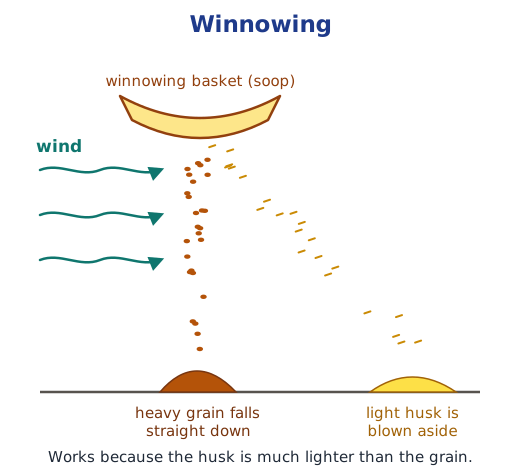
The wind carries the light husk a little distance away, where it forms a separate heap. The heavier grains fall almost straight down. Separating the heavier and lighter parts of a mixture by wind or blowing air is called winnowing. In a closed room with no wind, a fan does the same job.
Today many farmers use machines called threshers, which separate the grains from both the stalks and the husk, doing threshing and winnowing at the same time.
Using the methods one after another
After a wheat harvest, the stalks are threshed to separate the grains, the grains are winnowed to remove the husk, and at home any stones left are handpicked. When the wheat is ground into flour, the bran is removed by sieving, which you can read about in sieving, sedimentation, decantation and filtration.
Think about it
A little puffed rice is mixed with chana dal. You could handpick it, but there is a quicker way: blow gently over the plate, or winnow the mixture, and the light puffed rice is carried away from the heavier dal.
| Method | What it separates | Why it works |
|---|---|---|
| Handpicking | Stones and husk from grains | Different size, colour or shape; few pieces |
| Threshing | Grains from the stalks | Beating loosens the grains |
| Winnowing | Husk from grains | Husk is much lighter than grain |
Practice
-
Which method is used to remove small stones from grains before cooking?
Show answer
Answer: (b) Handpicking
-
Winnowing works because the husk is:
Show answer
Answer: (b) lighter than the grains
-
Beating harvested wheat stalks on a wooden log is called:
Show answer
Answer: (a) threshing
-
Why does the farmer stand on a raised platform while winnowing?
Show answer
Answer: Dropping the grain from a height gives the wind more time to push the light husk away, so the husk falls at a different place from the heavy grains.
-
Valli cannot winnow rice in a closed room. How can you help her?
Show answer
Answer: Switch on a fan, or blow air over the soop as it is tilted. The moving air will carry the light husk away, just like the wind outside.
Questions students ask
What is the difference between threshing and winnowing?
Threshing separates the grains from the stalks by beating them. Winnowing then separates the lighter husk from the heavier grains using wind or blowing air.
When is handpicking a good method?
When the pieces to be removed are present in small amounts, can be picked easily by hand, and look different in size, colour or shape, like stones in wheat or whole black peppers in pulao.
What is a thresher?
A machine that separates grains from the stalks and from the husk. It does the jobs of threshing and winnowing at the same time.
Stuck on a question?
Take a photo and Lagnever AI explains it step by step. Try it for 7 days for ₹2.
Get it on Google Play Open in browser
For parents: after the trial, the plan renews monthly by UPI or card autopay. You can cancel anytime in the app.