
Class 12 Biology Chapter 3: Reproductive Health Notes Hinglish mein
Ye chapter 5 lines mein
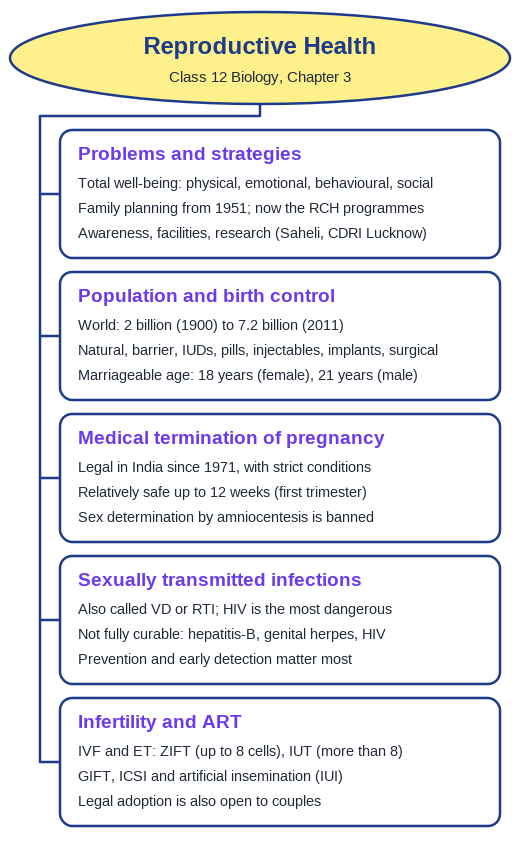
Reproductive health ka matlab hai reproduction ke har pehlu mein poori well-being: physical, emotional, behavioural aur social. India iske liye Reproductive and Child Health Care (RCH) programmes chalata hai. Chapter mein population growth aur contraceptive methods, medical termination of pregnancy (MTP), sexually transmitted infections (STIs), aur infertility ke saath assisted reproductive technologies (ART) aati hain.
Ye chapter kis baare mein hai?
Chapter 2 mein human reproductive system padha. Ye chapter ek bada sawal poochta hai: koi society reproductively healthy kab kehlati hai? Seedhe matlab mein reproductive health yaani swasth reproductive organs jo normal kaam karein. World Health Organisation (WHO) ise bada matlab deta hai: reproduction ke har pehlu mein poori well-being, yaani physical, emotional, behavioural aur social.
Chapter ke paanch hisse hain: problems aur unhe suljhane ki strategies, population growth aur birth control, medical termination of pregnancy, sexually transmitted infections, aur infertility. Chapter chhota hai, par naam, saal aur full forms bahut hain, isliye ise tables aur charts se revise karo.
Reproductive health ki problems aur strategies kya hain?
India un pehle deshon mein tha jinhone reproductive health ke liye national level par action plans shuru kiye. Ye programmes, jinhe family planning kaha gaya, 1951 mein shuru hue aur samay-samay par inki sameeksha hui. Ab bade roop mein ye Reproductive and Child Health Care (RCH) programmes ke naam se chalte hain. Inke do bade kaam hain: reproduction se judi baaton ki awareness badhana, aur reproductively healthy society ke liye facilities aur support dena.
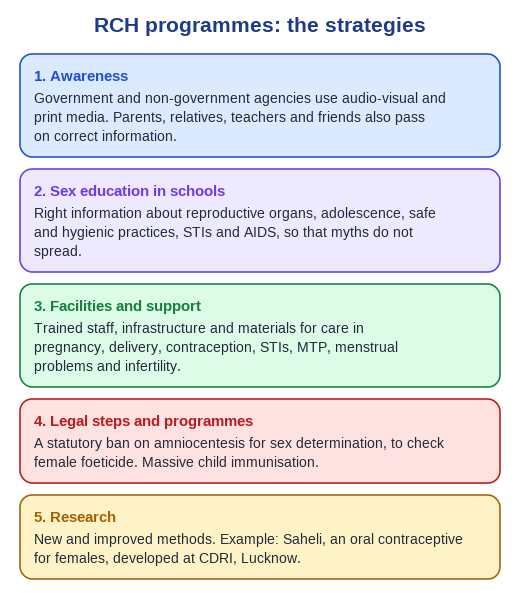
Awareness. Sarkari aur gair-sarkari agencies audio-visual aur print media ka use karti hain. Maa-baap, kareebi rishtedaar, teachers aur dost bhi badi bhoomika nibhate hain. Book kehti hai ki schools mein sex education ko badhava milna chahiye, taaki young logon ko sahi jaankari mile aur wo myths par bharosa na karein. Kaam ki jaankari mein reproductive organs, adolescence aur uske badlaav, safe aur hygienic sexual practices, aur AIDS samet sexually transmitted infections aate hain.
Marriageable age ke logon aur fertile couples ko birth control options, pregnant mothers ki care, maa aur bachche ki post-natal care, breastfeeding ka mahatva, aur male aur female child ke liye baraabar mauke, in sabke baare mein bhi pata hona chahiye. Uncontrolled population growth ki problems aur sex abuse aur sex-related crimes jaisi social evils ki awareness logon ko inhe rokne mein madad karti hai.
Facilities. In plans ke liye mazboot infrastructure, professional expertise aur material support chahiye, taaki logon ko pregnancy, delivery, STIs, abortions, contraception, menstrual problems aur infertility mein medical madad mile.
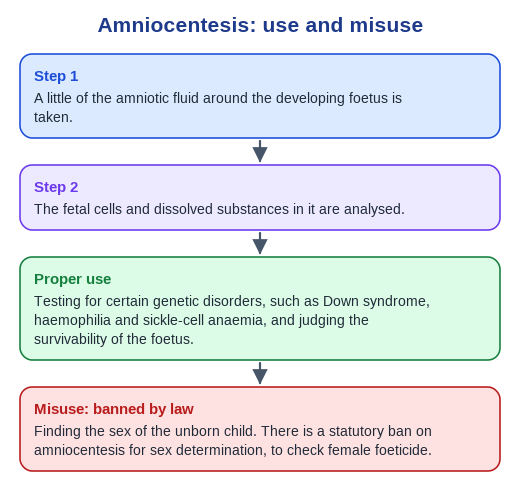
Legal steps aur research. Book do kadam khaas taur par ginati hai: massive child immunisation, aur sex determination ke liye amniocentesis par statutory ban, jo female foeticide ko rokta hai. Research ko bhi support milta hai: females ke liye oral contraceptive Saheli Central Drug Research Institute (CDRI), Lucknow mein bani.
Sudhaar ke sanket. Behtar awareness, zyada medically assisted deliveries, behtar post-natal care jisse maternal aur infant mortality rates ghate, chhote parivaar wale zyada couples, aur STIs ki behtar pehchaan aur ilaaj, ye sab dikhate hain ki society ki reproductive health sudhri hai.
Population itni tezi se kyun badhi?
Pichhli sadi mein behtar health facilities aur living conditions se zindagi ki quality sudhri, aur population bahut tezi se badhi. World population 1900 mein lagbhag 2 billion thi, 2000 tak lagbhag 6 billion aur 2011 mein 7.2 billion. India mein independence ke samay lagbhag 350 million log the, 2000 tak sankhya ek billion ke paas pahunchi aur May 2011 mein 1.2 billion paar kar gayi.
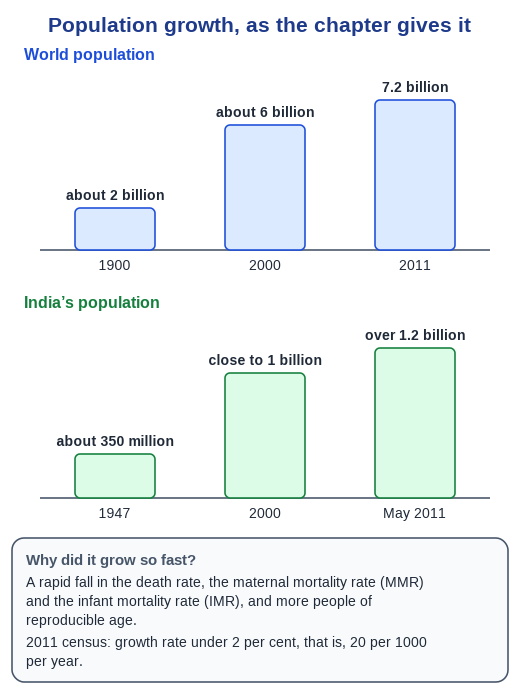
Probable reasons hain death rate, maternal mortality rate (MMR) aur infant mortality rate (IMR) mein tez giraavat, aur reproducible age ke logon ki badhti sankhya. RCH programme se growth rate thoda hi kam hua. 2011 census mein ye 2 per cent se thoda kam tha, yaani 20/1000/year. Is rate par khana, ghar aur kapde jaisi zaroori cheezon ki bhi kami ho sakti hai.
Jo kadam uthaye gaye:
- contraceptive methods se chhote parivaar ke liye prerit karna, slogan Hum Do Hamare Do ke saath; kai young, urban, working couples ne one-child norm bhi apnaya hai;
- kanoon se marriageable age badhakar females ke liye 18 saal aur males ke liye 21 saal karna;
- chhote parivaar wale couples ko incentives.
Birth control ke tareeke kaun se hain?
Ideal contraceptive user-friendly, aasani se milne wala, effective aur reversible hota hai, bina ya kam se kam side effects ke. Wo user ki sexual drive, desire ya act mein rukaavat nahi banta. Book methods ko in groups mein baantti hai: natural ya traditional, barrier, IUDs, oral contraceptives, injectables, implants aur surgical methods.
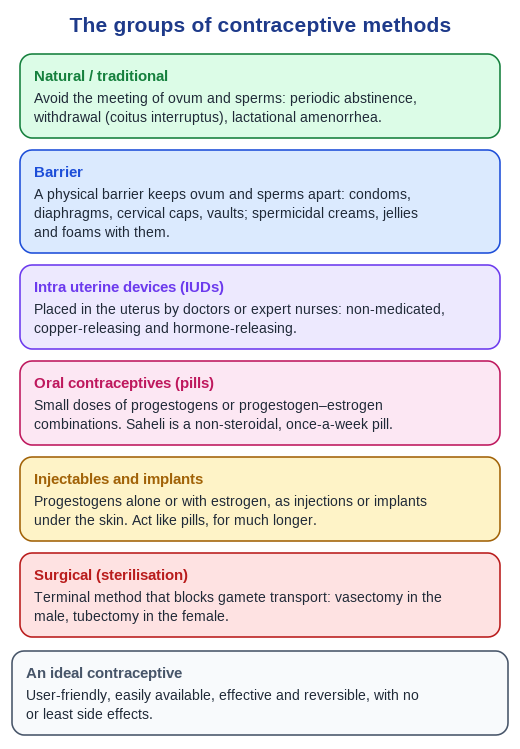
| Group | Principle | Examples |
|---|---|---|
| Natural | Ovum aur sperms ko milne ka mauka nahi milta | Periodic abstinence, withdrawal, lactational amenorrhea |
| Barrier | Physical barrier dono ko alag rakhta hai | Condoms, diaphragms, cervical caps, vaults |
| IUDs | Device uterus mein lagaya jaata hai | Lippes loop, CuT, Multiload 375, LNG-20 |
| Pills | Hormones ovulation aur implantation rokte hain | Progestogen ya progestogen–estrogen pills, Saheli |
| Injectables, implants | Pills jaisa kaam, bahut zyada der tak | Progestogens akele ya estrogen ke saath |
| Surgical | Gamete transport block hota hai | Vasectomy, tubectomy |
Method ka chunaav aur use hamesha qualified medical professionals ki salaah se hona chahiye. Contraceptives reproductive health ki regular zaroorat nahi hain; inka use pregnancy ko rokne, taalne ya bachchon mein antar rakhne ke liye hota hai. Inke possible ill-effects, jaise nausea, abdominal pain, breakthrough bleeding, irregular menstrual bleeding ya breast cancer tak, bahut significant nahi hain, par inhe nazarandaaz nahi karna chahiye. Har method birth control ke tareeke mein samjhaya gaya hai.
Medical termination of pregnancy kya hai?
Medical termination of pregnancy (MTP), ya induced abortion, full term se pehle pregnancy ko jaan-boojhkar ya apni marzi se khatm karna hai. Poori duniya mein saal mein lagbhag 45 se 50 million MTPs hote hain, jo saal ki saari conceived pregnancies ka lagbhag 1/5th hai. Government of India ne MTP ko 1971 mein legal kiya, misuse rokne ke liye sakht sharton ke saath. MTP first trimester mein, yaani 12 weeks tak, relatively safe maana jaata hai; second-trimester abortions kaafi zyada risky hote hain.
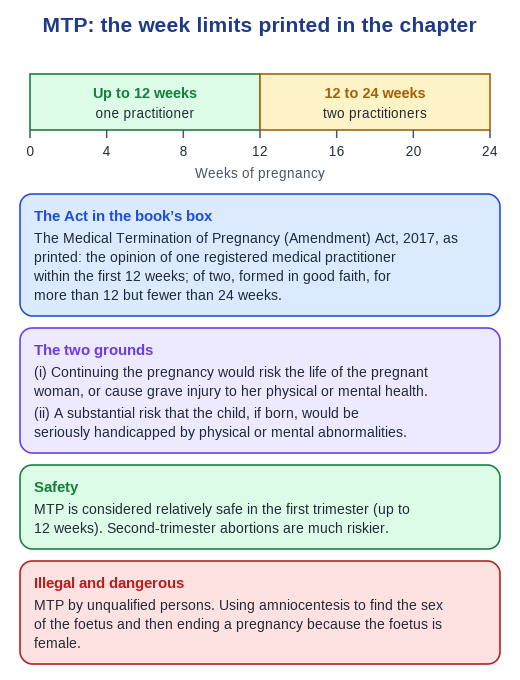
Book ko do trends chinta mein daalte hain: bahut se MTPs unqualified log illegal tareeke se karte hain, aur amniocentesis ka misuse karke unborn child ka sex pata kiya jaata hai, aur foetus female ho to MTP kar diya jaata hai. Dono illegal aur khatarnaak hain.
Sexually transmitted infections kya hain?
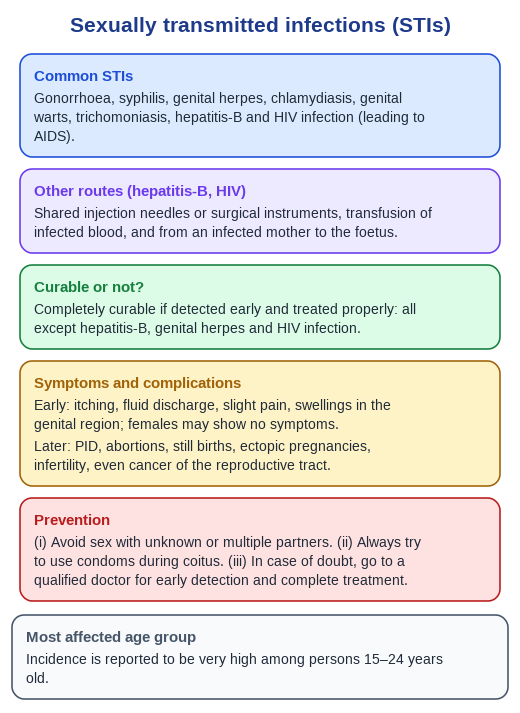
Sexual intercourse se phailne wale infections ko sexually transmitted infections (STIs), venereal diseases (VD) ya reproductive tract infections (RTI) kehte hain. Common STIs hain gonorrhoea, syphilis, genital herpes, chlamydiasis, genital warts, trichomoniasis, hepatitis-B aur HIV infection, jisse AIDS hota hai. Hepatitis-B, genital herpes aur HIV infection ko chhodkar baaki sab jaldi pata chalne aur sahi ilaaj se poori tarah curable hain. Bachaav teen simple principles par tika hai: unknown ya multiple partners ke saath sex se bacho, coitus ke dauraan hamesha condom use karne ki koshish karo, aur shak hone par jaldi qualified doctor ke paas jao.
Infertility kya hai, aur ART kaise madad karti hai?
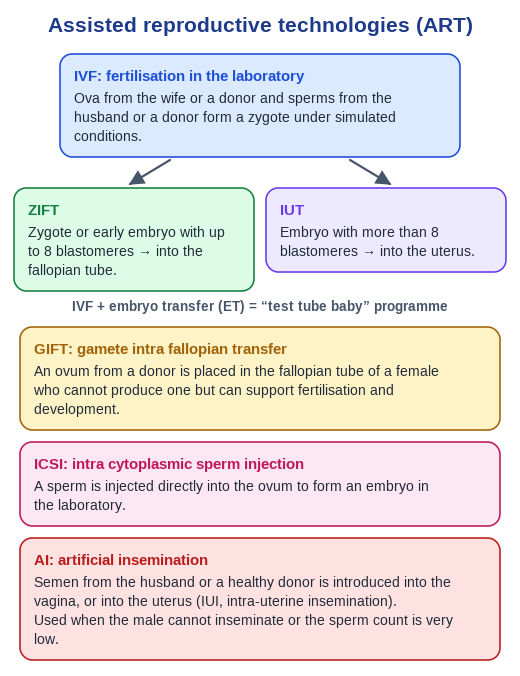
Couple infertile tab kehlata hai jab unprotected sexual cohabitation ke baad bhi wo bachche paida nahi kar paate. Wajah dono mein se kisi bhi partner mein ho sakti hai. Infertility clinics kuch disorders ko pehchaan kar theek kar sakte hain. Jahan ye mumkin nahi, wahan assisted reproductive technologies (ART) madad karti hain: IVF ke baad embryo transfer (ZIFT ya IUT), GIFT, ICSI aur artificial insemination. Legal adoption bhi parenthood ka ek achchha raasta hai. MTP, STIs aur ART STIs aur infertility mein padho.
Aage badhne se pehle
Is chapter ko lists ki tarah yaad karo: strategies, contraceptives ke saat groups ek-ek example ke saath, MTP ke facts, STIs aur ART ke full forms. Saari 12 exercises ke jawab Chapter 3 ke NCERT solutions mein hain.
Key terms (zaroori shabd)
| Term | Matlab |
|---|---|
| Reproductive health | Reproduction ke har pehlu mein poori well-being: physical, emotional, behavioural aur social (book mein WHO ka diya matlab). |
| RCH programmes | Reproductive and Child Health Care programmes: reproduction se jude areas mein awareness, facilities aur support ke liye India ke abhi ke programmes. |
| Amniocentesis | Ek test jisme developing foetus ka thoda amniotic fluid lekar fetal cells aur ghule hue substances ki jaanch hoti hai. Sex determination ke liye iska use banned hai. |
| Contraceptive | Aisa tareeka ya device jo conception rokta hai. Ideal contraceptive user-friendly, aasani se milne wala, effective aur reversible hota hai, bina ya kam se kam side effects ke. |
| Periodic abstinence | Natural method: menstrual cycle ke din 10 se din 17 tak coitus nahi, kyunki ye fertile period hai jab ovulation ho sakta hai. |
| Lactational amenorrhea | Bachche ke janm ke baad intense breastfeeding ke dauraan menstruation ka na hona. Contraceptive method ke roop mein ye zyada se zyada chhah mahine tak kaam karta hai. |
| IUD | Intra uterine device, jise doctor ya expert nurse uterus mein lagate hain: non-medicated, copper-releasing ya hormone-releasing. |
| Saheli | Females ke liye non-steroidal oral contraceptive, hafte mein ek baar; Central Drug Research Institute (CDRI), Lucknow mein bani. |
| Vasectomy aur tubectomy | Male mein sterilisation (vas deferens ka ek hissa nikalna ya baandhna) aur female mein sterilisation (fallopian tube ka ek hissa nikalna ya baandhna). |
| MTP | Medical termination of pregnancy ya induced abortion: full term se pehle pregnancy ko jaan-boojhkar khatm karna. India mein 1971 se legal, sakht sharton ke saath. |
| STIs | Sexually transmitted infections, jinhe venereal diseases (VD) ya reproductive tract infections (RTI) bhi kehte hain: sexual intercourse se phailne wale infections. |
| Infertility | Unprotected sexual cohabitation ke baad bhi couple ka bachche paida na kar paana (summary ke hisaab se 2 saal baad bhi). |
| ART | Assisted reproductive technologies: khaas techniques jaise IVF ke saath embryo transfer, GIFT, ICSI aur artificial insemination. |
| IVF aur ET | In vitro fertilisation (laboratory mein, body jaisi conditions mein) aur uske baad embryo transfer: test tube baby programme. |
Is chapter ke topics
Practice karo
-
India mein family planning programmes kab shuru hue?
Jawab dekho
Jawab: (b) 1951
-
Inme se copper-releasing IUD kaun sa hai?
Jawab dekho
Jawab: (c) Multiload 375
-
Hafte mein ek baar li jaane wali oral contraceptive Saheli kahan bani?
Jawab dekho
Jawab: (b) CDRI, Lucknow
-
ZIFT mein zygote ya early embryo kahan transfer hota hai?
Jawab dekho
Jawab: (c) fallopian tube
-
Inme se kaun sa STI jaldi pata chalne par bhi poori tarah curable NAHI hai?
Jawab dekho
Jawab: (c) genital herpes
-
Emergency contraceptives coitus ke kitne ghante ke andar effective hote hain?
Jawab dekho
Jawab: (d) 72
Students ke sawal
Class 12 Biology Chapter 3 ke main topics kya hain?
Reproductive health aur RCH programmes, population stabilisation aur birth control ke tareeke, medical termination of pregnancy (MTP), sexually transmitted infections (STIs), aur infertility ke saath assisted reproductive technologies (ART).
Kya Reproductive Health 2026-27 ki NCERT Class 12 Biology book mein hai?
Haan. Ye Unit VI, Reproduction, ka Chapter 3 hai, Class 12 ki textbook Biology (Reprint 2026-27) ke pages 41 se 50 par. Isme 12 end-of-chapter exercises hain.
Book ke hisaab se reproductive health ka matlab kya hai?
Book World Health Organisation ka matlab leti hai: reproduction ke har pehlu, yaani physical, emotional, behavioural aur social, mein poori well-being. Ye sirf normal reproductive organs hone se zyada hai.
Is chapter se kaun se full forms yaad karne chahiye?
RCH, MMR, IMR, IUD, MTP, STI, VD, RTI, PID, ART, IVF, ET, ZIFT, IUT, GIFT, ICSI, AI aur IUI. Har ek in pages par wahan samjhaya gaya hai jahan wo pehli baar aata hai.
Koi sawal atak gaya?
Photo lo, Lagnever AI step-by-step samjhayega. 7 din ka trial sirf ₹2.
Google Play se app lo Browser mein kholo
Parents ke liye: trial ke baad plan har mahine UPI ya card autopay se renew hota hai. App mein kabhi bhi cancel kar sakte hain.