
Transcription aur translation kya hain?
Short mein jawab
Transcription mein DNA ke ek segment ka ek strand RNA mein copy hota hai; ye kaam DNA-dependent RNA polymerase complementarity ke rule se karta hai. Translation mein ribosome par amino acids judkar polypeptide banate hain. mRNA ke triplet codons ka sequence, jise tRNA ke anticodons padhte hain, amino acids ka order tay karta hai.
Koi sawal atak gaya? Photo lo, Lagnever AI step-by-step samjhayega. 7 din ka trial sirf ₹2. Google Play se app lo
Transcription unit kya hai?
Transcription mein DNA ke ek strand ki genetic information RNA mein copy hoti hai. DNA ka sirf ek segment copy hota hai, aur uska bhi sirf ek strand. Transcription unit ke teen regions hote hain: promoter, structural gene aur terminator.
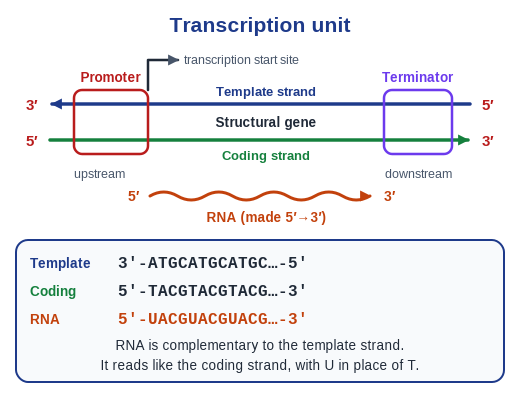
DNA-dependent RNA polymerase sirf 5′→3′ polymerise karta hai. Isliye 3′→5′ polarity wala strand template strand hai. Doosra strand, 5′→3′, ka sequence RNA jaisa hi hai (uracil ki jagah thymine) aur use coding strand kehte hain, halanki wo kisi cheez ke liye code nahi karta.
Saari positions coding strand par batayi jaati hain. Promoter uske 5′-end ki taraf (upstream) hota hai aur RNA polymerase ko binding site deta hai. Terminator uske 3′-end ki taraf (downstream) hota hai aur aam taur par transcription ka end batata hai.
Cistron DNA ka wo segment hai jo ek polypeptide ke liye code karta hai. Structural genes eukaryotes mein zyada-tar monocistronic aur bacteria mein polycistronic hote hain. Eukaryotic genes split hote hain: exons mature RNA mein aate hain, aur introns unhe interrupt karte hain.
Bacteria mein transcription kaise hota hai?
Bacteria mein teen major RNAs hain: mRNA template deta hai, tRNA amino acids laata hai aur code padhta hai, aur rRNAs structural aur catalytic role nibhate hain. Ek hi DNA-dependent RNA polymerase in sabko banata hai.
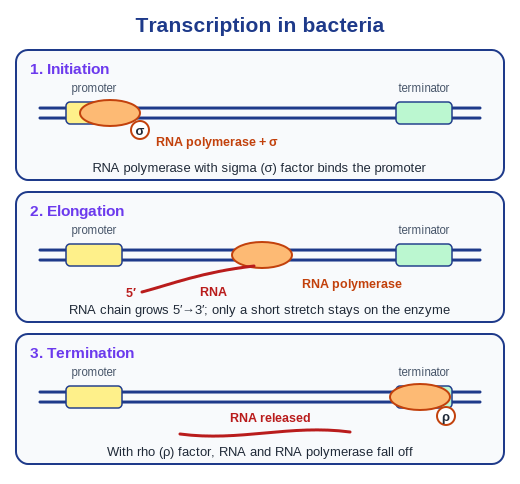
- Initiation: RNA polymerase promoter se judta hai. Ye thodi der ke liye initiation factor (σ) ke saath judta hai.
- Elongation: nucleoside triphosphates ko substrate ki tarah use karke ye complementarity ke rule se RNA polymerise karta hai aur helix kholne mein madad karta hai. RNA ka sirf chhota hissa enzyme se juda rehta hai.
- Termination: terminator par, termination factor (ρ) ke saath, naya RNA aur polymerase alag ho jaate hain.
Bacterial mRNA ko processing nahi chahiye aur alag nucleus nahi hota, isliye transcription aur translation coupled ho sakte hain.
Eukaryotes mein kya alag hai?
- Nucleus mein kam se kam teen RNA polymerases hote hain. RNA polymerase I rRNAs (28S, 18S aur 5.8S) transcribe karta hai. RNA polymerase II mRNA ka precursor, heterogeneous nuclear RNA (hnRNA), transcribe karta hai. RNA polymerase III tRNA, 5S rRNA aur snRNAs transcribe karta hai.
- Primary transcript mein exons aur introns dono hote hain aur ye non-functional hota hai. Iski processing hoti hai.
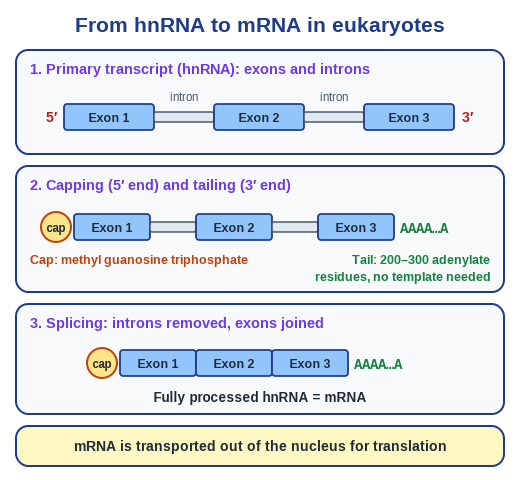
- Splicing: introns hataye jaate hain aur exons ek defined order mein jode jaate hain.
- Capping: 5′-end par ek unusual nucleotide, methyl guanosine triphosphate, judta hai.
- Tailing: 3′-end par bina template ke 200–300 adenylate residues judte hain.
Poori tarah processed hnRNA hi mRNA hai, jo translation ke liye nucleus se bahar jaata hai.
Genetic code ke features kya hain?
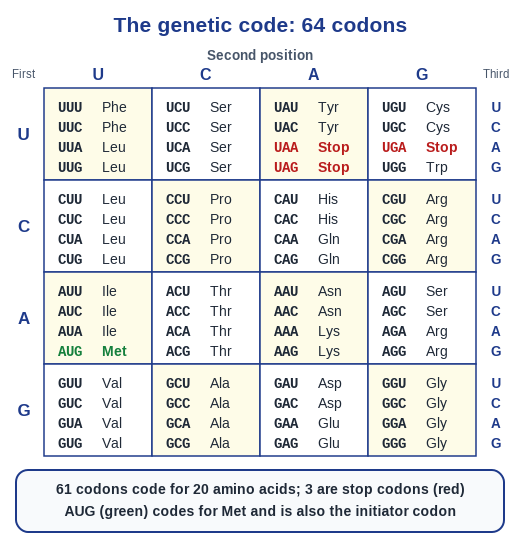
- Codon triplet hai. 61 codons amino acids ke liye code karte hain; 3 nahi karte aur stop codons hain.
- Code degenerate hai: kuch amino acids ke ek se zyada codons hain.
- Codons ek ke baad ek padhe jaate hain, bina punctuation ke.
- Code nearly universal hai: bacteria se humans tak UUU phenylalanine ke liye code karta hai. Kuch exceptions mitochondrial codons aur kuch protozoans mein hain.
- AUG methionine ke liye code karta hai aur initiator codon bhi hai.
- UAA, UAG aur UGA stop (terminator) codons hain.
tRNA code kaise padhta hai?
Francis Crick ne ek aise adapter ki baat kahi jo code bhi padhe aur amino acid se bhi jude. Wo adapter tRNA hai, jise pehle sRNA (soluble RNA) kehte the.
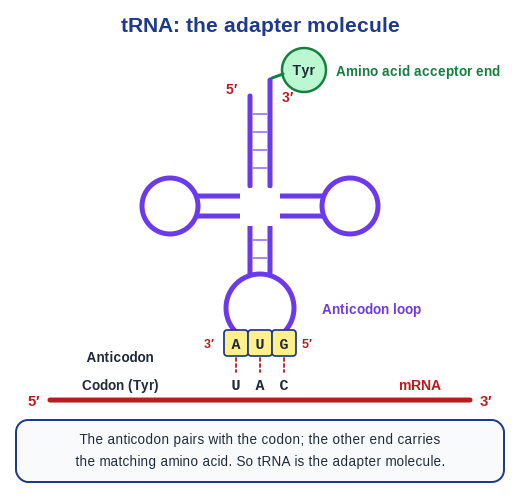
tRNA mein ek anticodon loop hota hai, jiske bases codon ke complementary hote hain, aur ek amino acid acceptor end. Har amino acid ke apne specific tRNAs hote hain. Ek special initiator tRNA hota hai, aur stop codons ke liye koi tRNA nahi hota. Secondary structure clover leaf jaisa dikhta hai; asli molecule compact hota hai aur ulte L jaisa dikhta hai.
Polypeptide kaise banta hai?
Translation mein amino acids peptide bonds se judte hain. Sabse pehle amino acids ATP se activate hokar apne tRNA se judte hain. Ise tRNA ki charging, ya aminoacylation, kehte hain.
Ribosome mein structural RNAs aur lagbhag 80 alag proteins hote hain. Inactive state mein ye ek large aur ek small subunit ke roop mein rehta hai. Large subunit mein do sites hoti hain jahan charged tRNAs itne paas baithte hain ki peptide bond ban sake. Ribosome catalyst bhi hai: bacteria mein 23S rRNA enzyme ka kaam karta hai, yaani ribozyme.
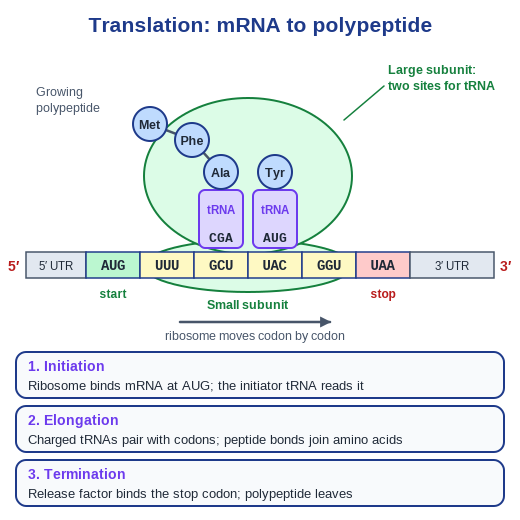
- Initiation: small subunit mRNA se milta hai, aur ribosome start codon (AUG) par judta hai, jise sirf initiator tRNA pehchanta hai.
- Elongation: charged tRNAs ek ke baad ek, apne anticodons ki base pairing se, sahi codons se judte hain. Ribosome codon se codon aage badhta hai aur amino acids ek-ek karke judte jaate hain.
- Termination: stop codon se ek release factor judta hai. Translation ruk jaata hai aur poora polypeptide release ho jaata hai.
Picture ke codons hamara apna example hain; unke amino acids codon table se padhe gaye hain.
Wapas Chapter 5 ke notes par, ya aage Human Genome Project aur DNA fingerprinting aur NCERT solutions par.
Practice karo
-
Agar coding strand 5′-TACG-3′ hai, to transcribe hua RNA hai:
Jawab dekho
Jawab: (a) 5′-UACG-3′
-
Eukaryotes mein mRNA ka precursor (hnRNA) kaun transcribe karta hai?
Jawab dekho
Jawab: (b) RNA polymerase II
-
Kitne codons amino acids ke liye code karte hain?
Jawab dekho
Jawab: (b) 61
-
Genetic code ko degenerate kyun kehte hain?
Jawab dekho
Jawab: Kyunki kuch amino acids ke liye ek se zyada codons hote hain. Jaise UUU aur UUC dono phenylalanine ke liye code karte hain.
-
UTRs kya hain?
Jawab dekho
Jawab: Untranslated regions: mRNA ke wo sequences jo translate nahi hote. Ye 5′-end par start codon se pehle aur 3′-end par stop codon ke baad hote hain, aur efficient translation ke liye zaroori hain.
Students ke sawal
DNA ka sirf ek strand kyun transcribe hota hai?
Agar dono strands copy hote, to ek DNA segment se do alag RNAs aur isliye do alag proteins bante. Dono RNAs complementary bhi hote aur double-stranded RNA bana lete, jo translate nahi ho sakta.
Exon aur intron mein kya fark hai?
Exons coding ya expressed sequences hain jo mature, processed RNA mein aate hain. Introns beech ke sequences hain jo exons ko interrupt karte hain aur mature RNA mein nahi aate; splicing inhe hata deti hai.
Bacteria mein transcription aur translation coupled kyun ho sakte hain?
Bacterial mRNA ko processing nahi chahiye, aur dono processes ek hi compartment mein hote hain kyunki alag nucleus nahi hota. mRNA ke poora banne se kaafi pehle translation shuru ho sakta hai.
tRNA ko adapter molecule kyun kehte hain?
Ek taraf iska anticodon mRNA ka codon padhta hai; doosri taraf iska acceptor end ek specific amino acid se judta hai. Ye code ko amino acid se jodta hai.
Koi sawal atak gaya?
Photo lo, Lagnever AI step-by-step samjhayega. 7 din ka trial sirf ₹2.
Google Play se app lo Browser mein kholo
Parents ke liye: trial ke baad plan har mahine UPI ya card autopay se renew hota hai. App mein kabhi bhi cancel kar sakte hain.