
What are oxidation and reduction?
Answer in short
Oxidation is the gain of oxygen or the loss of hydrogen by a substance. Reduction is the loss of oxygen or the gain of hydrogen. The two happen together: when one reactant is oxidised, another is reduced, and the reaction is called a redox reaction. Corrosion of metals and rancidity of food are everyday effects of oxidation.
Stuck on a question? Take a photo and Lagnever AI explains it step by step. Try it for 7 days for ₹2. Get it on Google Play
What happens when copper is heated in air?
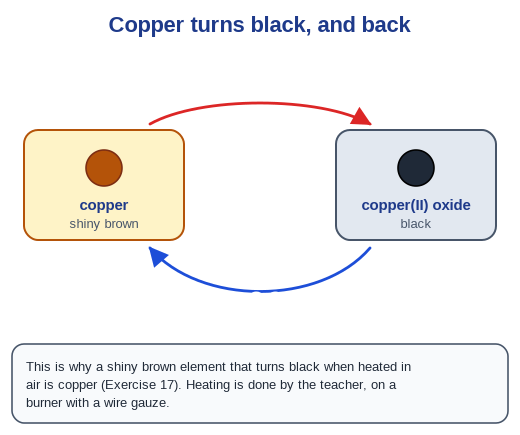
Put about a gram of brown copper powder in a china dish and let your teacher heat it. Its surface turns black. Oxygen from the air has joined the copper to form black copper(II) oxide:
2Cu + O₂ → 2CuO
When a substance gains oxygen, we say it is oxidised. Now pass hydrogen gas over the hot black powder. The black coating turns brown again, because the reverse change takes place:
CuO + H₂ → Cu + H₂O
Here copper(II) oxide loses oxygen, so it is reduced. At the same moment, hydrogen gains that oxygen and becomes water, so hydrogen is oxidised. A shiny brown metal that turns black on heating in air is therefore copper.
What is a redox reaction?
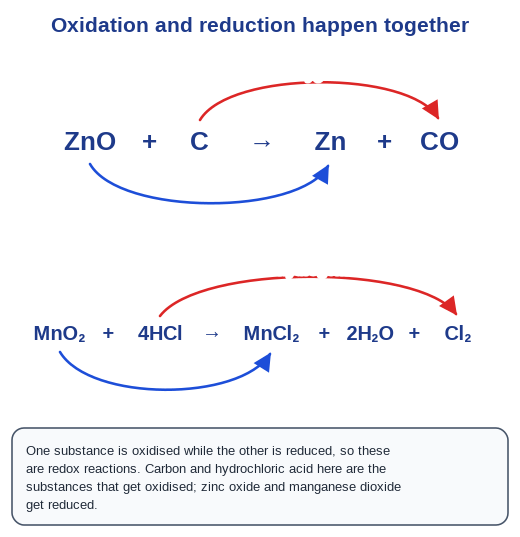
Oxidation and reduction always go together. If one substance takes oxygen, another must give it up. A reaction in which one reactant is oxidised while another is reduced is an oxidation-reduction reaction, or redox reaction for short. Two more examples from the book:
- ZnO + C → Zn + CO. Carbon gains oxygen and is oxidised to carbon monoxide; zinc oxide loses oxygen and is reduced to zinc.
- MnO₂ + 4HCl → MnCl₂ + 2H₂O + Cl₂. Hydrochloric acid loses hydrogen and is oxidised to chlorine; manganese dioxide loses oxygen and is reduced.
How do we tell oxidation from reduction?
The second example shows that oxygen alone is not the whole story. The full rules, as the chapter gives them:
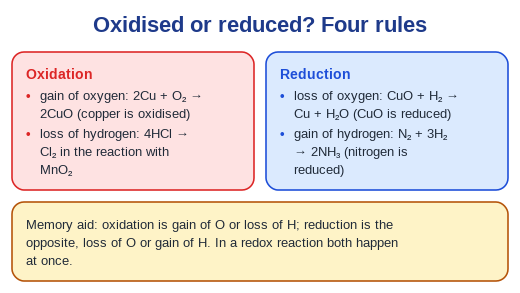
- A substance is oxidised if it gains oxygen or loses hydrogen.
- A substance is reduced if it loses oxygen or gains hydrogen.
Magnesium burning in air gains oxygen to become magnesium oxide, so magnesium is oxidised. In 4Na + O₂ → 2Na₂O, sodium is oxidised. When you name the substance oxidised or reduced, always name a reactant, not a product.
What is corrosion?
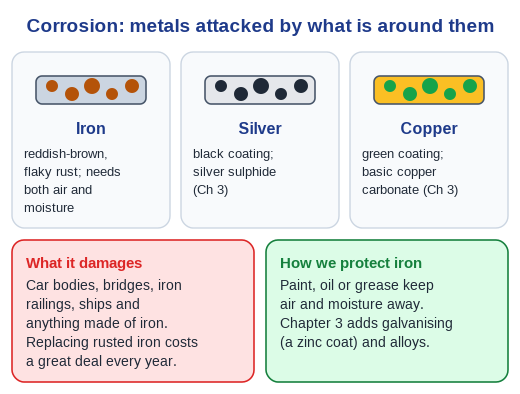
New iron is shiny, but left in damp air it gets a coat of reddish-brown powder: it rusts. Silver articles turn black and copper gets a green coat. When a metal is attacked by the substances around it, such as moisture, air and acids, it corrodes, and the process is called corrosion. It damages car bodies, bridges, iron railings and ships, and a great deal of money is spent every year to replace rusted iron. Painting, oiling or greasing iron keeps air and moisture away and stops rust. Chapter 3 explains that iron rusts only when both air and water reach it, and shows more ways to protect it.
What is rancidity?
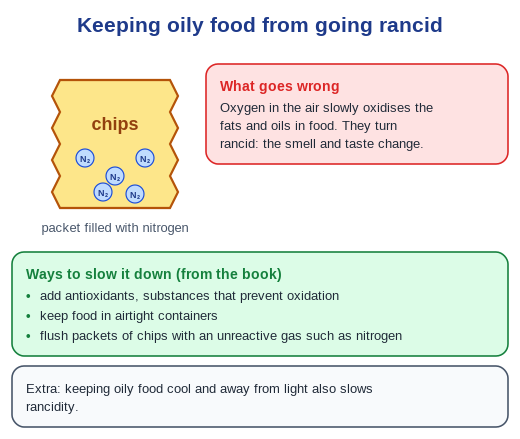
Smell a packet of namkeen or a tin of ghee that has been left open for weeks. It smells and tastes stale. Fats and oils react slowly with oxygen from the air; once oxidised, they are rancid. The chapter gives three ways to slow this down:
- add antioxidants, substances that prevent oxidation, to food that contains fats and oils;
- keep such food in airtight containers;
- flush packets with an unreactive gas: makers of chips usually fill the bags with nitrogen, which keeps the oxygen out.
A tip for the board exam
For any equation, write down which reactant gains oxygen or loses hydrogen (oxidised) and which loses oxygen or gains hydrogen (reduced). Exercise 1 of the chapter tests exactly this, and its answer is worked out on the NCERT solutions page.
Back to types of chemical reactions or the chapter notes.
Practice
-
In 4Na + O₂ → 2Na₂O, sodium is:
Show answer
Answer: (b) oxidised
-
In ZnO + C → Zn + CO, the substance reduced is:
Show answer
Answer: (c) ZnO
-
Green coating on old copper vessels is an example of:
Show answer
Answer: (b) corrosion
-
Why is iron painted?
Show answer
Answer: Paint keeps air and moisture away from the iron, so it cannot rust.
-
In CuO + H₂ → Cu + H₂O, name the substance oxidised and the substance reduced.
Show answer
Answer: Hydrogen is oxidised (it gains oxygen to form water); copper(II) oxide is reduced (it loses oxygen to form copper).
Questions students ask
What is a redox reaction?
A reaction in which one reactant is oxidised while another is reduced. In CuO + H₂ → Cu + H₂O, copper(II) oxide loses oxygen and is reduced, while hydrogen gains oxygen and is oxidised.
Why does copper turn black when heated?
Hot copper combines with oxygen from the air and forms black copper(II) oxide: 2Cu + O₂ → 2CuO. The copper has been oxidised.
What is the difference between corrosion and rancidity?
Both are slow oxidation. Corrosion attacks metals, such as iron rusting; rancidity spoils fats and oils in food, changing their smell and taste.
Why are chips packets filled with nitrogen?
Nitrogen is unreactive. Filling the packet with it keeps oxygen away from the oil in the chips, so they do not turn rancid as quickly.
Stuck on a question?
Take a photo and Lagnever AI explains it step by step. Try it for 7 days for ₹2.
Get it on Google Play Open in browser
For parents: after the trial, the plan renews monthly by UPI or card autopay. You can cancel anytime in the app.