
Class 12 Chemistry Chapter 10: Biomolecules Notes
This chapter in five lines
Biomolecules are the molecules of living things. Carbohydrates are polyhydroxy aldehydes or ketones; glucose closes into α and β rings. Proteins are chains of α-amino acids joined by peptide bonds; enzymes are protein catalysts. Vitamins are needed in small amounts. Nucleic acids, DNA and RNA, carry heredity and make proteins; hormones are chemical messengers.
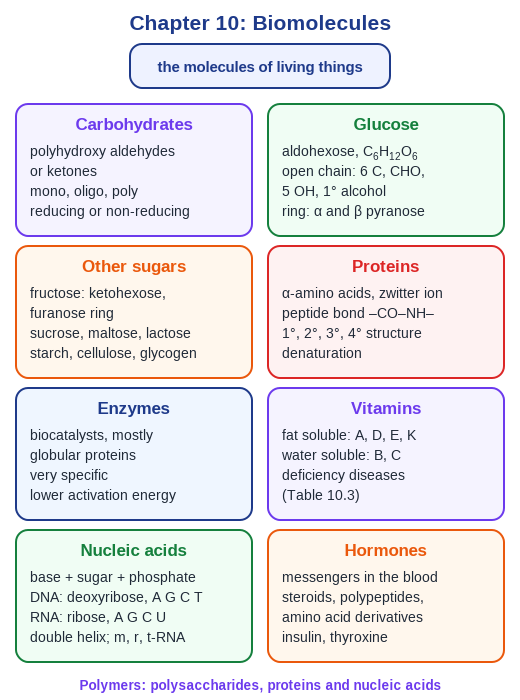
What is this chapter about?
A living cell is built from atoms that are not alive. The chemistry of what happens inside it is biochemistry, and its large molecules are biomolecules: carbohydrates, proteins, nucleic acids and lipids. Small molecules such as vitamins and mineral salts also matter. This unit describes the structures and roles of carbohydrates, proteins, enzymes, vitamins, nucleic acids and hormones. It is Unit 10, the last unit of Chemistry Part II, and it uses ideas from earlier units: aldehydes and ketones (Unit 8), amines (Unit 9) and optical activity (Unit 6).
How structures are written on this site. Condensed formulas: a group in brackets hangs from the carbon written just before it, so R–CH(NH₂)–COOH has –NH₂ on the carbon next to –COOH. Ring drawings follow the book’s Haworth style: the ring lies flat with its thick edge towards you, and groups point straight up or down.
What are carbohydrates?
Carbohydrates are made mainly by plants. Many have the formula Cx(H₂O)y, which is how they got their name (“hydrates of carbon”): glucose, C₆H₁₂O₆, is C₆(H₂O)₆. The formula is not a reliable test, though. Acetic acid fits it but is not a carbohydrate, and rhamnose, C₆H₁₂O₅, is a carbohydrate that does not fit. The chemical definition is better: carbohydrates are optically active polyhydroxy aldehydes or ketones, or compounds that give such units on hydrolysis. Sweet ones are called sugars; cane sugar is sucrose and milk sugar is lactose.
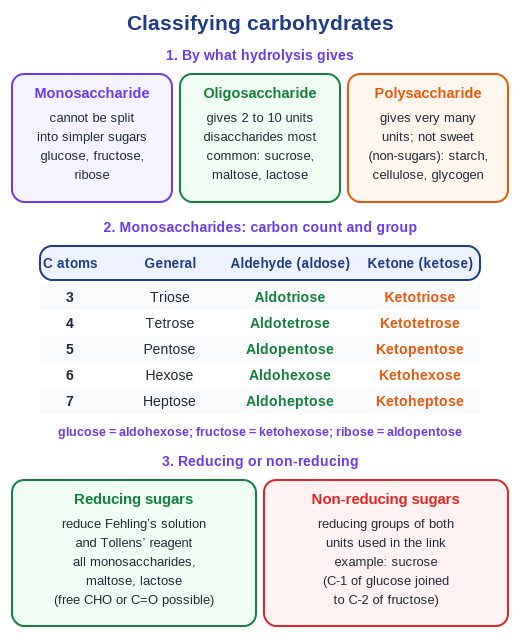
They are classified in two ways:
- By hydrolysis: monosaccharides (cannot be broken into simpler sugars; about 20 occur in nature), oligosaccharides (2 to 10 units) and polysaccharides (a very large number of units; not sweet, so also called non-sugars).
- By reducing power: sugars that reduce Fehling’s solution and Tollens’ reagent are reducing sugars. Every monosaccharide, aldose or ketose, is reducing.
Monosaccharides are named by their group and carbon count: an aldohexose has a –CHO group and six carbons, a ketopentose a keto group and five carbons (Table 10.1 of the book).
Glucose: how is it made, and what is its structure?
Glucose occurs uncombined in sweet fruits, honey and ripe grapes, and combined in larger carbohydrates. Two preparations:
- From sucrose: boiling with dilute HCl or H₂SO₄ in alcoholic solution gives glucose and fructose in equal amounts: C₁₂H₂₂O₁₁ + H₂O → C₆H₁₂O₆ + C₆H₁₂O₆.
- From starch (commercial): boiling with dilute H₂SO₄ at 393 K under 2–3 atm pressure: (C₆H₁₀O₅)ₙ + nH₂O → nC₆H₁₂O₆.
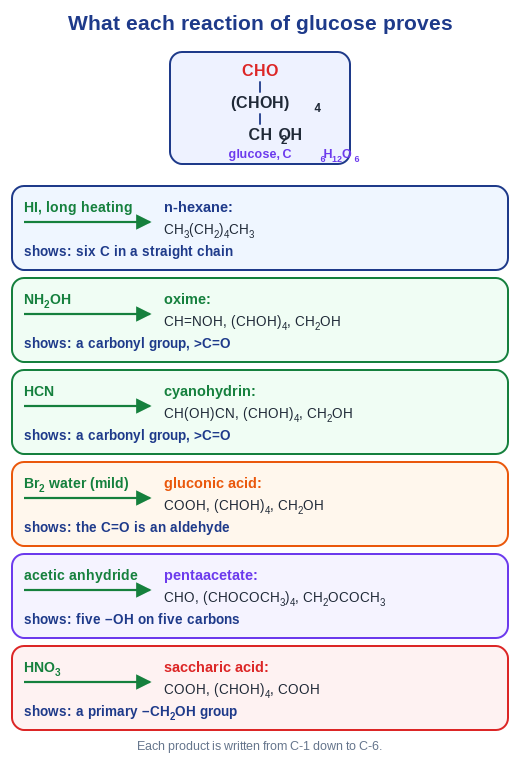
Glucose (dextrose) is an aldohexose and the monomer of starch and cellulose. Its open-chain structure, CHO–(CHOH)₄–CH₂OH, was worked out from six facts: the formula C₆H₁₂O₆; n-hexane on long heating with HI (a straight chain); an oxime with hydroxylamine and a cyanohydrin with HCN (a carbonyl group); gluconic acid with bromine water (the carbonyl is an aldehyde); a stable pentaacetate with acetic anhydride (five –OH groups on five different carbons); and saccharic acid, a dicarboxylic acid, with nitric acid (a primary alcohol group).
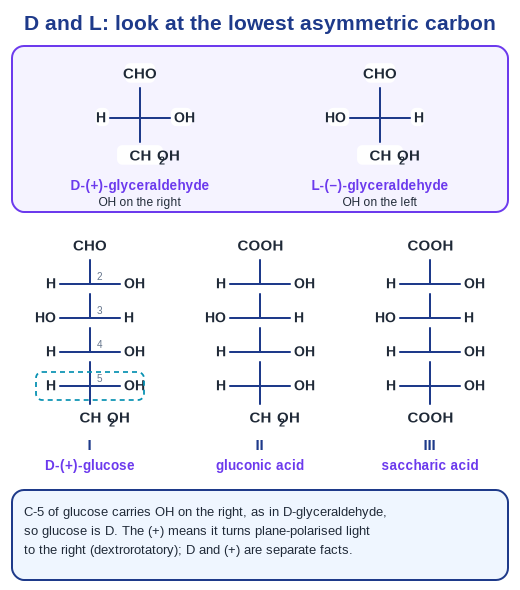
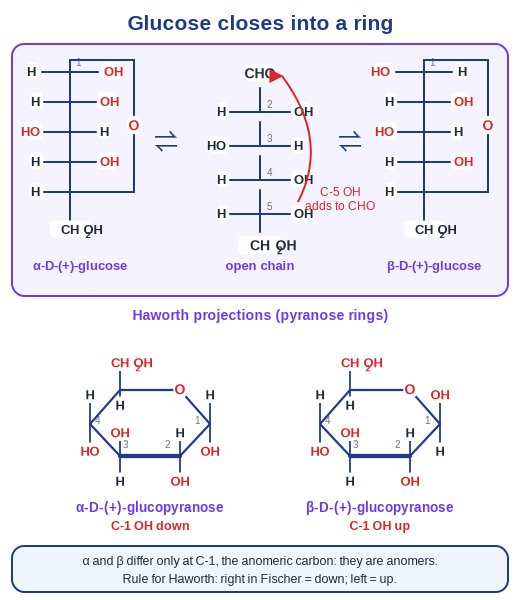
Fischer worked out the arrangement of the –OH groups. Glucose is D-(+)-glucose: D because the –OH on C-5, the lowest asymmetric carbon, is on the right, as in D-(+)-glyceraldehyde; (+) because it is dextrorotatory. D and L describe configuration only and are not related to the sign of rotation, nor to the old d and l.
The ring form. Some facts do not fit the open chain: glucose gives no Schiff’s test and no hydrogensulphite product with NaHSO₃, its pentaacetate does not react with hydroxylamine, and it crystallises in two forms, α (m.p. 419 K, from a concentrated solution at 303 K) and β (m.p. 423 K, from a hot saturated solution at 371 K). The answer: the –OH on C-5 adds to the –CHO group to form a six-membered cyclic hemiacetal. C-1 becomes a new asymmetric centre (the anomeric carbon), so there are two anomers, α and β, in equilibrium with a small amount of the open chain. The ring has five carbons and one oxygen, like pyran, so it is a pyranose ring, most clearly drawn as a Haworth projection.
Read more in carbohydrates and glucose.
Fructose
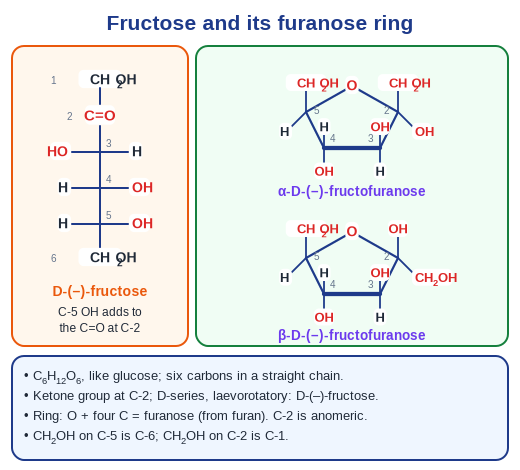
Fructose, C₆H₁₂O₆, is a ketohexose found in fruits, honey and vegetables and obtained with glucose from sucrose. It has a keto group at C-2 and six carbons in a straight chain, belongs to the D-series and is laevorotatory: D-(–)-fructose. The –OH on C-5 adds to the C=O at C-2 to give a five-membered ring of four carbons and an oxygen, a furanose ring (after furan), again as α and β anomers.
Disaccharides
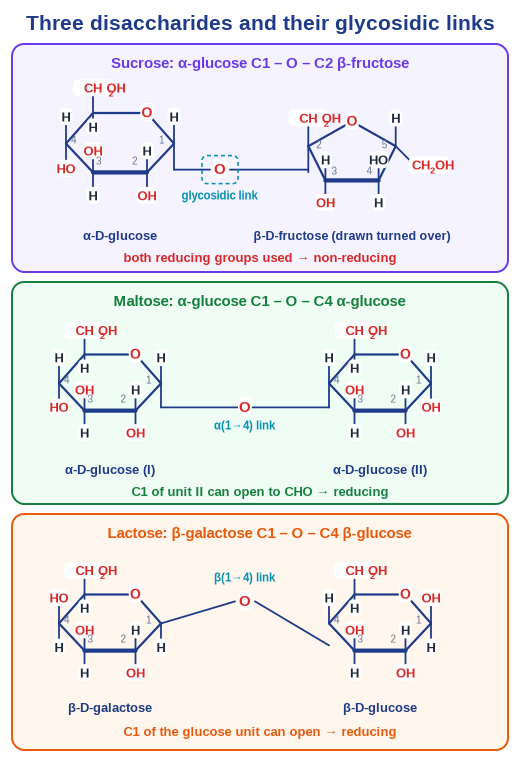
Two monosaccharide units joined through an oxygen atom, with loss of water, form a glycosidic linkage. If the link uses the reducing groups of both units, the sugar is non-reducing.
- Sucrose: C-1 of α-D-glucose is joined to C-2 of β-D-fructose. Both reducing groups are used, so sucrose is non-reducing. It is dextrorotatory, but hydrolysis gives glucose (+52.5°) and fructose (–92.4°); fructose wins, the mixture is laevorotatory, and it is called invert sugar.
- Maltose: two α-D-glucose units, C-1 of one joined to C-4 of the other. C-1 of the second unit can open to give an aldehyde group, so maltose is reducing.
- Lactose (milk sugar): β-D-galactose and β-D-glucose, C-1 of galactose joined to C-4 of glucose. Reducing, because C-1 of the glucose unit is not tied up in the link.
Polysaccharides
Polysaccharides are long chains of monosaccharide units, the commonest carbohydrates in nature, used for storage or structure.
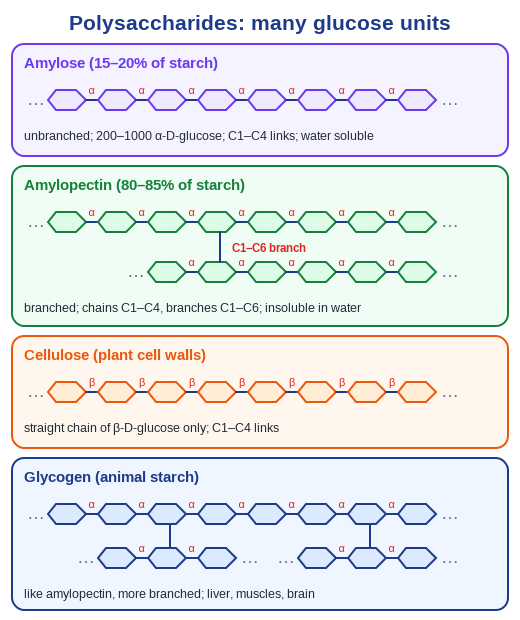
- Starch, the main storage polysaccharide of plants and our main dietary carbohydrate (cereals, roots, tubers), is a polymer of α-glucose with two parts: amylose (15–20%, water soluble, an unbranched chain of 200–1000 α-D-(+)-glucose units joined C1–C4) and amylopectin (80–85%, insoluble, chains joined C1–C4 with branches joined C1–C6).
- Cellulose, the most abundant organic substance of the plant kingdom and the main part of plant cell walls, is a straight chain of β-D-glucose units joined C1–C4.
- Glycogen, the store in animals (liver, muscles, brain; also yeast and fungi), is called animal starch: it is like amylopectin but more highly branched. Enzymes break it down to glucose when the body needs it.
Why they matter. Carbohydrates form a major part of food; honey has long been used in ayurveda as a quick source of energy. They store energy (starch in plants, glycogen in animals), build plant cell walls (cellulose, which we use as wood and cotton), and supply industries such as textiles, paper, lacquers and breweries. D-ribose and 2-deoxy-D-ribose are parts of nucleic acids.
Proteins
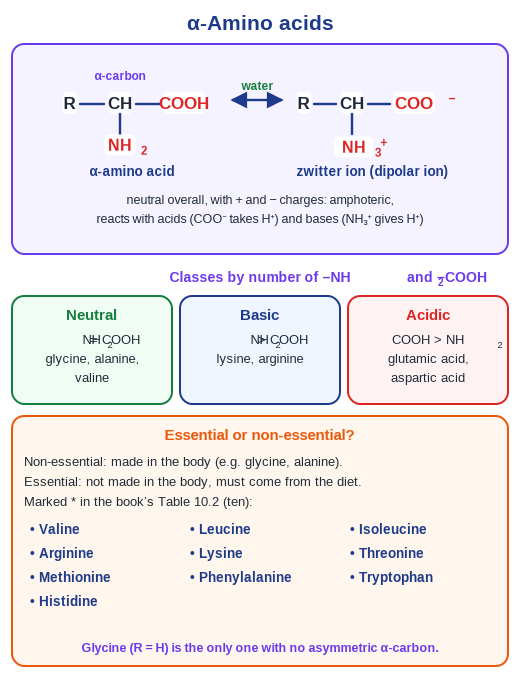
Of all biomolecules, proteins are present in living systems in the largest amount, in every part of the body and needed for growth and maintenance. The book lists milk, cheese, pulses, peanuts, fish and meat as chief sources. All proteins are polymers of α-amino acids, R–CH(NH₂)–COOH.
- Amino acids have trivial names (glycine from Greek for sweet, tyrosine from cheese) and three-letter or one-letter symbols (Table 10.2). They are neutral, acidic or basic according to the numbers of –NH₂ and –COOH groups. Those made in the body are non-essential; those that must come from the diet are essential (ten are starred in the book’s table).
- They are colourless, crystalline, high-melting, water-soluble solids that behave like salts, because in water they exist as zwitter ions, R–CH(NH₃⁺)–COO⁻, and react with both acids and bases (amphoteric). All except glycine are optically active; most natural ones are L.
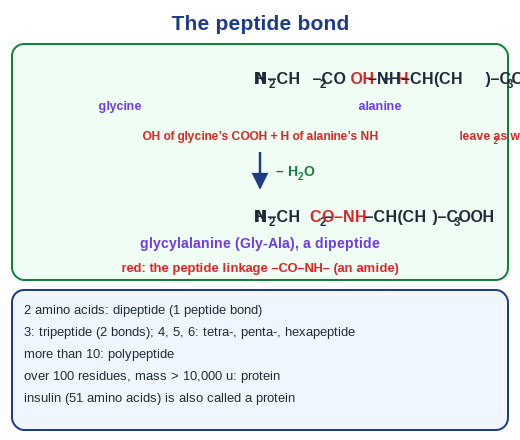
- The peptide bond, –CO–NH–, forms when the –COOH of one amino acid and the –NH₂ of another lose water. Glycine and alanine give the dipeptide glycylalanine: C₂H₅NO₂ + C₃H₇NO₂ → C₅H₁₀N₂O₃ + H₂O. More than ten amino acids make a polypeptide; one with more than a hundred residues and a mass above 10,000 u is a protein (the line is not sharp: insulin, with 51, is called a protein).
- By shape, proteins are fibrous (parallel chains held by hydrogen and disulphide bonds, insoluble: keratin in hair and wool, myosin in muscles) or globular (chains coiled into a sphere, usually soluble: insulin, albumins).
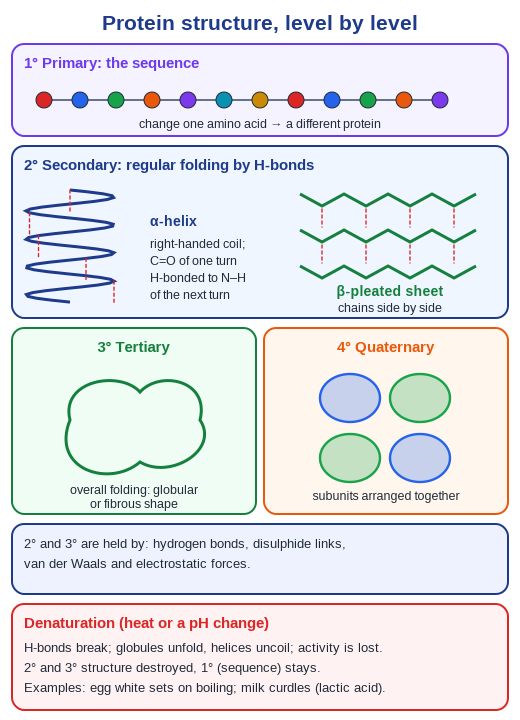
- Four levels of structure: primary (the sequence of amino acids), secondary (α-helix or β-pleated sheet, from hydrogen bonds between C=O and –NH– of the backbone), tertiary (overall folding) and quaternary (the arrangement of subunits). Secondary and tertiary structure are held by hydrogen bonds, disulphide links, van der Waals and electrostatic forces.
- Denaturation: heat or a change of pH disturbs the hydrogen bonds; globules unfold, helices uncoil and activity is lost, but the primary structure stays. Egg white setting on boiling and milk curdling are examples.
Read more in proteins and nucleic acids.
Enzymes
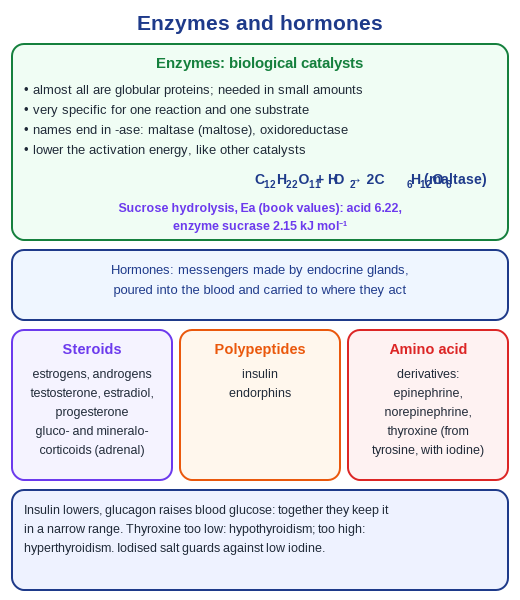
Reactions in the body, such as the digestion of food, run under very mild conditions because enzymes, biological catalysts, speed them up. Almost all enzymes are globular proteins; each is very specific for one reaction and one substrate. Many are named after their substrate (maltase hydrolyses maltose: C₁₂H₂₂O₁₁ + H₂O → 2C₆H₁₂O₆) or after their reaction (oxidoreductases), with the ending -ase. Small amounts are enough. Like other catalysts they lower the activation energy; the book quotes 6.22 kJ mol⁻¹ for the acid hydrolysis of sucrose against 2.15 kJ mol⁻¹ with the enzyme sucrase. The rationalised book keeps the heading “Mechanism of enzyme action” but no longer describes the mechanism.
Vitamins
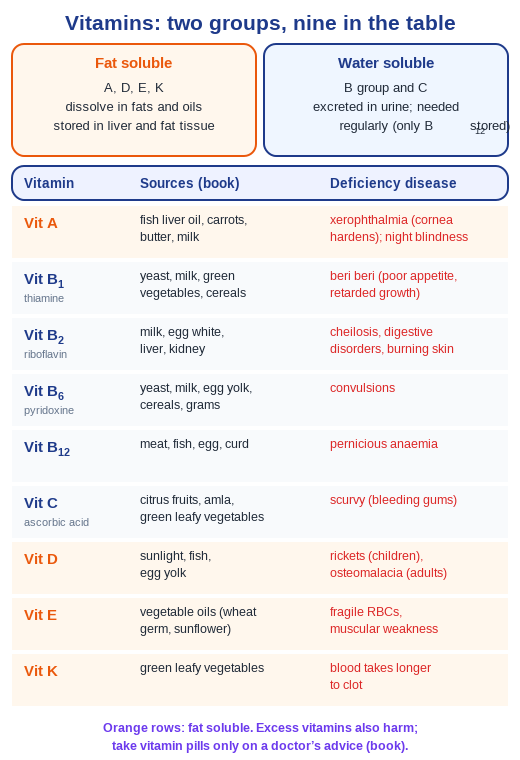
Vitamins are organic compounds needed in the diet in small amounts for specific biological functions; their lack causes particular diseases. Most cannot be made in our body, though plants make almost all of them and gut bacteria make some. They are named by letters (A, B, C, D…) and sub-groups (B₁, B₂, B₆, B₁₂). The name came from “vital amine”, and the final e was dropped when most turned out to have no amino group.
- Fat-soluble: A, D, E and K, stored in the liver and adipose tissue.
- Water-soluble: the B group and C. They are excreted in urine and, except B₁₂, not stored, so they must be supplied regularly.
The book’s Table 10.3 links each vitamin to sources and a deficiency disease, for example vitamin C and scurvy, vitamin D and rickets. The book also warns that too much of a vitamin is harmful and that vitamin pills are for taking only on a doctor’s advice.
Read more in vitamins and hormones.
Nucleic acids
Heredity, the passing of characters from one generation to the next, is controlled by chromosomes in the nucleus, made of proteins and nucleic acids. There are two kinds, DNA (deoxyribonucleic acid) and RNA (ribonucleic acid), both long polymers of nucleotides (polynucleotides).
- Composition: complete hydrolysis gives a pentose sugar (β-D-2-deoxyribose in DNA, β-D-ribose in RNA), phosphoric acid and nitrogen bases. DNA has adenine (A), guanine (G), cytosine (C) and thymine (T); RNA has A, G, C and uracil (U).
- Nucleoside and nucleotide: a base joined to C-1′ of the sugar is a nucleoside; with phosphoric acid at C-5′ it is a nucleotide. Nucleotides are joined by phosphodiester links between C-5′ and C-3′ of the sugars.
- Structure: the sequence of nucleotides is the primary structure. Watson and Crick gave DNA a double helix: two strands wound round each other, held by hydrogen bonds between specific base pairs, A with T and C with G, so the strands are complementary. RNA is a single strand that sometimes folds back on itself; it comes in three types, m-RNA, r-RNA and t-RNA.
- Functions: DNA is the chemical basis of heredity, keeps a species’ identity over millions of years and copies itself when a cell divides. Proteins are made by the RNA molecules, but the message for each protein is in the DNA.
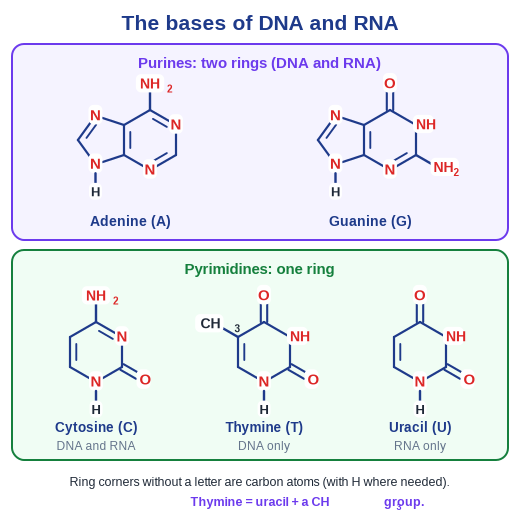
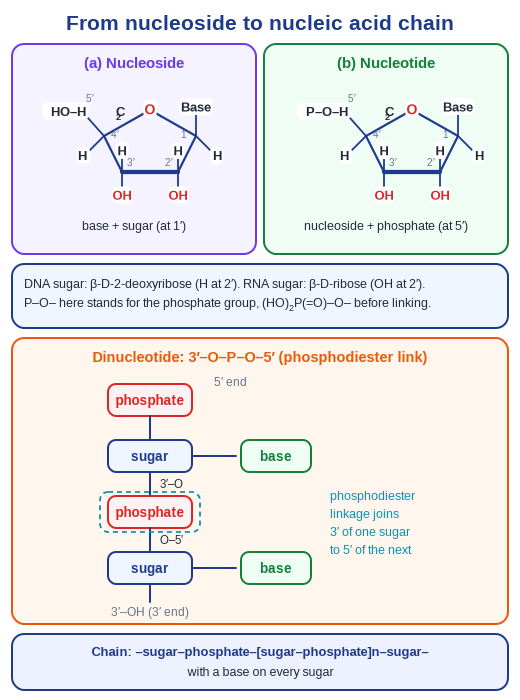
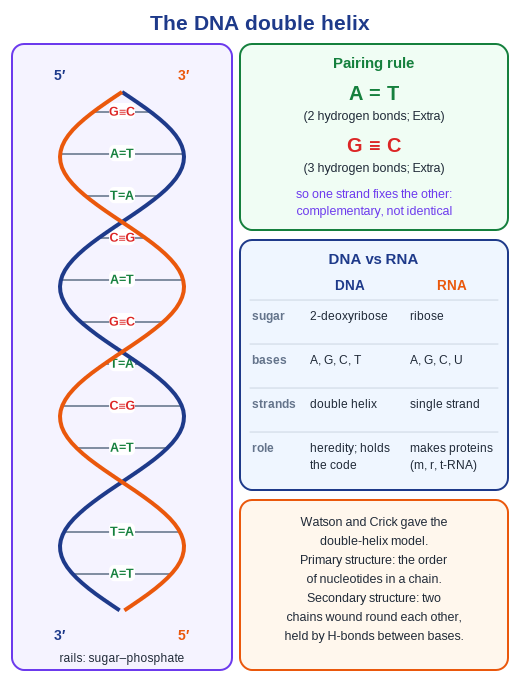
The book’s box on DNA fingerprinting explains that a person’s base sequence is unique and the same in every cell; it is used in forensic laboratories, to settle paternity and to identify bodies by comparison with relatives. Boxes on James Watson and Har Gobind Khorana describe the Nobel prizes for the double helix (1962) and for cracking the genetic code (1968).
Hormones
Hormones are chemical messengers between cells. Endocrine glands release them straight into the blood, which carries them to where they act. By chemical nature they are steroids (estrogens, androgens), polypeptides (insulin, endorphins) or amino acid derivatives (epinephrine, norepinephrine). They keep the body’s activities in balance: insulin and glucagon together hold blood glucose in a narrow range, and thyroxine, an iodinated derivative of tyrosine, is made in the thyroid gland. The details are in the vitamins and hormones topic.
Stay safe
Concentrated acids, nitric acid, bromine water, hydrogen iodide and the Fehling’s and Tollens’ reagents are hazardous. Any test on sugars or proteins is done only in the school laboratory with your teacher, never at home; never taste a chemical or a test sample. What this chapter says about vitamins and hormones is chemistry information, not health advice: for any question about diet or health, ask a doctor.
Before we move on
Three skills carry this chapter: explaining glucose’s structure from its reactions (open chain and ring), telling sugars, proteins and nucleic acids apart by their links (glycosidic, peptide, phosphodiester), and recalling the book’s lists (essential amino acids, vitamins and their deficiency diseases, DNA versus RNA). Every exercise and Intext Question of the unit is answered in the NCERT solutions for Chapter 10.
Key terms
| Term | Meaning |
|---|---|
| Carbohydrate | An optically active polyhydroxy aldehyde or ketone, or a compound that gives such units on hydrolysis. Many fit Cx(H₂O)y, but that formula alone does not decide it. |
| Monosaccharide, oligosaccharide, polysaccharide | A monosaccharide cannot be hydrolysed to a simpler sugar; an oligosaccharide gives 2 to 10 monosaccharide units; a polysaccharide gives a very large number. |
| Reducing sugar | A carbohydrate that reduces Fehling’s solution and Tollens’ reagent. All monosaccharides, maltose and lactose are reducing; sucrose is not. |
| Aldose and ketose | A monosaccharide with an aldehyde group is an aldose (glucose is an aldohexose); one with a keto group is a ketose (fructose is a ketohexose). |
| D and L configuration | A label that compares a sugar with glyceraldehyde: if the –OH on the lowest asymmetric carbon is on the right in the Fischer drawing, the sugar is D. It says nothing about the sign of rotation. |
| Anomers | The α and β ring forms of a sugar, which differ only in the position of the –OH on the anomeric carbon (C-1 of glucose, C-2 of fructose). |
| Glycosidic linkage | The oxide link (C–O–C) that joins two monosaccharide units after the loss of a water molecule. |
| Invert sugar | The equimolar mixture of glucose and fructose from hydrolysing sucrose. The sign of rotation changes from + to – because fructose (–92.4°) turns light more than glucose (+52.5°). |
| Zwitter ion | The dipolar form of an amino acid, R–CH(NH₃⁺)–COO⁻, with both charges on one molecule. It makes amino acids amphoteric, high melting and soluble in water. |
| Peptide bond | The amide link –CO–NH– formed between the –COOH of one amino acid and the –NH₂ of another, with loss of water. |
| Denaturation | Loss of a protein’s biological activity when heat or a change of pH disturbs its hydrogen bonds; secondary and tertiary structure are lost, primary structure stays. |
| Enzyme | A biological catalyst, almost always a globular protein, very specific for its reaction and substrate. Names usually end in -ase. |
| Nucleoside and nucleotide | A nucleoside is a base joined to C-1′ of a pentose sugar; a nucleotide is a nucleoside with phosphoric acid joined at C-5′. |
Topics in this chapter
Practice
-
Which of these is a non-reducing sugar?
Show answer
Answer: (d) sucrose
-
Glucose gives n-hexane on prolonged heating with HI. This shows that:
Show answer
Answer: (b) its six carbons are in a straight chain
-
In α-D-glucopyranose and β-D-glucopyranose, the two forms differ at:
Show answer
Answer: (a) C-1
-
Which bond holds the α-helix of a protein in shape?
Show answer
Answer: (b) hydrogen bonds between C=O and N–H
-
Which base is found in RNA but not in DNA?
Show answer
Answer: (c) uracil
Questions students ask
What are the main topics of Class 12 Chemistry Chapter 10?
Carbohydrates (classification, glucose and its open-chain and ring structures, fructose, the disaccharides sucrose, maltose and lactose, and the polysaccharides starch, cellulose and glycogen), proteins (amino acids, peptide bond, structure and denaturation), enzymes, vitamins, nucleic acids (composition, structure of DNA and RNA, functions) and hormones.
Is Biomolecules in the 2026-27 NCERT Class 12 Chemistry book?
Yes. It is Unit 10, the fifth and last unit of Chemistry Part II, the Class 12 textbook marked Reprint 2026-27, on pages 281 to 302. The book calls it a unit; here it is Chapter 10.
Why is sucrose non-reducing when glucose and fructose are both reducing?
In sucrose, C-1 of glucose and C-2 of fructose, the two carbons that carry the reducing groups, are joined to each other in the glycosidic link. Neither ring can open to give an aldehyde or ketone group, so sucrose does not reduce Fehling’s solution or Tollens’ reagent.
Should I take vitamin tablets after reading this chapter?
No. The chapter lists vitamins and their deficiency diseases as chemistry information. The book itself warns that too much of a vitamin also harms, and that vitamin pills are for taking only on a doctor’s advice. For any health question, ask a doctor.
Stuck on a question?
Take a photo and Lagnever AI explains it step by step. Try it for 7 days for ₹2.
Get it on Google Play Open in browser
For parents: after the trial, the plan renews monthly by UPI or card autopay. You can cancel anytime in the app.