
Class 6 Science Chapter 11: Nature's Treasures Notes
This chapter in five lines
Nature's treasures are natural resources: air, water, energy from the Sun, forests, soil, rocks, minerals and fossil fuels. All living beings depend on them. Things people make from them, like bulbs, furniture and bicycles, are human-made resources. Resources that nature renews within a reasonable time, such as air, water and forests, are renewable; those that are limited and not replenished in time, such as minerals, soil, rocks, coal, petroleum and natural gas, are non-renewable. So we must use them wisely.
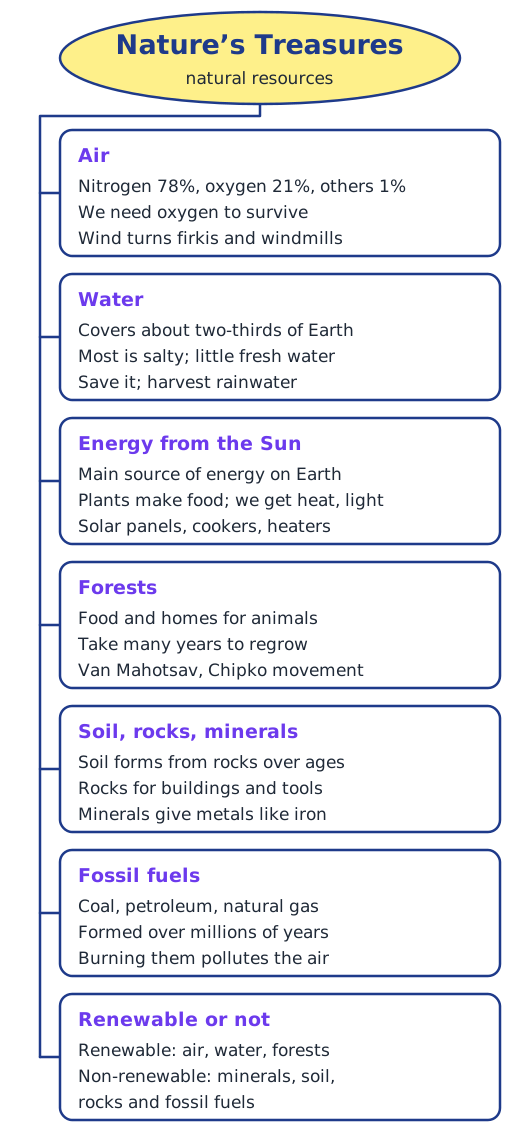
Nature’s treasures
Bhoomi and Surya spend their school holidays with their Ajji (grandmother) in a village at the edge of a forest in the Western Ghats. The air is fresh, the soil is fertile, the sun shines brightly, and there are hills, streams, plants, animals and birds all around. Ajji calls these the treasures of nature. We need them to survive and to make our lives comfortable; without them, no life on Earth is possible. We, too, are part of nature.
Air
Try holding your breath: soon you must breathe again, because the body needs the oxygen in air to work. We can live for a few days without food or water, but not for even a few minutes without oxygen.
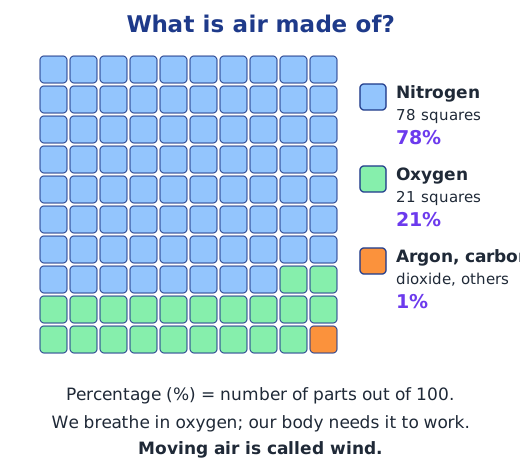
Air is a mixture of gases: about 78% nitrogen, 21% oxygen and 1% argon, carbon dioxide and other gases. Moving air is called wind. It turns a paper firki, and it turns the wings of windmills, which run flour mills, pull up water from wells or generate electricity. India has many windmill farms, such as Muppandal in Tamil Nadu, the Jaisalmer Wind Park in Rajasthan and Brahmanvel in Maharashtra.
Water
We need water for drinking, cooking, bathing, washing, cleaning, farming and industry. Water covers about two-thirds of the Earth’s surface, but most of it is in the oceans and seas and is salty. Freshwater is found as ice and snow, in rivers and lakes, and underground, and only a small part of it, in ponds, rivers, lakes and wells, is easy to reach. Many places in India face water shortages. So we must stop wasting water, keep it clean and conserve it, for example by rainwater harvesting. Stepwells such as the bawadi of Rajasthan and the vav of Gujarat have harvested water for centuries. World Water Day is observed on 22 March.
Energy from the Sun
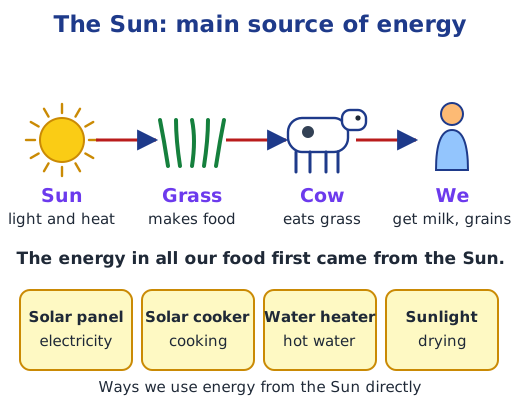
The Sun is the main source of energy on Earth. Plants use sunlight to make food, animals eat plants, and we get food from both, so all our food energy first came from the Sun. We also use its heat and light to dry clothes, chillies and grains, and its energy directly in solar panels (electricity), solar cookers and solar water heaters.
Forests
Forests are large areas with a dense growth of plants. They give food and shelter to wild animals, birds and insects, and give us wood, fruits, medicinal plants and more. Forest cover has been shrinking because of large-scale tree cutting, and a forest takes many years to regrow. India has a long tradition of protecting forests: sacred groves, the forest festival Van Mahotsav in July, and the Chipko movement, which began in the early 1970s in present-day Uttarakhand, when local women hugged trees to save them.
Soil, rocks and minerals
Roots hold the soil and stop it from being washed away, and fallen leaves decay and enrich it: recycling in nature. Soil forms when rocks break apart under the action of the Sun, water and living things over thousands of years. Rocks such as granite, sandstone, marble, slate and laterite are used for buildings, roads and tools. Rocks are made of minerals, from which metals like aluminium, gold, copper and iron are extracted; a basic mobile phone has about a dozen minerals in it.
Fossil fuels
Petrol, diesel and kerosene come from petroleum. Petroleum, natural gas and coal are fossil fuels, formed over millions of years from the buried remains of microorganisms and plants. Natural gas is used for cooking, for electricity and, as CNG, as a cleaner fuel for vehicles; coal is mainly used to produce electricity. Fossil fuels are limited, and burning them produces smoke and carbon dioxide that pollute the air. Walking, cycling and public transport help save them.
Renewable and non-renewable resources
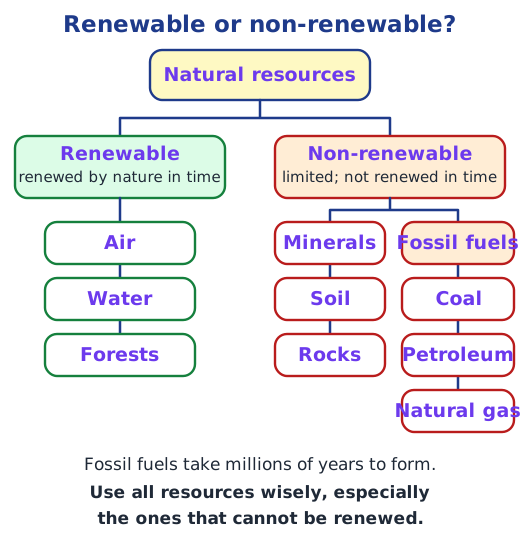
Resources from nature are natural resources; things people make from them, like bulbs, furniture, solar panels and bicycles, are human-made resources. Renewable resources, such as air, water and forests, are renewed by nature within a reasonable time. Non-renewable resources, such as minerals, soil, rocks, coal, petroleum and natural gas, are limited and get used up. Read more in what are natural resources, renewable and non-renewable resources and how to conserve natural resources. Answers to the whole chapter are in the NCERT solutions for Chapter 11.
Key terms
| Term | Meaning |
|---|---|
| Natural resources | Resources we get from nature, such as air, water, energy from the Sun, forests, soil, rocks, minerals and fossil fuels. |
| Human-made resources | Things people create from natural resources to meet their needs, like electric bulbs, furniture, solar panels and bicycles. |
| Renewable resources | Resources that get renewed, replenished or restored by natural processes within a reasonable time, like air, water and forests. |
| Non-renewable resources | Resources found in limited amounts that are not replenished within a reasonable time, like minerals, soil, rocks, coal, petroleum and natural gas. |
| Wind | Moving air. It turns a firki (paper pinwheel) and the wings of windmills. |
| Percentage (%) | The number of parts out of 100. Air is 78% nitrogen: 78 parts out of every 100. |
| Freshwater | Water that is not salty, found as ice and snow, in rivers and lakes, and underground. Only a small part of it is easy to reach. |
| Rainwater harvesting | Collecting and storing rainwater for later use, an age-old practice in India. |
| Minerals | The materials rocks are made of. Metals such as aluminium, gold, copper and iron are extracted from them. |
| Fossil fuels | Coal, petroleum and natural gas, formed over millions of years from the buried remains of microorganisms and plants. |
| CNG | Compressed Natural Gas, a cleaner fuel than petrol or diesel, used in vehicles. |
| Chipko movement | A movement that began in the early 1970s in present-day Uttarakhand, in which local women hugged trees to stop them from being cut. |
Topics in this chapter
Practice
-
Which gas makes up the largest part of air?
Show answer
Answer: (b) Nitrogen
-
Which of these is a human-made resource?
Show answer
Answer: (c) Bicycle
-
Which of these is a renewable resource?
Show answer
Answer: (c) Water
-
Fossil fuels were formed from:
Show answer
Answer: (b) the buried remains of microorganisms and plants
-
The Chipko movement began in the early 1970s to:
Show answer
Answer: (b) protect trees from being cut
Questions students ask
What are the main topics of Class 6 Science Chapter 11?
Air and its composition, wind and windmills, water and its conservation, energy from the Sun, forests, soil, rocks and minerals, fossil fuels, natural and human-made resources, and renewable and non-renewable resources.
Is Nature's Treasures in the new Curiosity book?
Yes. Nature's Treasures is Chapter 11 of Curiosity, the Class 6 Science textbook used in the 2026-27 session.
How many questions are in the chapter exercise?
“Let us enhance our learning” has 16 questions. Our NCERT solutions page answers all of them, along with Activities 11.1 to 11.6, the in-text questions and the Learning further tasks.
Stuck on a question?
Take a photo and Lagnever AI explains it step by step. Try it for 7 days for ₹2.
Get it on Google Play Open in browser
For parents: after the trial, the plan renews monthly by UPI or card autopay. You can cancel anytime in the app.