
How can we conserve natural resources?
Answer in short
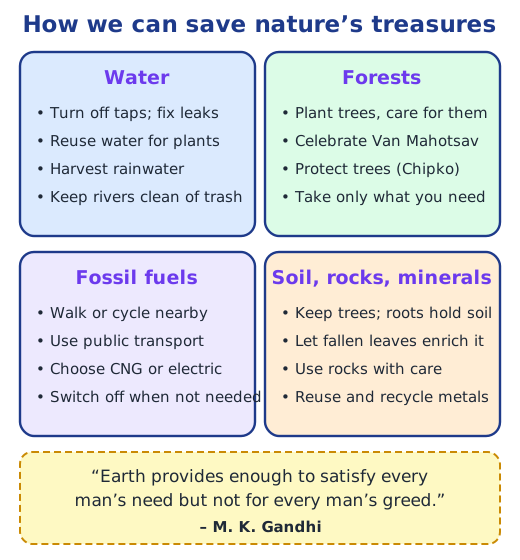
We conserve natural resources by using them wisely and not wasting them. Save water by turning off taps, fixing leaks, reusing water and harvesting rainwater. Protect forests by planting trees and not cutting them carelessly. Save fossil fuels by walking, cycling and using public transport, and keep air and water clean by not polluting them.
Stuck on a question? Take a photo and Lagnever AI explains it step by step. Try it for 7 days for ₹2. Get it on Google Play
Why conserve?
Nature’s treasures meet all our needs, but many of them are limited, and even renewable ones need time to renew. Mahatma Gandhi said, “Earth provides enough to satisfy every man’s need but not for every man’s greed.” If we use resources carefully, without wasting them, we can meet our needs today and still save them for the future, without harming the environment.
Saving water
Only a small part of the Earth’s water is fresh and easy to reach, and many parts of India face water shortages; in some places people walk long distances to fetch drinking water. A lot of water is wasted every day:
| Activity | How water is wasted | How to save it |
|---|---|---|
| Brushing teeth, washing hands | Tap left running | Turn off the tap; use a mug |
| Bathing | Long showers | Use a bucket |
| Washing clothes and utensils | Washing under a running tap | Wash in a tub; reuse rinse water |
| Gardening | Watering too much, in the midday heat | Water in the morning or evening |
Other ways to save water are fixing leaking taps, recycling water and rainwater harvesting, collecting rainwater in buildings, homes and schools for later use. This is an age-old practice in India: stepwells, called bawadi in Rajasthan and vav in Gujarat, store rainwater and water seeping in from nearby lakes, ponds and rivers.
Keeping water clean
Plastic bags, wrappers and other trash thrown into rivers, and waste from homes and industries dumped into water, make it unfit for living beings. Do not throw waste into water bodies, use dustbins, and tell others about it.
Saving forests
Forests take many years to grow or to recover. We should:
- plant trees and look after them, for example during Van Mahotsav, the forest festival celebrated for a week in July;
- protect old trees, as the women of the Chipko movement did in the 1970s by hugging trees;
- take only what we need, like Ajji’s village tradition of leaving fruits on the trees for animals and birds.
Saving fossil fuels and clean air
Fossil fuels are limited, and burning them pollutes the air. We can walk or cycle to nearby places, use public transport, choose CNG or electric vehicles, switch off lights and fans when we leave a room, and use energy from the Sun and the wind wherever possible.
Soil, rocks and minerals
Trees protect the soil: their roots hold it in place, and fallen leaves decay and enrich it. Rocks and minerals take thousands to millions of years to form, so they should be used with care and not wasted.
Saving resources at school
A school can do a lot together. An eco-club can check taps for leaks every week, collect rainwater from the roof, water the garden with leftover drinking water, and run a tree plantation drive with the teachers. Classes can switch off lights and fans when they leave, use both sides of paper, and remind everyone in the morning assembly why these habits matter.
Every small step counts, at home and at school. To see which resources are renewable, read renewable and non-renewable resources.
Practice
-
Collecting and storing rainwater for later use is called:
Show answer
Answer: (b) rainwater harvesting
-
Stepwells built for water harvesting are called bawadi in Rajasthan and ______ in Gujarat.
Show answer
Answer: (a) vav
-
Van Mahotsav, a week-long forest festival, is celebrated in:
Show answer
Answer: (c) July
-
Suggest two ways to save water while brushing your teeth and washing utensils.
Show answer
Answer: Turn off the tap while brushing and use a mug of water to rinse. Fill a tub or bowl to wash utensils instead of keeping the tap running.
-
How does walking or cycling to school help conserve natural resources?
Show answer
Answer: It saves fossil fuels like petrol and diesel, which are limited, and it causes no smoke, so the air stays cleaner.
Questions students ask
Why should we conserve natural resources?
Many resources are limited, and even renewable ones need time to renew. All living beings depend on them, so we must use them responsibly to meet our needs today and save them for the future.
What is rainwater harvesting?
Collecting rainwater, for example from rooftops, and storing it for later use. It is an age-old practice in India; stepwells such as the bawadi of Rajasthan and the vav of Gujarat are traditional examples.
What was the Chipko movement?
A movement that started in the early 1970s in present-day Uttarakhand, then part of Uttar Pradesh. Local women hugged the trees to stop them from being cut down.
How can we reduce air pollution?
Walk or cycle short distances, use public transport, choose cleaner vehicles such as CNG and electric ones, use LPG or natural gas instead of wood and dung cakes for cooking, and plant trees.
Stuck on a question?
Take a photo and Lagnever AI explains it step by step. Try it for 7 days for ₹2.
Get it on Google Play Open in browser
For parents: after the trial, the plan renews monthly by UPI or card autopay. You can cancel anytime in the app.