
What do a Municipal Corporation and a Municipal Council do?
Answer in short
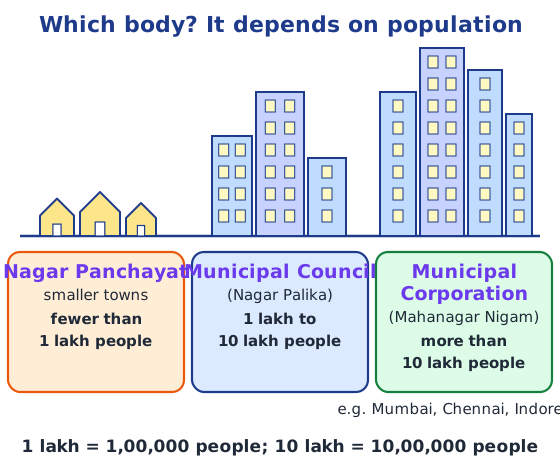
A Municipal Corporation (Mahanagar Nigam) is the highest urban local body in a city of more than 10 lakh people, and a Municipal Council (Nagar Palika) in a city of 1 to 10 lakh; smaller towns have a Nagar Panchayat. These bodies supply water, collect garbage, look after roads and drains, issue licences and certificates, and collect local taxes.
Stuck on a question? Take a photo and Lagnever AI explains it step by step. Try it for 7 days for ₹2. Get it on Google Play
Which city has which body?
Local government in cities and towns is run by urban local bodies. Which one a place has depends on how many people live there. The chapter gives this rule:
| Population | Highest urban local body | Also called |
|---|---|---|
| More than 10 lakh | Municipal Corporation | Mahanagar Nigam |
| 1 lakh to 10 lakh | Municipal Council | Nagar Palika |
| Smaller towns | Nagar Panchayat |
One lakh is 1,00,000 people, so a Municipal Corporation serves a city of more than 10,00,000 people. Chennai, Indore and Mumbai all have a Municipal Corporation at the top of their urban bodies. (Extra: each State makes its own exact rules, so some smaller cities also have a Municipal Corporation.)
What do they do?
A Municipal Corporation, a Municipal Council and a Nagar Panchayat all do the same kind of work for their area, on different scales:
- Infrastructure: water supply, roads and drains, and repairs when something goes wrong;
- Cleanliness: garbage collection and disposal, and looking after burial grounds;
- Records and permissions: certificates such as marriage certificates, and licences for businesses, trades and hoardings;
- Emergencies and requests: fire services, ambulances and water tankers;
- Schemes and planning: checking that government schemes are carried out, and some planning for the area’s economic and social development;
- Money: collecting local taxes and fines.
Wards and elected members
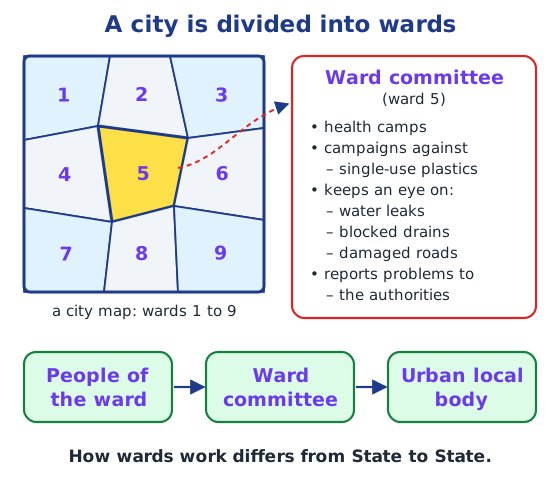
A city is too big to manage from one office, so it is divided into smaller units called wards. Ward committees run activities like health camps and campaigns against single-use plastics, and they watch out for water leaks, blocked drains and damaged roads, reporting them to the authorities. The urban local bodies have elected members who represent the local citizens, just as villagers elect their Gram Panchayat. (Extra: in many States each ward elects a councillor, called a corporator in a Municipal Corporation, and a Mayor heads the corporation.)
Where does the money come from?
Look at the services of the Indore Municipal Corporation shown in the chapter and you can see how a city body earns:
- taxes: property tax on buildings;
- charges: water charges for the water it supplies;
- fees: for business and trade licences, hoardings and marriage certificates;
- services on request: water tankers, septic tankers, an auditorium, funeral vans, mobile toilets and ambulances, which people book and usually pay for;
- fines for breaking local rules.
(Extra: city bodies also receive grants from the State and Union governments.)
Indore: a city and its citizens
Indore in Madhya Pradesh was named the cleanest city in India under the Swachh Survekshan survey seven years in a row. A Municipal Corporation cannot achieve this alone. When people segregate waste at home, use dustbins, avoid single-use plastics and report problems quickly, garbage collection works smoothly. This is what the chapter means by citizens doing their duties in a participatory democracy.
The oldest city bodies
The Madras Corporation, now the Greater Chennai Corporation, was set up on 29 September 1688 and is the oldest municipal institution in India. The Bombay Municipal Corporation, now the Municipal Corporation of Greater Mumbai, was created in 1865. To see where these bodies fit among all levels of government, read the Chapter 12 notes.
Practice
-
According to the chapter, a city of 4 lakh people has, as its highest body, a:
Show answer
Answer: (b) Municipal Council
-
Mahanagar Nigam is another name for a:
Show answer
Answer: (b) Municipal Corporation
-
Which of these does the Indore Municipal Corporation provide on request?
Show answer
Answer: (a) A water tanker Water tankers, septic tankers, funeral vans, mobile toilets and ambulances are among its services on request.
-
Name three ways in which an urban local body raises money.
Show answer
Answer: Local taxes such as property tax; charges such as water charges; and fees for licences, certificates and services on request, such as a water tanker. Fines are another source.
-
What could Indore's citizens have done to help it stay the cleanest city for years?
Show answer
Answer: They could segregate their waste, use dustbins instead of littering, avoid single-use plastics, report problems quickly and take part in cleanliness drives, so that the Municipal Corporation's waste services worked well.
Questions students ask
What is the difference between a Municipal Corporation and a Municipal Council?
Both are urban local bodies. The chapter says a Municipal Corporation (Mahanagar Nigam) is the highest body in cities of more than 10 lakh people, while a Municipal Council (Nagar Palika) is the highest body in cities of 1 lakh to 10 lakh people.
What services does a Municipal Corporation provide?
Water supply, garbage collection and disposal, roads and drains, burial grounds, licences and certificates, fire services and complaint handling, and services on request such as water tankers and ambulances. It also collects property tax and checks that government schemes are carried out.
Who runs a Municipal Corporation?
Members elected by the citizens represent them. (Extra: in many States each ward elects a councillor, called a corporator in a Municipal Corporation; the corporation is headed by a Mayor, and a Municipal Commissioner appointed by the State runs its daily work. The rules differ from State to State.)
Which is the oldest municipal body in India?
The Madras Corporation, now the Greater Chennai Corporation, set up on 29 September 1688.
Stuck on a question?
Take a photo and Lagnever AI explains it step by step. Try it for 7 days for ₹2.
Get it on Google Play Open in browser
For parents: after the trial, the plan renews monthly by UPI or card autopay. You can cancel anytime in the app.