
Microbes sewage kaise saaf karte hain aur biogas kaise banate hain?
Short mein jawab
Sewage do stages mein treat hota hai. Primary treatment filtration aur sedimentation se particles physically hataata hai. Secondary treatment biological hai: aeration tanks ke aerobic flocs organic matter kha kar BOD kam karte hain; baitha activated sludge anaerobically digest ho kar biogas deta hai. Sludge aur gobar ke Methanobacterium jaise methanogens biogas plants mein methane banate hain.
Koi sawal atak gaya? Photo lo, Lagnever AI step-by-step samjhayega. 7 din ka trial sirf ₹2. Google Play se app lo
Sewage seedhe nadi mein kyun nahi ja sakta?
Har din shehar aur towns bahut zyada waste water banate hain, jiska zyadatar hissa human excreta hai. Is municipal waste water ko sewage kehte hain. Ismein bahut organic matter aur microbes hote hain, jinme kai pathogenic hain. Bina treat kiye chhodne par ye nadiyon ko pollute karega aur water-borne bimaariyan failayega.
Isliye sewage pehle sewage treatment plants (STPs) mein jaata hai, jo use bahar chhodne se pehle kaafi kam polluting bana dete hain. Ye kaam sewage mein pehle se maujood heterotrophic microbes karte hain. Ye page chapter ke sections 8.3 aur 8.4 cover karta hai; poora chapter short mein Chapter 8 notes par hai.
Primary treatment mein kya hota hai?
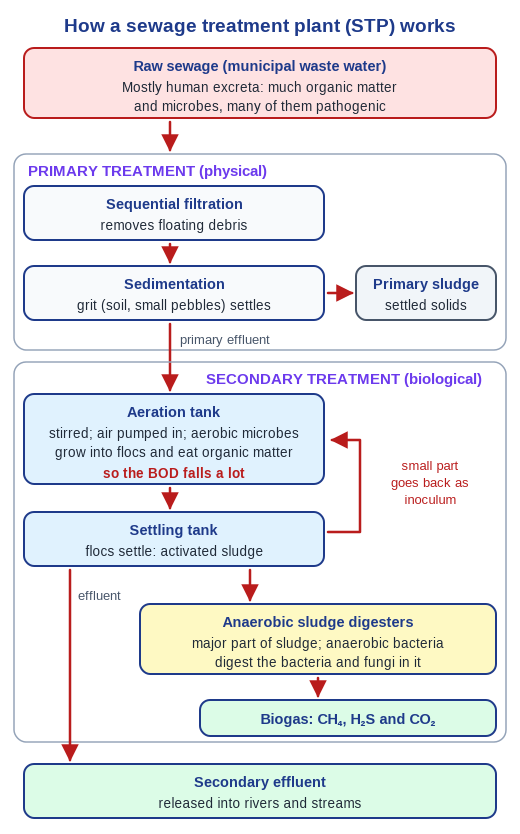
Primary treatment physical hai. Chhote-bade particles stages mein hataaye jaate hain:
- Sequential filtration tairta kachra hataata hai.
- Sedimentation se grit (mitti aur chhote kankad) hatti hai.
Jo solids baith jaate hain, wo primary sludge banate hain. Unke upar ka liquid, supernatant, effluent hai. Ye primary effluent phir secondary treatment ke liye bheja jaata hai.
Secondary (biological) treatment mein kya hota hai?
- Aeration tanks. Primary effluent bade aeration tanks mein jaata hai, jahan machines use lagaataar hilaati hain aur usmein hawa pump hoti hai.
- Flocs. Kaam ke aerobic microbes tezi se badh kar flocs banate hain: bacteria aur fungal threads ke mesh jaise jhund.
- Organic matter khatam. Badhte hue flocs effluent ka zyadatar organic matter kha jaate hain, isliye BOD kaafi gir jaata hai. BOD kam hone tak treatment chalta hai.
- Settling tank. Phir effluent settling tank mein jaata hai, jahan flocs baith jaate hain. Ye sediment activated sludge hai.
- Sludge ka recycling. Activated sludge ka chhota hissa inoculum ki tarah aeration tank mein wapas jaata hai. Bada hissa bade tanks, anaerobic sludge digesters, mein jaata hai.
- Digesters. Yahan doosre bacteria, jo anaerobically (bina oxygen) badhte hain, sludge ke bacteria aur fungi ko tod dete hain. Isse gases ka mixture, methane, hydrogen sulphide aur carbon dioxide, nikalta hai, jo biogas banata hai. Biogas jalti hai, isliye energy source ki tarah kaam aati hai.
- Release. Secondary treatment ka effluent aam taur par rivers aur streams jaise natural water bodies mein chhoda jaata hai.
| Primary treatment | Secondary treatment | |
|---|---|---|
| Nature | Physical | Biological |
| Kaise | Filtration aur sedimentation | Aeration tanks mein aerobic microbes (flocs) |
| Kya hataata hai | Tairta kachra, grit aur doosre particles | Zyadatar organic matter |
| Product | Primary sludge aur primary effluent | Activated sludge aur secondary effluent; digesters se biogas |
BOD kya hai, aur kyun zaroori hai?
BOD (biochemical oxygen demand) wo oxygen hai jo bacteria ko ek litre paani ke saare organic matter ko oxidise karne ke liye chahiye.
- BOD test naapta hai ki paani ke sample ke micro-organisms kitni tezi se oxygen lete hain.
- Isliye BOD paani ke organic matter ka indirect naap hai.
- Zyada BOD matlab aisa waste water jo zyada pollution kar sakta hai.
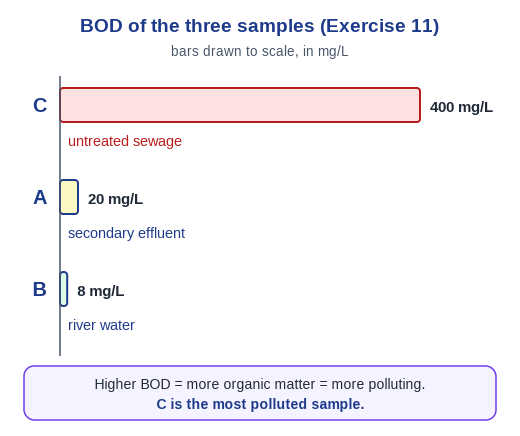
Chapter ki Exercise 11 isi idea se teen bina label wale samples pehchaanti hai; uska hal NCERT solutions mein hai.
Kya microbial sewage treatment ab bhi use hota hai, aur kya kaafi hai?
Chapter batata hai ki microbes duniya bhar mein roz lakhon gallon waste water treat karte hain, ye tareeka sau saal se zyada se chal raha hai, aur abhi tak koi man-made technology iski barabari nahi kar paayi.
Par badhte urbanisation ke saath pehle se kahin zyada sewage banta hai, jabki STPs utne nahi badhe. Untreated sewage aksar seedhe nadiyon mein jaata hai, unhe pollute karta hai aur water-borne bimaariyan badhaata hai.
Desh ki do badi nadiyon ko pollution se bachane ke liye Ministry of Environment and Forests ne Ganga Action Plan aur Yamuna Action Plan shuru kiye. In plans mein bahut se sewage treatment plants banane ki yojana hai, taaki nadiyon mein sirf treated sewage jaaye.
Methanogens kya hain?
Biogas gases ka mixture hai, zyadatar methane, jo microbial activity se banta hai aur fuel ki tarah use ho sakta hai. Kaun si gas banegi, ye microbe aur uske organic substrate par depend karta hai: dough, cheese aur beverages mein main gas CO₂ hai.
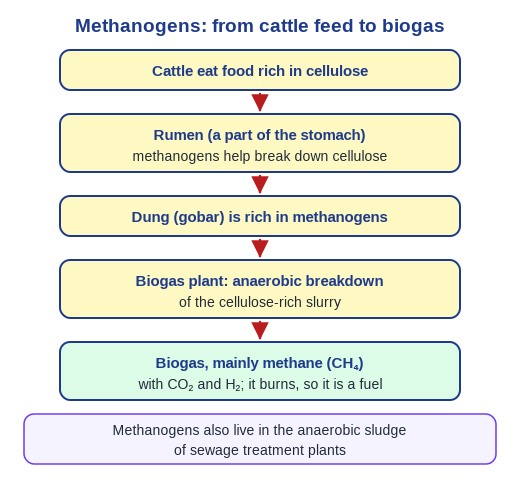
Kuch bacteria cellulose wale material par anaerobically badhte hain aur CO₂ aur H₂ ke saath bahut saari methane chhodte hain. Inhe methanogens kehte hain; ek common methanogen Methanobacterium hai.
- Ye sewage treatment ki anaerobic sludge mein common hain.
- Ye cattle ke pet ke ek hisse, rumen, mein rehte hain. Cattle ke khaane mein bahut cellulose hota hai; rumen mein methanogens use todne mein madad karte hain, jo cattle ke nutrition ke liye zaroori hai.
- Isliye cattle ka gobar (dung) methanogens se bhara hota hai, aur isse biogas banti hai, jise gobar gas kehte hain.
Biogas plant kaise kaam karta hai?
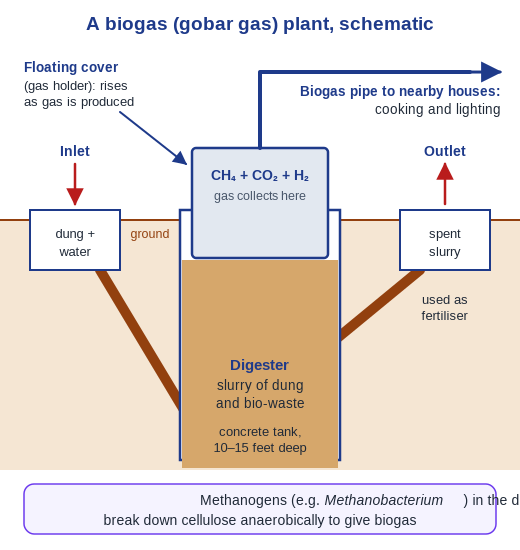
| Hissa | Kya karta hai |
|---|---|
| Concrete tank (digester), 10–15 feet gehra | Ismein bio-wastes jama hote hain aur gobar ki slurry daali jaati hai |
| Floating cover (gas holder) | Slurry ke upar rakha hota hai; microbes gas banate hain to ye upar uthta rehta hai |
| Gas outlet aur pipe | Paas ke gharon tak biogas pahunchata hai |
| Doosra outlet | Spent slurry nikaalta hai, jo fertiliser ki tarah kaam aa sakti hai |
- Use: cooking aur lighting.
- Kahan: zyadatar rural areas mein, kyunki wahan gobar bahut milta hai.
- India mein kisne develop kiya: mainly Indian Agricultural Research Institute (IARI) aur Khadi and Village Industries Commission (KVIC) ne.
Book paas ke biogas plant ya sewage treatment plant ko dekhne aur chalane walon se seekhne ka sujhaav deti hai. Aisa visit sirf teacher ke saath school visit mein karo.
Quick check
- Primary = physical; secondary = biological.
- Flocs: aerobic; sludge digesters: anaerobic.
- Secondary treatment mein BOD girta hai; zyada BOD = zyada polluted.
- Methanogen: Methanobacterium; biogas: mainly methane.
Aage: kheton mein microbes zehreele chemicals ki jagah kaise lete hain, biocontrol agents aur biofertilisers mein.
Practice karo
-
Sewage se grit kaise hatti hai?
Jawab dekho
Jawab: (b) sedimentation se
-
Settling tank mein baithe bacterial flocs ko kya kehte hain?
Jawab dekho
Jawab: (b) activated sludge
-
Methanogens aam taur par kahan milte hain?
Jawab dekho
Jawab: (a) cattle ke rumen mein
-
Activated sludge ka kuch hissa aeration tank mein wapas kyun bheja jaata hai?
Jawab dekho
Jawab: Ye inoculum ka kaam karta hai: naye primary effluent mein kaam ke aerobic microbes (flocs) ki taiyaar population daal deta hai, taaki wo jaldi organic matter khaana shuru kar dein.
-
Biogas plants zyadatar rural areas mein kyun bante hain?
Jawab dekho
Jawab: Biogas plants gobar se chalte hain, jo gaon mein bahut milta hai kyunki wahan cattle kai kaamon ke liye paale jaate hain. Bani gas paas ke gharon mein cooking aur lighting mein kaam aati hai.
Students ke sawal
Primary aur secondary sewage treatment mein main farq kya hai?
Primary treatment physical hai: ye filtration aur sedimentation se particles hataata hai. Secondary treatment biological hai: aeration tanks ke aerobic microbes organic matter kha kar BOD kam karte hain.
BOD test kya naapta hai?
Ye naapta hai ki paani ke sample ke micro-organisms kitni tezi se oxygen lete hain. Ye oxygen organic matter ko oxidise karne mein lagti hai, isliye BOD paani ke organic matter ka indirect naap hai.
Biogas ke liye gobar achha kyun hai?
Methanogens cattle ke rumen mein rehte hain aur wahan cellulose todne mein madad karte hain. Isliye gobar in bacteria se bhara hota hai, aur biogas plant mein ye cellulose wali slurry ko anaerobically tod kar methane chhodte hain.
Kya main sewage treatment plant ya biogas plant dekhne ja sakta hoon?
Book dono visits ko seekhne ka achha mauka batati hai. Sirf teacher ke arrange kiye school visit mein jao, aur plant chalane walon ki baat maano.
Koi sawal atak gaya?
Photo lo, Lagnever AI step-by-step samjhayega. 7 din ka trial sirf ₹2.
Google Play se app lo Browser mein kholo
Parents ke liye: trial ke baad plan har mahine UPI ya card autopay se renew hota hai. App mein kabhi bhi cancel kar sakte hain.