
Puberty and Hormones
Answer in short
Puberty is the stage in which an adolescent’s body changes, outside and inside, to become able to reproduce. Secondary sexual characteristics such as a deeper voice and facial hair in boys and breasts in girls appear, and in girls the menstrual cycle begins. Hormones, chemicals released on signals from the brain, bring about most of these changes.
Stuck on a question? Take a photo and Lagnever AI explains it step by step. Try it for 7 days for ₹2. Get it on Google Play
Signs that the body is preparing
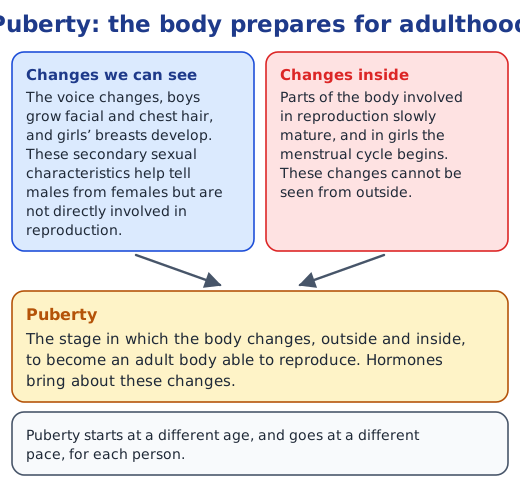
Some of the changes of adolescence, such as a deeper voice, a moustache, beard or chest hair in boys, and breasts developing in girls, play no direct part in reproduction. What they do is make it easier to tell males from females, so they are called secondary sexual characteristics. They are natural signs that the body is getting ready for adulthood, and their appearance marks the start of puberty.
What is puberty?
During puberty, an adolescent’s body changes on the outside and on the inside until it becomes an adult body that can reproduce. It does not happen overnight: the changes come gradually over several years, and they begin at a different age for each person. Like all the changes of adolescence, they are a natural part of growing up.
Changes inside the body
Not everything can be seen from outside. During puberty, the parts of the body involved in reproduction slowly mature in both boys and girls. In girls, one important internal change is the start of the menstrual cycle, often simply called “the period”.
The menstrual cycle
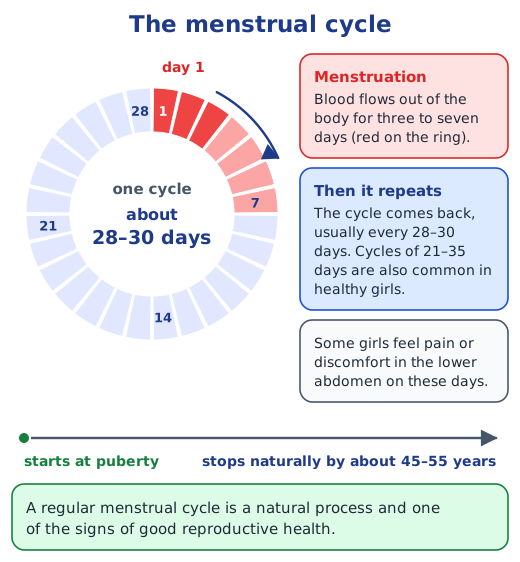
The menstrual cycle usually comes back every 28–30 days, although many healthy girls have shorter or longer cycles, anywhere from 21 to 35 days. The phase in which blood flows out of the body is called menstruation, and it lasts from three to seven days. Some girls have cramps or an uneasy feeling low in the abdomen on these days; rest, warmth and light activity can help, and a doctor can advise if the pain is severe. The cycle is an important natural process, and a regular one shows good reproductive health. It continues through adulthood and usually stops naturally by the age of about 45–55, which marks the end of a woman’s ability to reproduce.
Keeping clean during these days, with clean sanitary pads or reusable cloth pads that are changed regularly, is part of healthy habits in adolescence.
Breaking the myths
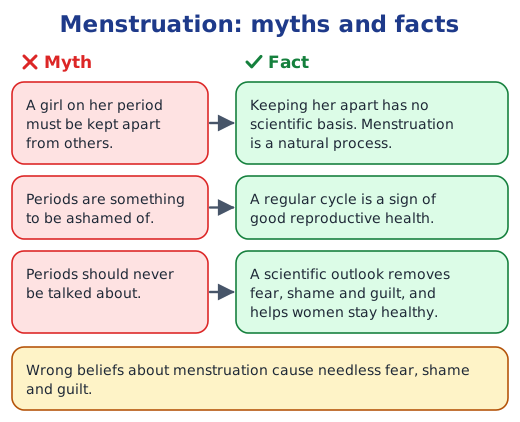
Many wrong beliefs surround menstruation, and they cause needless fear, shame and even guilt. Over time, such beliefs have hardened into myths and taboos. One that is still common is keeping a girl apart from others during her period. None of these myths has any scientific basis: menstruation is a natural process. When families, schools and communities look at it scientifically, they can talk about it openly, support good reproductive health and help women lead healthier lives.
Hormones: the ‘why’ question
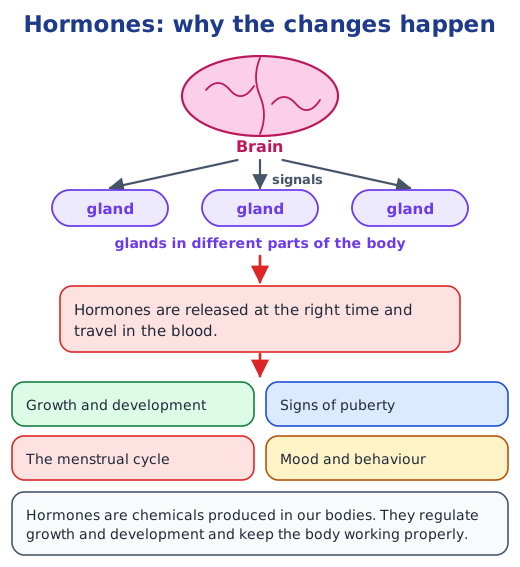
Why do all these changes happen during adolescence and not earlier? The answer lies in hormones, chemicals produced in our bodies. Glands in several parts of the body make them, and each is let out at the right moment when the brain sends a signal; hormones travel in the blood to the parts of the body they act on. They regulate growth and development and help the body work properly. Hormones are the main cause of many changes of adolescence, menstruation and the other signs of puberty among them, and some hormones also influence mood and behaviour. That helps explain why feelings can swing so quickly at this age.
Why it matters
Understanding puberty takes away much of the worry and embarrassment around it. Staying informed, asking parents, teachers or a doctor when in doubt, and making healthy choices build a strong base for adult life. The visible changes of this age are in changes during adolescence. Answers to every question are in the NCERT solutions for Chapter 6; see also the full Chapter 6 notes.
Practice
-
Which of these is NOT a secondary sexual characteristic?
Show answer
Answer: (d) Pimples on the face
-
For how long does menstruation usually last?
Show answer
Answer: (b) Three to seven days
-
Hormones are released in response to signals from which organ?
Show answer
Answer: (b) The brain
-
What is puberty?
Show answer
Answer: Puberty is the time when an adolescent’s body changes, outside and inside, until it becomes an adult body able to reproduce. Secondary sexual characteristics mark its start.
-
Why are myths about menstruation harmful?
Show answer
Answer: They cause needless fear, shame and guilt, and lead to unfair practices such as keeping girls apart. Menstruation is natural, and a scientific outlook helps society support women’s health.
Questions students ask
What are secondary sexual characteristics?
They are changes of adolescence, such as a deeper voice, a moustache, beard or chest hair in boys, and breasts in girls, that help tell males from females. They are not directly involved in reproduction, but they show that the body is naturally getting ready for adult life, and their appearance marks the start of puberty.
What is the menstrual cycle?
It is a natural cycle that begins in girls at puberty and usually repeats every 28–30 days, though anything from 21 to 35 days is common in healthy girls. In each cycle, blood flows out of the body for three to seven days; this is menstruation. It stops naturally by about 45–55 years, ending a woman’s ability to reproduce.
What do hormones do in adolescence?
Hormones are chemicals made by glands in several parts of the body and sent out at the right moment when the brain signals. They regulate growth and development and bring about many changes of adolescence, including menstruation and the other signs of puberty. Some hormones also influence mood and behaviour, which is one reason feelings can swing at this age.
Stuck on a question?
Take a photo and Lagnever AI explains it step by step. Try it for 7 days for ₹2.
Get it on Google Play Open in browser
For parents: after the trial, the plan renews monthly by UPI or card autopay. You can cancel anytime in the app.