
Healthy Habits in Adolescence
Answer in short
Adolescents stay healthy by eating a nutritious diet rich in proteins, carbohydrates, calcium and iron; keeping the body clean, including good menstrual hygiene; exercising and playing every day; being polite, respectful and careful online; and saying a firm NO to tobacco, alcohol and drugs. Talking to trusted adults helps whenever something feels worrying or confusing.
Stuck on a question? Take a photo and Lagnever AI explains it step by step. Try it for 7 days for ₹2. Get it on Google Play
Why habits matter now
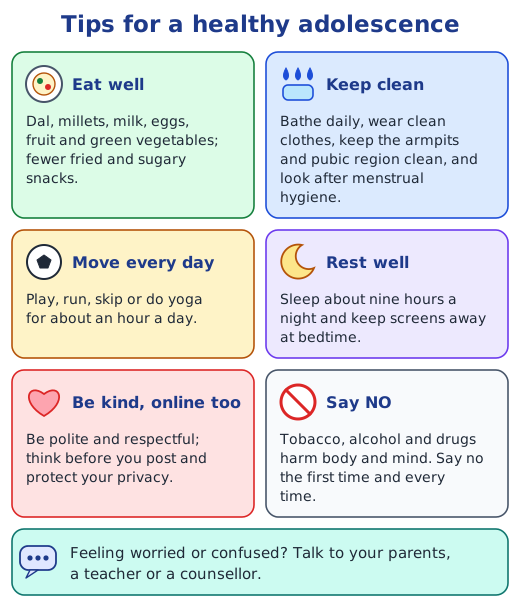
Adolescence is full of curiosity and excitement, and adolescents start to see almost everything around them in a new way. It is also the time when habits form that can last a lifetime. Good habits, thoughtful decisions and small daily actions can make a big difference to how healthy and happy these years are. The chapter groups them under five heads: nutrition, personal hygiene, physical activity, a balanced social life, and avoiding harmful substances.
Eat well
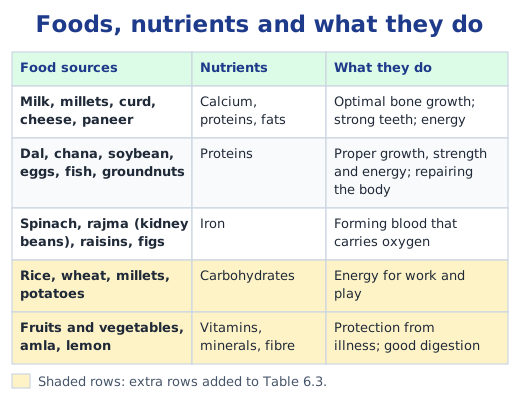
A growing body needs proteins and carbohydrates for growth and energy, and enough fats, vitamins and minerals too. In Activity 6.3, students fill Table 6.3 with local foods: milk, curd, paneer, cheese and millets give calcium, proteins and fats for strong bones; dal, chana, soybean, eggs and fish give proteins for growth and strength; and spinach, rajma and dried fruits such as raisins and figs give iron, which the body uses to form blood. (Revise what a balanced diet is from Class 6.)
Adolescents, especially girls, may develop blood-related problems such as anaemia if they get too little iron or vitamin B12. Eating iron-rich food with a source of vitamin C, such as amla or lemon, and taking iron and folic acid tablets given under the government’s Anaemia Mukt Bharat programme help prevent it. Vitamin B12, whose structure was worked out by the Nobel Prize–winning chemist Dorothy Hodgkin, cannot be made by the body; it comes from foods such as milk, curd, eggs and fish.
Keep clean
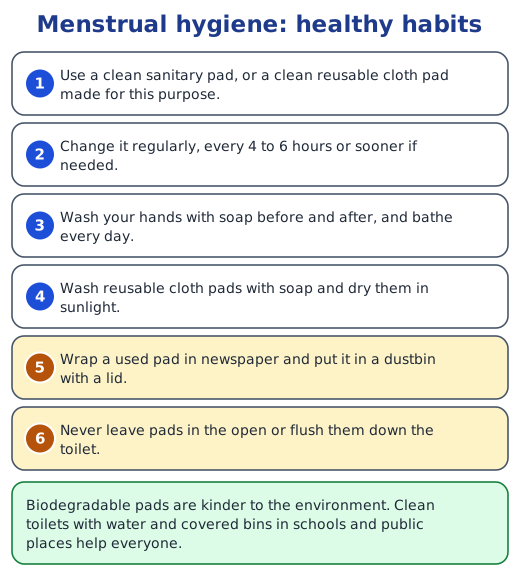
Bathing daily and keeping the armpits and pubic region clean protect against infections. For girls, menstrual hygiene matters for both comfort and health: use clean sanitary pads or reusable cloth pads made for the purpose, and change them regularly. Wrap a used pad in newspaper and put it in a dustbin; never leave it in the open. Biodegradable pads are kinder to the environment. Schools and public places need clean toilets and bins, and everyone can help remove the stigma around sanitary pads. Government schemes such as the Menstrual Hygiene Scheme and the Suvidha initiative make pads available at a low price or at no cost.
Move every day
Regular exercise and games build stamina, keep the body and mind fit and lift our mood. Football, skipping and yoga, as in Fig. 6.2, are simple ways to stay active; about an hour of play or exercise a day is a good target.
A balanced social life
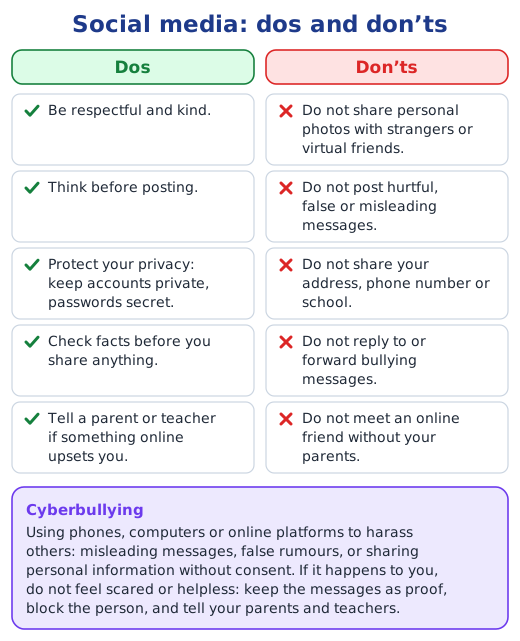
Being polite and respectful to others creates a safe, friendly environment, in class and outside it. Adolescents often feel drawn to their peers and copy their behaviour, and much of their contact now happens online. Online platforms are useful for learning and staying connected, but they must be used responsibly. Think before posting, protect your privacy, and never share personal photos or details with strangers or virtual friends. Cyberbullying, using digital devices to harass others with misleading messages, false rumours or personal information shared without consent, is never acceptable. If someone bullies you, do not feel scared; keep proof and seek help from parents and teachers.
Say NO to harmful substances
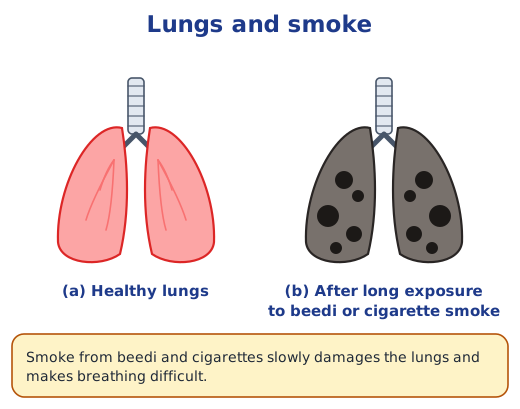
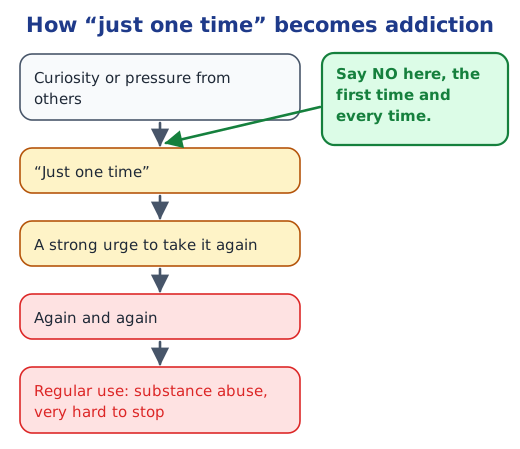
Peers or others may tempt or pressure adolescents to try tobacco, gutka, cigarettes, beedi, alcohol or illegal drugs. These harm physical and mental health and are addictive: after one try, a strong urge to take them again can grow into regular use, called substance abuse. They can cause breathing difficulties, memory loss and lung damage. So the safest choice is to stay firm and say NO, the first time and every time. Anyone trying to overcome addiction should start by seeking support from family, friends and trusted adults, along with counselling and medical advice. The Nasha Mukt Bharat Abhiyaan spreads awareness, and the National De-addiction Helpline is 14446.
Why it matters
Healthy habits help adolescents handle the many changes of this age with confidence. What those changes are is in changes during adolescence, and why they happen is in puberty and hormones. Answers to every activity and question are in the NCERT solutions for Chapter 6; see also the full Chapter 6 notes.
Practice
-
Which of these foods is a good source of iron?
Show answer
Answer: (a) Spinach
-
What is the number of the National De-addiction Helpline?
Show answer
Answer: (b) 14446
-
Which of these is a safe habit on social media?
Show answer
Answer: (b) Thinking before posting
-
How should used sanitary pads be disposed of, and why?
Show answer
Answer: Wrap them in newspaper and put them in a dustbin. This protects community health and keeps the surroundings clean; biodegradable pads are also kinder to the environment.
-
What should you do if someone bullies you online?
Show answer
Answer: Do not feel scared or helpless. Keep the messages as proof, block the person, and tell your parents and teachers so that they can help you handle it wisely.
Questions students ask
Why is nutrition so important in adolescence?
Adolescence is a period of rapid growth with many changes in the body, so it needs good nourishment. Proteins and carbohydrates support growth and energy, calcium builds bones, iron helps form blood, and fats, vitamins and minerals keep the body working. Adolescents, especially girls, can develop blood-related problems such as anaemia if they lack iron or vitamin B12.
What is menstrual hygiene?
It means staying clean and comfortable during menstruation: using clean sanitary pads or reusable cloth pads, changing them regularly, washing hands and bathing, and disposing of used pads by wrapping them and putting them in a dustbin. Schemes such as the Menstrual Hygiene Scheme help girls get pads at a low price or at no cost.
What is cyberbullying?
Cyberbullying is harassing or hurting someone through a phone, a computer or the internet, for example with lies meant to mislead, false rumours, or private details shared without permission. If it happens, do not feel helpless: keep proof, block the person, and tell your parents and teachers.
What is the Nasha Mukt Bharat Abhiyaan?
It is a campaign run by India’s Ministry of Social Justice and Empowerment to spread awareness against substance abuse, with the youth, women and the community taking an active part. It focuses especially on preventing substance abuse among young children. The National De-addiction Helpline, 14446, offers help.
Stuck on a question?
Take a photo and Lagnever AI explains it step by step. Try it for 7 days for ₹2.
Get it on Google Play Open in browser
For parents: after the trial, the plan renews monthly by UPI or card autopay. You can cancel anytime in the app.