
Class 7 Science Chapter 6: Adolescence: A Stage of Growth and Change Notes
This chapter in five lines
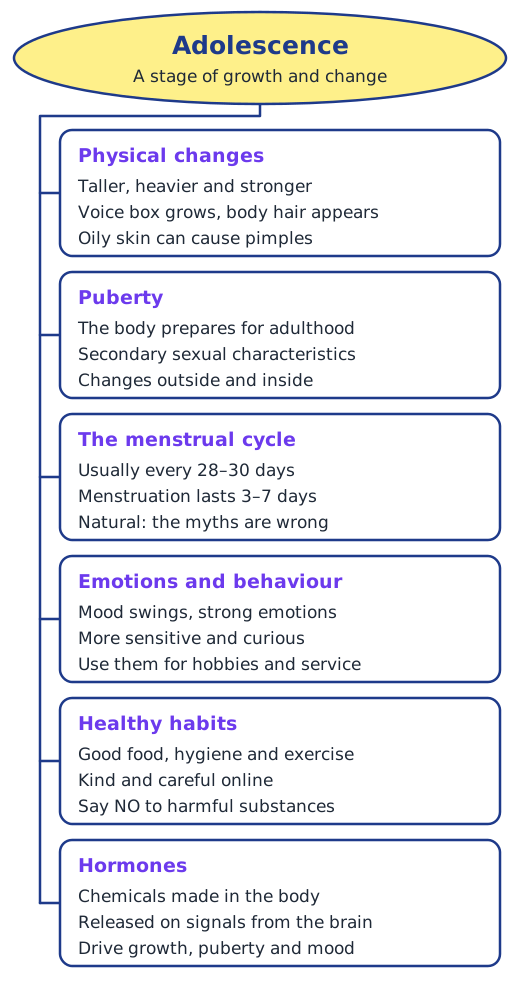
Adolescence: A Stage of Growth and Change is about the years from about 10 to 19, when the body grows fast and prepares for adulthood. It covers physical changes such as height, voice, body hair and pimples, puberty and the menstrual cycle, emotional and behavioural changes, healthy habits, saying NO to harmful substances, and the hormones behind many of these changes.
What is this chapter about?
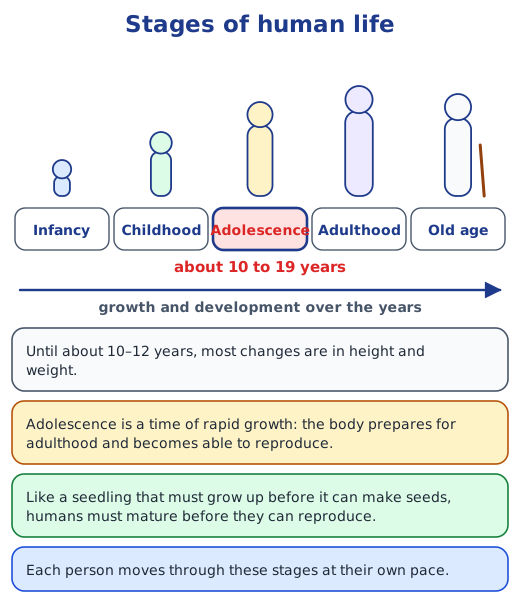
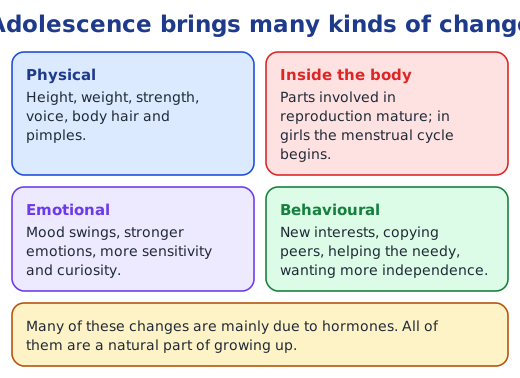
A seed sprouts, grows into a sapling and then a young plant, and only much later does it flower and make seeds of its own. Animals, too, must grow and mature before they can have young. Humans are no different. Our life passes through five stages, from infancy and childhood to adolescence, adulthood and old age. Up to about 10–12 years, we mostly grow taller and heavier. After that, other changes begin, and they mark the start of adolescence, a time of rapid growth between roughly 10 and 19 years of age, in which the body gets ready for adulthood. The chapter looks at these changes and at how to go through them responsibly and happily.
The teenage years
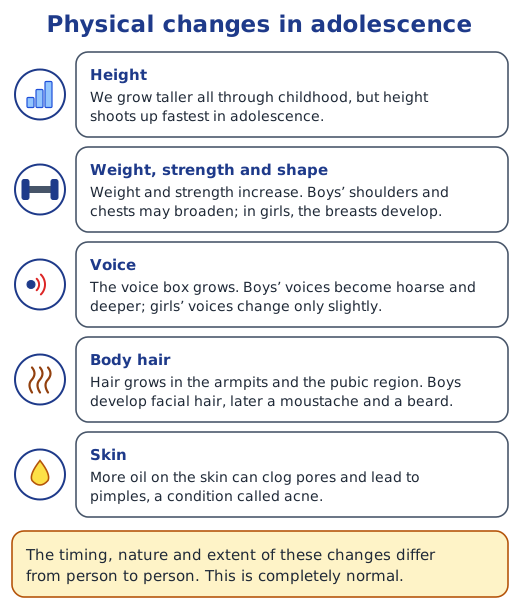
On a summer visit to his grandparents, Venkatesh meets his 12-year-old cousin Devyani. Each notices something new in the other: Venkatesh now has a thin moustache, Devyani has grown much taller, and Venkatesh’s voice sounds different. In Activity 6.1, students write such changes on paper slips, without names, drop them in a jar and then discuss them in class. The most common ones are listed in Table 6.1:
- Height goes up all through childhood, but fastest in adolescence.
- Weight, strength and shape change: boys may grow broader shoulders and chests, and girls’ breasts develop.
- Voice changes as the voice box grows.
- Body hair grows in the armpits and the pubic region, and boys develop facial hair.
- Pimples may appear on the face.
Read changes during adolescence.
Voice, hair and skin
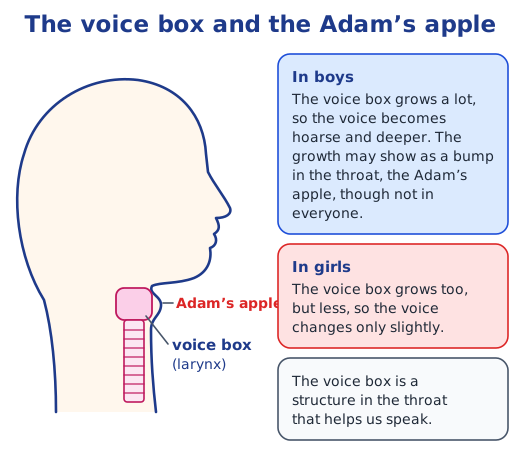
The voice box, or larynx, is the part of the throat that helps us speak. In adolescent boys it grows a lot, so the voice turns hoarse and deeper, and the growth may show as a bump in the throat, the Adam’s apple, though not everyone has a visible one. In girls the voice box grows less, so the voice changes only a little. Hair appears in the armpits and pubic region of both boys and girls, and boys’ facial hair later becomes a moustache and beard; some boys also grow hair on the chest and back, and some grow very little. The skin also makes more oil, which can block its tiny pores and lead to infection: small reddish pimples appear, a condition called acne. Above all, these changes come at different times and in different ways for different people, and every one of those differences is normal.
Puberty and the menstrual cycle
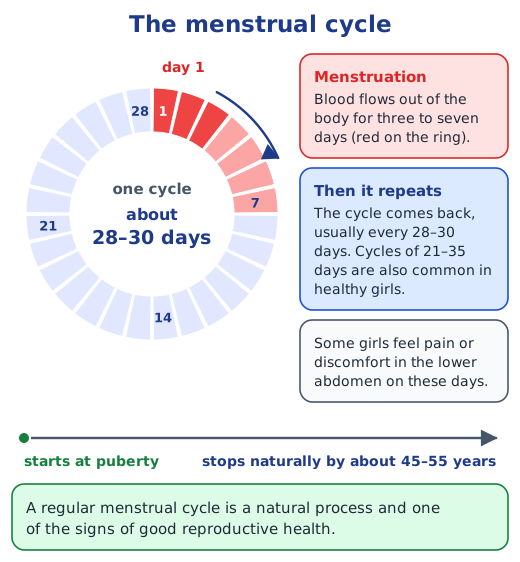
Some changes, such as a deeper voice, facial and chest hair in boys and breasts in girls, do not take part in reproduction but help tell males from females. These are secondary sexual characteristics. They show, quite naturally, that the body is getting ready to be an adult, and their arrival marks the start of puberty, the stage in which the body changes, outside and inside, into an adult body able to reproduce. Inside, the parts involved in reproduction slowly mature. In girls, the menstrual cycle begins. It usually repeats every 28–30 days, though healthy cycles can be anywhere from 21 to 35 days. During menstruation, the part of the cycle when blood flows out of the body, which lasts three to seven days, some girls have cramps or an uneasy feeling low in the abdomen. Menstruation stops naturally by about 45–55 years. A regular cycle is a sign of good reproductive health, and myths such as keeping girls apart from others have no scientific basis. Read puberty and hormones.
Emotions and behaviour
Adolescence changes how we feel and act, not only how we look. Feelings often run stronger than in childhood, and moods can swing from very happy to low. In Activity 6.2 and Table 6.2, such emotions are linked with their likely effects and with good ways to use them: mood swings can be channelled into music, dance or sport, and strong emotions and greater sensitivity into compassion and social work. Adolescents may join efforts to help people in need or develop a deep interest in something new. Understanding how emotions shape actions helps us make better choices.
Making adolescence a joyful experience
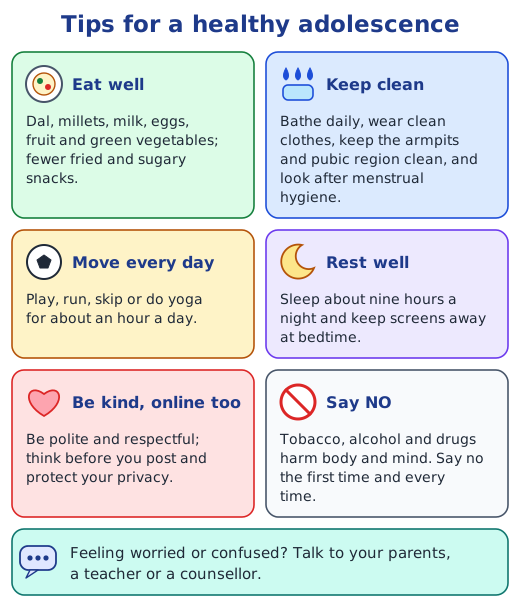
Five habits make a big difference. A nutritious diet gives proteins and carbohydrates for growth and play, and enough fats, vitamins and minerals too (Table 6.3): calcium from milk, curd and paneer for bones, and iron from spinach, rajma, raisins and figs for blood. Personal hygiene protects against infections; girls need proper menstrual hygiene, with clean sanitary pads or reusable cloth pads, and used pads should be wrapped in newspaper and put in a dustbin. Exercise, sport and yoga keep body and mind fit and lift our mood. A balanced social life means being polite and respectful, in person and online, and guarding against cyberbullying. Finally, say NO to tobacco, gutka, alcohol and drugs, the first time and every time. Read healthy habits in adolescence.
Saying NO to harmful substances
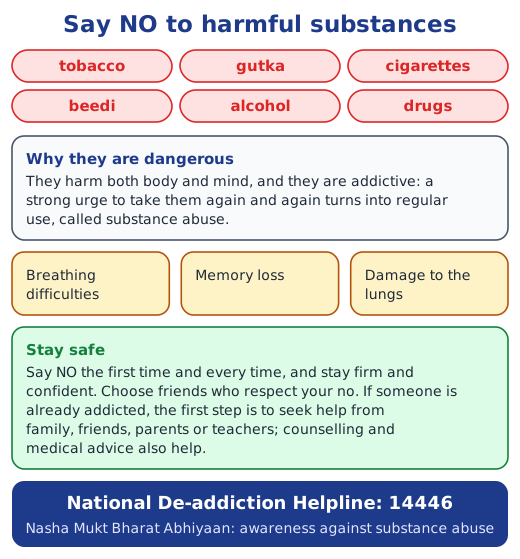
Friends or others may tempt or pressure adolescents to try harmful substances, and curiosity can make the offer seem exciting. But tobacco, alcohol and drugs harm both body and mind and are addictive: one try can start a craving for more, and then regular use, called substance abuse. They can cause breathing problems, memory loss and lung damage. Staying firm and saying NO is the safest choice. Anyone caught in addiction should first seek help from family, friends or teachers, along with counselling and medical advice. The government’s Nasha Mukt Bharat Abhiyaan spreads awareness, and the National De-addiction Helpline is 14446.
The ‘why’ question: hormones
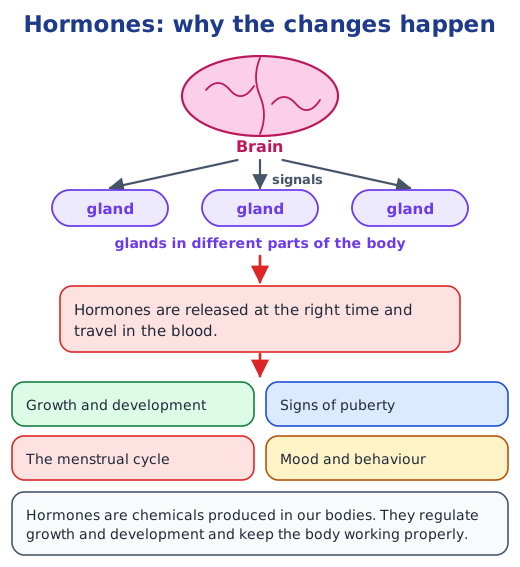
Why do all these changes happen at this age? Many of them, including menstruation and the other signs of puberty, are mainly caused by hormones, chemicals made in our bodies. Glands in several parts of the body make them and let them out at the right moment, when the brain sends a signal. They regulate growth and development and keep the body working properly, and some of them also affect mood and behaviour.
In a nutshell
Adolescence, from about 10 to 19 years, brings physical, internal, emotional and behavioural changes, set off mainly by hormones. Puberty makes the body able to reproduce, and in girls the menstrual cycle begins. Good food, hygiene, exercise, kindness online and a firm NO to harmful substances keep these years healthy, and talking to trusted adults helps with any worries. Answers to every activity and question are in the NCERT solutions for Chapter 6.
Key terms
| Term | Meaning |
|---|---|
| Adolescence | The stage of life between childhood and adulthood, from about 10 to 19 years of age, when the body grows and develops quickly. |
| Puberty | The stage in which an adolescent’s body changes, outside and inside, to become an adult body able to reproduce. |
| Secondary sexual characteristics | Features such as a deeper voice and facial and chest hair in boys, and breasts in girls, which help tell males from females but are not directly involved in reproduction. |
| Voice box | A structure in the throat, also called the larynx, that helps us speak. It grows in adolescence, much more in boys, so their voices turn hoarse and deeper. |
| Adam’s apple | The bump at the front of the throat formed by the growing voice box. It is seen mainly in boys, and not in everyone. |
| Acne | A skin condition common in adolescence: extra oil clogs the skin’s pores, which can get infected, and small reddish pimples appear. |
| Menstrual cycle | A natural cycle in girls and women that begins at puberty and usually repeats every 28–30 days; cycles of 21–35 days are also common in healthy girls. |
| Menstruation | The part of the menstrual cycle when blood flows out of the body, lasting three to seven days. It stops naturally by about 45–55 years of age. |
| Menstrual hygiene | Keeping clean and comfortable during menstruation by using clean sanitary pads or reusable cloth pads, changing them regularly and disposing of used pads properly. |
| Cyberbullying | Harassing or hurting someone through a phone, a computer or the internet, for example with lies, rumours or private details shared without permission. |
| Substance abuse | Regular use of addictive harmful substances such as tobacco, alcohol or drugs, which grows out of a craving to use them over and over. |
| Hormones | Chemicals made by glands in several parts of the body and sent out at the right moment when the brain signals. They control growth and development, and some affect mood and behaviour. |
Topics in this chapter
Practice
-
At about what ages does adolescence usually take place?
Show answer
Answer: (c) 10 to 19 years
-
Why does the voice of adolescent boys become hoarse?
Show answer
Answer: (a) Their voice box grows
-
How often does the menstrual cycle usually repeat?
Show answer
Answer: (b) Every 28–30 days
-
Which of these is a secondary sexual characteristic?
Show answer
Answer: (a) Growth of facial hair in boys
-
Which nutrient helps in the formation of blood?
Show answer
Answer: (b) Iron
-
What are the chemicals in our body that bring about many changes of adolescence called?
Show answer
Answer: (b) Hormones
Questions students ask
What are the main topics of Class 7 Science Chapter 6?
The stages of life and when adolescence happens; physical changes in height, voice, body hair and skin; secondary sexual characteristics and puberty; the menstrual cycle and the myths around it; emotional and behavioural changes; nutrition, personal and menstrual hygiene, exercise, a balanced social life and safe use of social media; avoiding harmful substances; and hormones.
Is Adolescence: A Stage of Growth and Change in the new NCERT Class 7 book?
Yes. It is Chapter 6 of Curiosity, the Class 7 Science textbook (Reprint 2026-27), on pages 73 to 88. It follows Changes Around Us: Physical and Chemical and comes before Heat Transfer in Nature.
Why do the changes of adolescence come at different times for different people?
Every body follows its own timetable. Hormones are released when the brain signals that the time has come, and that moment differs from person to person. So one classmate may grow tall or find their voice changing a year or two before another. The timing, nature and extent of the changes all vary, and this is normal.
Why should adolescents say NO to tobacco, alcohol and drugs?
These substances harm both body and mind, and they are addictive: after trying them, people crave them more and more until they use them regularly, which is substance abuse. They can cause breathing difficulties, memory loss and lung damage. Saying NO the first time and every time is the safest choice; help is available on the National De-addiction Helpline, 14446.
Stuck on a question?
Take a photo and Lagnever AI explains it step by step. Try it for 7 days for ₹2.
Get it on Google Play Open in browser
For parents: after the trial, the plan renews monthly by UPI or card autopay. You can cancel anytime in the app.