
Class 12 Biology Chapter 7: Human Health and Disease Notes
This chapter in five lines
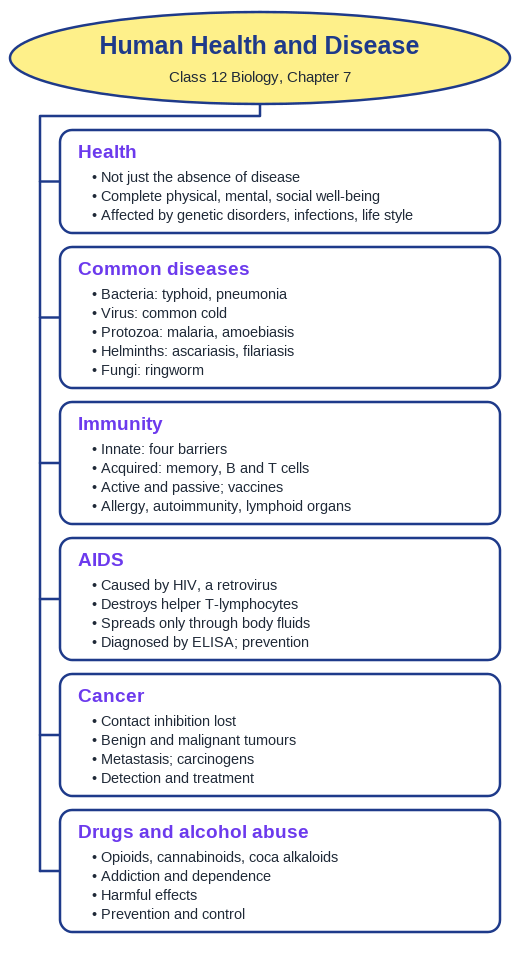
Health is a state of complete physical, mental and social well-being, not just the absence of disease. The chapter describes common diseases caused by bacteria, viruses, protozoans, helminths and fungi and how to prevent them; how the immune system defends the body; AIDS and cancer; and the harmful effects of drug and alcohol abuse and how to prevent it.
What is this chapter about?
This chapter opens Unit VIII, Biology in Human Welfare. It asks what health is, which common diseases affect people, how the body defends itself, and how serious conditions such as AIDS and cancer, and the abuse of drugs and alcohol, harm health. Three topic pages go deeper: common diseases in humans, immunity, and AIDS and cancer.
These notes follow the textbook for exam study. They are not medical advice: for any illness, see a doctor.
What is health?
For a long time, health was seen as a balance of body “humors”, an idea held by early Greeks such as Hippocrates and by the Indian Ayurveda system. It came from pure thought, not experiment. William Harvey’s discovery of blood circulation, made by the experimental method, and thermometer readings showing normal body temperature in people said to have “blackbile”, disproved this “good humor” idea.
Biology later showed that the mind acts on the immune system through the neural and endocrine systems, and the immune system keeps us healthy. So the mind and mental state can affect health. Health is also affected by:
- Genetic disorders: deficiencies a child is born with or inherits from the parents.
- Infections.
- Life style: food and water, rest and exercise, and the habits we have or lack.
Health is a state of complete physical, mental and social well-being, not just the absence of disease or physical fitness. Healthy people work more efficiently, which raises productivity and prosperity; health also increases longevity and reduces infant and maternal mortality. A balanced diet, personal hygiene, regular exercise and yoga help. So do awareness about diseases, vaccination, proper waste disposal, control of vectors and hygienic food and water.
When one or more organs or systems work poorly, with signs and symptoms, we have a disease. Diseases are infectious (easily passed from person to person, such as AIDS, which is fatal) or non-infectious (such as cancer, the major cause of death among them).
Which common diseases does the chapter describe?
Disease-causing organisms are pathogens: bacteria, viruses, fungi, protozoans, helminths and others. They enter the body, multiply and damage it, and they must adapt to life in the host; for example, a pathogen that enters the gut must survive the low pH of the stomach and the digestive enzymes.
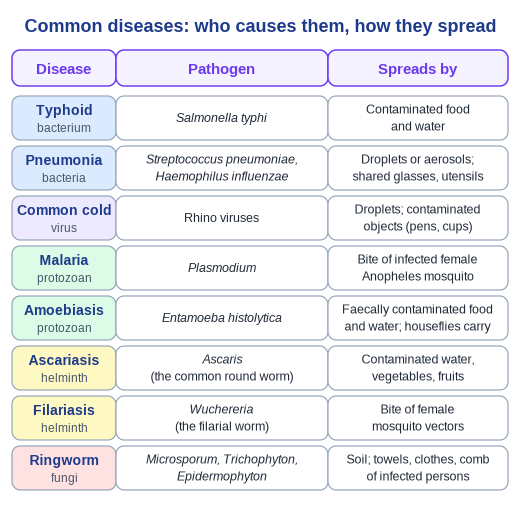
| Disease | Pathogen | Main symptoms (as the book lists them) |
|---|---|---|
| Typhoid | Salmonella typhi (bacterium) | Sustained high fever (39° to 40 °C), weakness, stomach pain, constipation, headache, loss of appetite; confirmed by the Widal test |
| Pneumonia | Streptococcus pneumoniae, Haemophilus influenzae | Alveoli fill with fluid; fever, chills, cough, headache; lips and nails may turn grey to bluish in severe cases |
| Common cold | Rhino viruses | Nasal congestion and discharge, sore throat, hoarseness, cough, headache, tiredness, usually for 3–7 days; the lungs are not infected |
| Malaria | Plasmodium (protozoan) | Chill and high fever recurring every 3–4 days |
| Amoebiasis | Entamoeba histolytica (protozoan) | Constipation, abdominal pain and cramps, stools with excess mucus and blood clots |
| Ascariasis | Ascaris, the common round worm | Internal bleeding, muscular pain, fever, anaemia, blockage of the intestine |
| Filariasis (elephantiasis) | Wuchereria (W. bancrofti, W. malayi) | Slow, long-lasting swelling, most often of the lymph vessels of the legs |
| Ringworm | Microsporum, Trichophyton, Epidermophyton (fungi) | Dry, scaly, itchy lesions on skin, nails and scalp |
The book also recalls Mary Mallon, called Typhoid Mary: a cook who was a typhoid carrier and infected others through her cooking for years.
How does malaria spread?
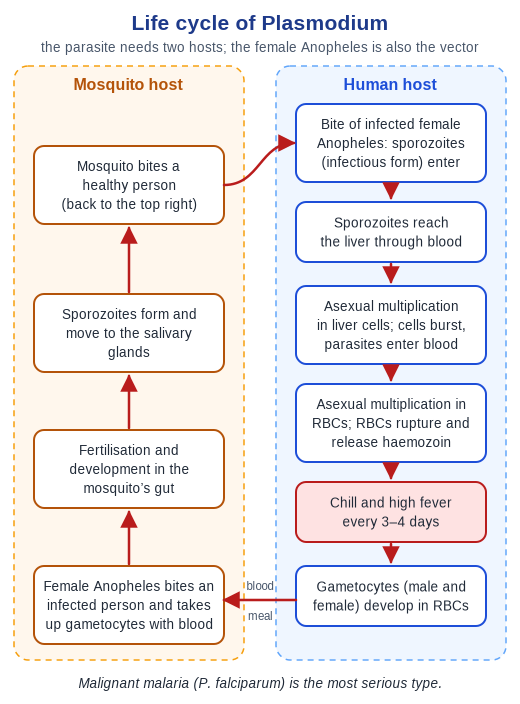
Three species of Plasmodium (P. vivax, P. malaria and P. falciparum) cause different types of malaria. Malignant malaria, caused by P. falciparum, is the most serious and can be fatal.
- An infected female Anopheles mosquito bites a person and injects sporozoites, the infectious form.
- The parasites first multiply in liver cells, then attack red blood cells, which burst. This releases a toxic substance, haemozoin, which causes chill and high fever every three to four days.
- When a female Anopheles bites an infected person, the parasites enter the mosquito, develop further and form sporozoites, stored in its salivary glands.
So the parasite needs two hosts, human and mosquito, and the female Anopheles is also the vector.
How can these diseases be prevented and controlled?
- Personal hygiene: keep the body clean; use clean drinking water, food, vegetables and fruits.
- Public hygiene: proper disposal of waste and excreta; regular cleaning and disinfecting of tanks, pools, reservoirs and cesspools; standard hygiene in public catering. These matter most for food- and water-borne diseases such as typhoid, amoebiasis and ascariasis.
- Air-borne diseases (pneumonia, common cold): also avoid close contact with infected people and their belongings.
- Vector-borne diseases (malaria, filariasis): cut down the vectors and the places where they breed. Avoid stagnant water, clean household coolers, use mosquito nets, introduce fish such as Gambusia that eat mosquito larvae, spray insecticides in ditches and swamps, and fit wire mesh on doors and windows. This matters more with the spread of dengue and chikungunya, carried by Aedes mosquitoes.
Vaccines and immunisation programmes have eradicated smallpox and controlled polio, diphtheria, pneumonia and tetanus to a large extent. Antibiotics and other drugs help treat infectious diseases; treatment is decided by a doctor.
What is immunity?
We meet many infectious agents every day, yet only a few cause disease, because the body defends itself. The host’s total capacity to resist pathogens, provided by the immune system, is immunity. It is of two types.
Innate immunity is non-specific and present at birth. It works through four barriers:
- Physical: skin, and mucus lining the respiratory, gastrointestinal and urogenital tracts.
- Physiological: acid in the stomach, saliva in the mouth, tears from the eyes.
- Cellular: neutrophils (PMNL), monocytes and natural killer cells in the blood, and macrophages in tissues, which phagocytose and destroy microbes.
- Cytokine: virus-infected cells secrete interferons, which protect non-infected cells.
Acquired immunity is pathogen-specific and has memory. The first encounter with a pathogen gives a low-intensity primary response; a later encounter with the same pathogen gives a highly intensified secondary or anamnestic response. Two kinds of lymphocytes carry these out:
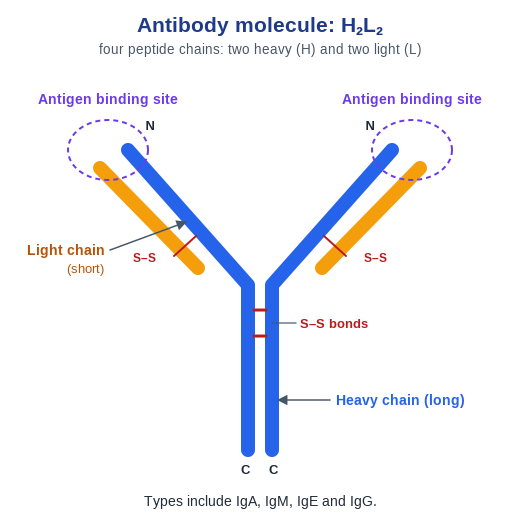
- B-lymphocytes make antibodies. Each antibody has two light and two heavy chains (H₂L₂); types include IgA, IgM, IgE and IgG. This is the humoral immune response.
- T-lymphocytes do not secrete antibodies but help B cells make them, and they mediate cell-mediated immunity (CMI). CMI tells “self” from “non-self” and is responsible for graft rejection. This is why tissue matching and blood group matching are essential before a transplant, and the patient takes immuno-suppressants for life.
What are active and passive immunity, vaccines, allergies and autoimmunity?
- Active immunity: the host makes its own antibodies after exposure to antigens (living or dead microbes or other proteins), in a natural infection or by immunisation. It is slow to reach its full effect.
- Passive immunity: ready-made antibodies are given. Examples: colostrum, the yellowish first milk, rich in IgA; antibodies passing from mother to foetus through the placenta.
- Vaccination is based on memory. A vaccine (antigenic proteins, or the inactivated or weakened pathogen) makes the body produce antibodies and memory B and T cells. For quick protection, as in tetanus, preformed antibodies or antitoxin are injected; the injection for snakebite also contains preformed antibodies against the venom. This is passive immunisation. Recombinant DNA technology lets antigenic polypeptides be produced in bacteria or yeast for large-scale vaccines, such as the hepatitis B vaccine made from yeast.
- Allergy is an exaggerated immune response to environmental antigens (allergens) such as dust mites, pollen and animal dander. IgE antibodies are made; mast cells release histamine and serotonin, causing sneezing, watery eyes, running nose and difficulty in breathing. Diagnosis and treatment are a doctor’s job.
- Auto-immune disease: sometimes, for genetic and other unknown reasons, the body attacks its own cells. Rheumatoid arthritis is an example.
Where is the immune system in the body?
The immune system includes lymphoid organs and tissues, many kinds of cells, and dissolved molecules such as antibodies. Primary lymphoid organs are the bone marrow (where all blood cells, including lymphocytes, are made) and the thymus (near the heart, beneath the breastbone; large at birth, very small by puberty). Mature lymphocytes move to secondary lymphoid organs: spleen, lymph nodes, tonsils, Peyer’s patches of the small intestine and appendix, where they meet antigens. MALT, in the lining of the major tracts, is about 50 per cent of the lymphoid tissue. More in immunity.
What is AIDS?
AIDS is Acquired Immuno Deficiency Syndrome: a deficiency of the immune system acquired during life, not present from birth. It was first reported in 1981; the book records more than 25 million deaths worldwide since then. It is caused by HIV, a retrovirus with an RNA genome inside an envelope.
- Transmission: sexual contact with an infected person, transfusion of contaminated blood, sharing infected needles, and from an infected mother to her child through the placenta. HIV is not spread by touch or physical contact; it spreads only through body fluids. Infected people should not be isolated from family and society.
- In the body: HIV enters macrophages, where reverse transcriptase makes viral DNA from its RNA. The viral DNA joins the host DNA, and the cell becomes an “HIV factory”. HIV also enters helper T-lymphocytes, whose number falls steadily. The person gets fever, diarrhoea and weight loss, and then infections such as Mycobacterium and Toxoplasma that the body would otherwise overcome.
- Diagnosis: ELISA. Anti-retroviral drugs are only partly effective. Prevention is the main approach: safe blood, disposable needles and syringes, controlling drug abuse, safe sex, condoms and regular check-ups, with education by NACO, NGOs and WHO.
What is cancer?
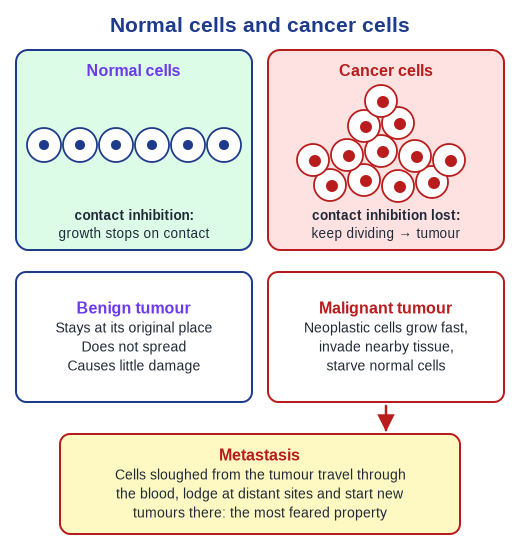
In cancer, the controls on cell growth and differentiation break down. Normal cells show contact inhibition; cancer cells lose it and keep dividing, forming tumours. Benign tumours stay in place and cause little damage; malignant tumours invade nearby tissue and spread by metastasis. Carcinogens include ionising radiation (X-rays, gamma rays), UV rays, chemicals in tobacco smoke (a major cause of lung cancer) and oncogenic viruses; proto-oncogenes in normal cells can also be activated. Detection uses biopsy and histopathology, blood and bone marrow tests, radiography, CT and MRI; treatment combines surgery, radiotherapy, chemotherapy and immunotherapy. See AIDS and cancer.
What does the chapter say about drugs and alcohol abuse?
The book says that the use of drugs and alcohol has been rising, especially among the young, and that education and guidance help young people protect themselves. The drugs most often abused are:
- Opioids, which bind to opioid receptors in the central nervous system and gut. Heroin (diacetylmorphine, called smack) is made from morphine, which comes from the poppy plant Papaver somniferum. It is a depressant that slows body functions.
- Cannabinoids, from the plant Cannabis sativa, which act on receptors mainly in the brain and affect the cardiovascular system.
- Coca alkaloid (cocaine), from Erythroxylum coca, which interferes with the transport of dopamine and strongly stimulates the central nervous system; in excess it causes hallucinations. Atropa belladona and Datura also have hallucinogenic properties.
Medicines such as barbiturates, amphetamines and benzodiazepines, prescribed for illnesses like depression and insomnia, are also abused; morphine is a useful painkiller after surgery under medical care. Using any of these other than as a doctor prescribes, or in ways that harm physical or mental functions, is drug abuse.
Tobacco contains nicotine, which makes the adrenal gland release adrenaline and nor-adrenaline, raising blood pressure and heart rate. Smoking is linked with cancers of the lung, urinary bladder and throat, bronchitis, emphysema, heart disease and gastric ulcer; chewing tobacco with cancer of the mouth. Smoking raises carbon monoxide in the blood and lowers haem-bound oxygen. The book adds that smoking paves the way to hard drugs.
Adolescence (roughly 12–18 years) is a vulnerable phase. Curiosity, the need for adventure, stress about exams, the idea that drugs are “cool”, media influence, unstable families and peer pressure can push young people towards drugs and alcohol. Addiction is a psychological attachment to the effects of drugs or alcohol; with repeated use, tolerance rises and the receptors respond only to more, so the person is pulled into a vicious circle. The book warns that even one use can lead to addiction. Dependence shows as a withdrawal syndrome (anxiety, shakiness, nausea, sweating), which can be severe and need medical supervision.
Effects include reckless behaviour, violence, coma and death from respiratory or heart failure or cerebral haemorrhage; infections such as AIDS and hepatitis B from shared needles; damage to the nervous system and liver (cirrhosis); harm to the foetus during pregnancy; and family distress. Some sportspersons misuse anabolic steroids and other substances, which have serious side-effects.
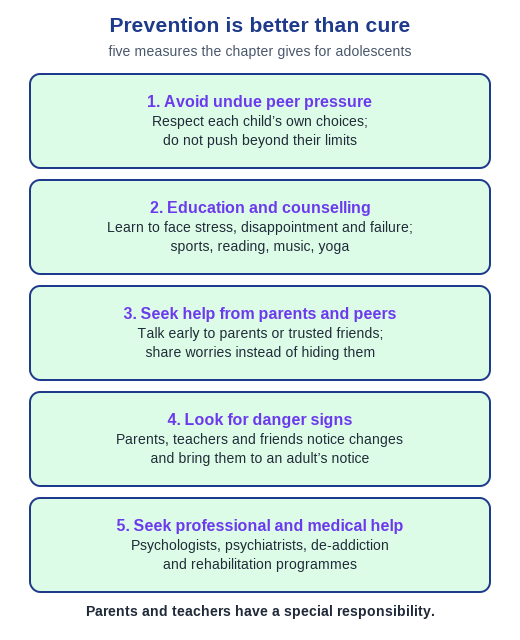
Prevention is better than cure. The chapter’s measures: avoid undue peer pressure, education and counselling, seeking help from parents and peers, looking for danger signs, and seeking professional and medical help. Anyone who is worried about themselves or a friend should talk to a parent, teacher or doctor.
Before we move on
This chapter links back to Chapter 3, Reproductive Health (sexually transmitted infections), and to Chapter 4, Principles of Inheritance and Variation (genetic disorders). Learn the table of diseases with their pathogens, draw the antibody and the Plasmodium life cycle, and be able to explain how HIV lowers helper T cells. All 17 exercises are answered in the NCERT solutions for Chapter 7.
Key terms
| Term | Meaning |
|---|---|
| Health | A state of complete physical, mental and social well-being. It is more than the absence of disease or physical fitness. |
| Pathogen | A disease-causing organism, such as a bacterium, virus, fungus, protozoan or helminth. Most parasites are pathogens, because they harm the host they live in or on. |
| Vector | An organism that transmits a pathogen. The female Anopheles mosquito is the vector of malaria; female mosquitoes also carry the filarial worm. |
| Immunity | The overall ability of the host to fight disease-causing organisms, given by the immune system. It is innate (present at birth, non-specific) or acquired (pathogen-specific, with memory). |
| Antibody | A protein made by B-lymphocytes against a pathogen. Each antibody has two light and two heavy peptide chains, so it is written H₂L₂. IgA, IgM, IgE and IgG are types. |
| Vaccination | Introducing antigenic proteins of a pathogen, or the inactivated or weakened pathogen (the vaccine), so that the body makes antibodies and memory B and T cells before a real infection. |
| Allergy | An exaggerated response of the immune system to certain antigens in the environment, called allergens, such as dust mites, pollen and animal dander. The antibodies are of the IgE type. |
| Auto-immune disease | Damage caused when the body attacks its own cells, due to genetic and other unknown reasons. Rheumatoid arthritis is an example. |
| Retrovirus | A virus with an RNA genome inside an envelope that makes DNA from its RNA with the enzyme reverse transcriptase. HIV, which causes AIDS, is a retrovirus. |
| Metastasis | The spread of a malignant tumour: cells sloughed from the tumour reach distant sites through the blood and start new tumours there. It is the most feared property of malignant tumours. |
| Carcinogens | Physical, chemical or biological agents that can turn normal cells into cancerous cells, such as X-rays, UV rays, chemicals in tobacco smoke and oncogenic viruses. |
| Dependence | The tendency of the body to show an unpleasant withdrawal syndrome (anxiety, shakiness, nausea, sweating) if the regular intake of drugs or alcohol is stopped suddenly. |
Topics in this chapter
Practice
-
Which test confirms typhoid fever?
Show answer
Answer: (b) Widal test
-
The toxic substance released when RBCs rupture in malaria is:
Show answer
Answer: (b) haemozoin
-
An antibody molecule is represented as:
Show answer
Answer: (c) H₂L₂
-
Colostrum protects the new-born mainly through antibodies of the type:
Show answer
Answer: (b) IgA
-
HIV mainly attacks which cells, lowering their number?
Show answer
Answer: (c) Helper T-lymphocytes
-
The property of normal cells that cancer cells lose is:
Show answer
Answer: (b) contact inhibition
Questions students ask
What are the main topics of Class 12 Biology Chapter 7?
Health and its meaning, common diseases in humans and their prevention, immunity (innate and acquired, active and passive, vaccination, allergies, autoimmunity and the immune system in the body), AIDS, cancer, and drug and alcohol abuse.
Is Human Health and Disease in the 2026-27 NCERT Class 12 Biology book?
Yes. It is Chapter 7, the first chapter of Unit VIII, Biology in Human Welfare, in the Class 12 Biology textbook marked Reprint 2026-27, on pages 129 to 148. It has 17 end-of-chapter exercises.
Which diseases are spread by mosquitoes in this chapter?
Malaria (Plasmodium, carried by the female Anopheles) and filariasis (Wuchereria, carried by female mosquitoes). The chapter also mentions dengue and chikungunya, carried by Aedes mosquitoes, as reasons to control vectors.
Does this page give medical advice?
No. It explains the textbook for exam study. If you or someone you know feels unwell, or needs help with tobacco, alcohol or drugs, talk to a parent, a teacher or a doctor.
Stuck on a question?
Take a photo and Lagnever AI explains it step by step. Try it for 7 days for ₹2.
Get it on Google Play Open in browser
For parents: after the trial, the plan renews monthly by UPI or card autopay. You can cancel anytime in the app.