
Neutralisation: when an acid meets a base
Answer in short
Neutralisation is the reaction between an acid and a base. Mixed in the right amounts, they cancel each other, so the result is neither acidic nor basic: acid + base gives salt + water, and heat is given out. It eases ant bites with baking soda, fixes acidic or basic soil and makes acidic factory waste safer.
Stuck on a question? Take a photo and Lagnever AI explains it step by step. Try it for 7 days for ₹2. Get it on Google Play
When an acid meets a base
Acids and bases are like opposites. Mix them in the right amounts and they cancel each other out. This reaction is called neutralisation, and the chapter shows it with a simple test tube experiment.
Activity 2.7: lemon juice meets lime water
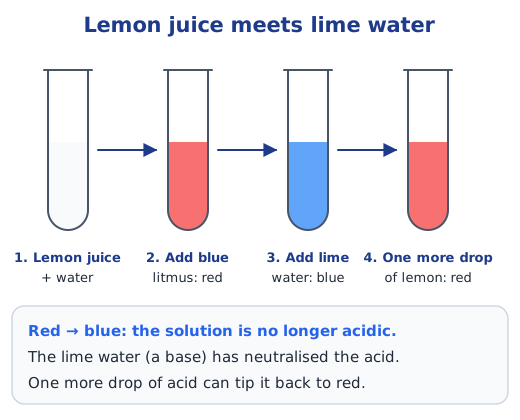
Mix a drop of lemon juice with about twenty drops of water in a test tube. Add a drop of blue litmus solution: it turns red, because lemon juice is acidic. Now add lime water, a base, drop by drop, swirling the tube each time. For a while nothing seems to happen, then suddenly the colour switches from red to blue. The solution is no longer acidic: the lime water has neutralised the acid. Add one more drop of lemon juice and it can turn red again, showing how close to the balance point the mixture is.
What neutralisation makes
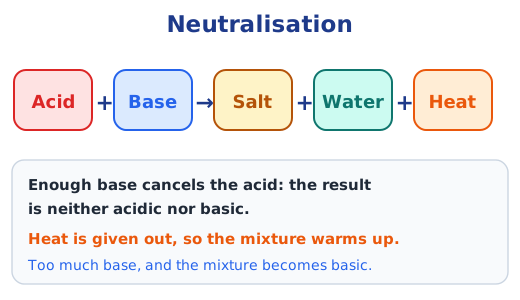
When enough acid and base react, the result is neither acidic nor basic. New substances form, a salt and water, and heat is given out, so the mixture warms slightly:
Acid + Base → Salt + Water + Heat
The word salt here means the chemical made by the reaction; common salt is just one example of a salt.
An ant bite
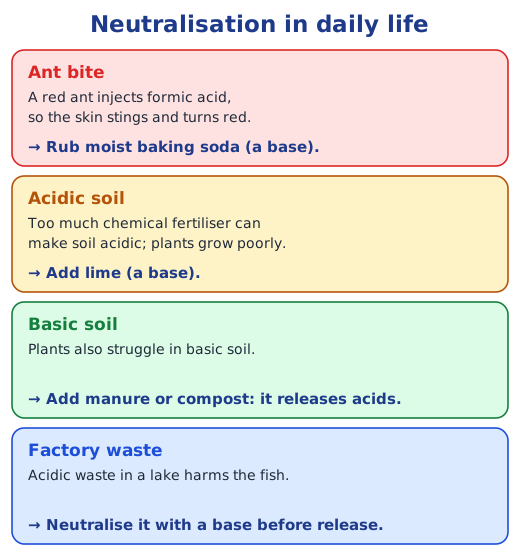
Keerthi was watching a butterfly when a red ant bit her hand, leaving a red, stinging patch. Her brother rubbed moist baking soda on it, and the pain eased. Why? An ant bite injects formic acid into the skin, and baking soda is a base, so it neutralises the acid.
Caring for soil
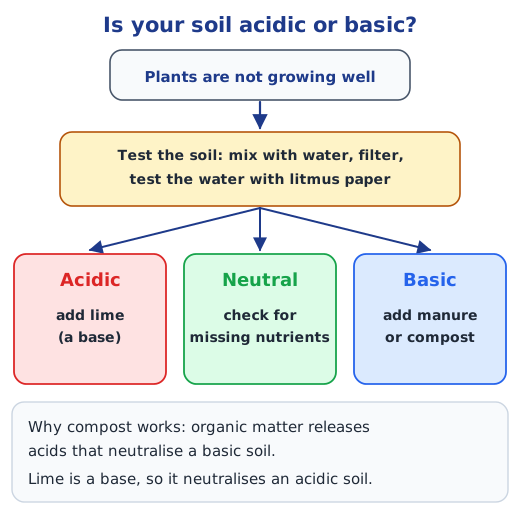
A farmer wrote on a government farmers’ portal that his plants were not growing well. The cause was too much chemical fertiliser, which had made the soil acidic. The remedy is to add lime, a base. Soil can also be too basic; then farmers add organic matter such as manure and composted leaves, which release acids as they rot. And if the soil turns out to be neutral but plants are still weak, the problem may be a shortage of nutrients.
Protecting a lake
Gurbir lives near an industrial area and noticed that the fish in a nearby lake were dying out. One likely cause is factory waste flowing into the lake. If the waste is acidic, it should be neutralised by adding basic substances before it is released, so that the water stays safe for fish.
More examples around you
Extra: two more everyday cases use the same idea. Antacid tablets, taken for acidity, contain a mild base that neutralises extra acid in the stomach. And toothpaste is usually basic, which helps to cancel the acids that bacteria in the mouth make from sweet food, so brushing after meals protects your teeth.
Why it matters
Neutralisation is everyday chemistry: in first aid, farming and protecting rivers and lakes. Learn how to test whether something is acidic or basic in acids, bases and indicators and natural indicators. Answers to every textbook question are in the NCERT solutions for Chapter 2; see all of the Chapter 2 notes.
Practice
-
In Activity 2.7, what colour does the lemon juice solution with blue litmus turn after enough lime water is added?
Show answer
Answer: (b) Blue
-
Which is added to soil that has become too acidic?
Show answer
Answer: (b) Lime
-
The products of neutralisation are:
Show answer
Answer: (b) salt and water, with heat
-
Why does moist baking soda help after a red ant bite?
Show answer
Answer: The ant injects formic acid, an acid, into the skin. Baking soda is a base, so rubbing it on neutralises the acid and eases the stinging pain.
-
Why is manure or compost added to basic soil?
Show answer
Answer: Organic matter such as manure and composted leaves releases acids as it breaks down. These acids neutralise the basic nature of the soil, so plants grow better.
Questions students ask
What is neutralisation?
It is the reaction between an acid and a base. When enough of each is mixed, they cancel each other’s effect, so the solution is neither acidic nor basic. Salt and water form, and heat is given out: acid + base → salt + water + heat.
How does Activity 2.7 show neutralisation?
A drop of lemon juice in water turns red with blue litmus solution, showing it is acidic. Adding lime water, a base, drop by drop with swirling, at last turns it blue: the acid has been neutralised and the solution is no longer acidic. One more drop of lemon juice can turn it red again.
How can factory waste harm a lake, and how can neutralisation help?
If a factory releases acidic waste into a lake, the water can become harmful to fish, and their numbers can fall. Neutralising the waste with a basic substance before it is released keeps the lake safer.
Stuck on a question?
Take a photo and Lagnever AI explains it step by step. Try it for 7 days for ₹2.
Get it on Google Play Open in browser
For parents: after the trial, the plan renews monthly by UPI or card autopay. You can cancel anytime in the app.